

Product Introduction
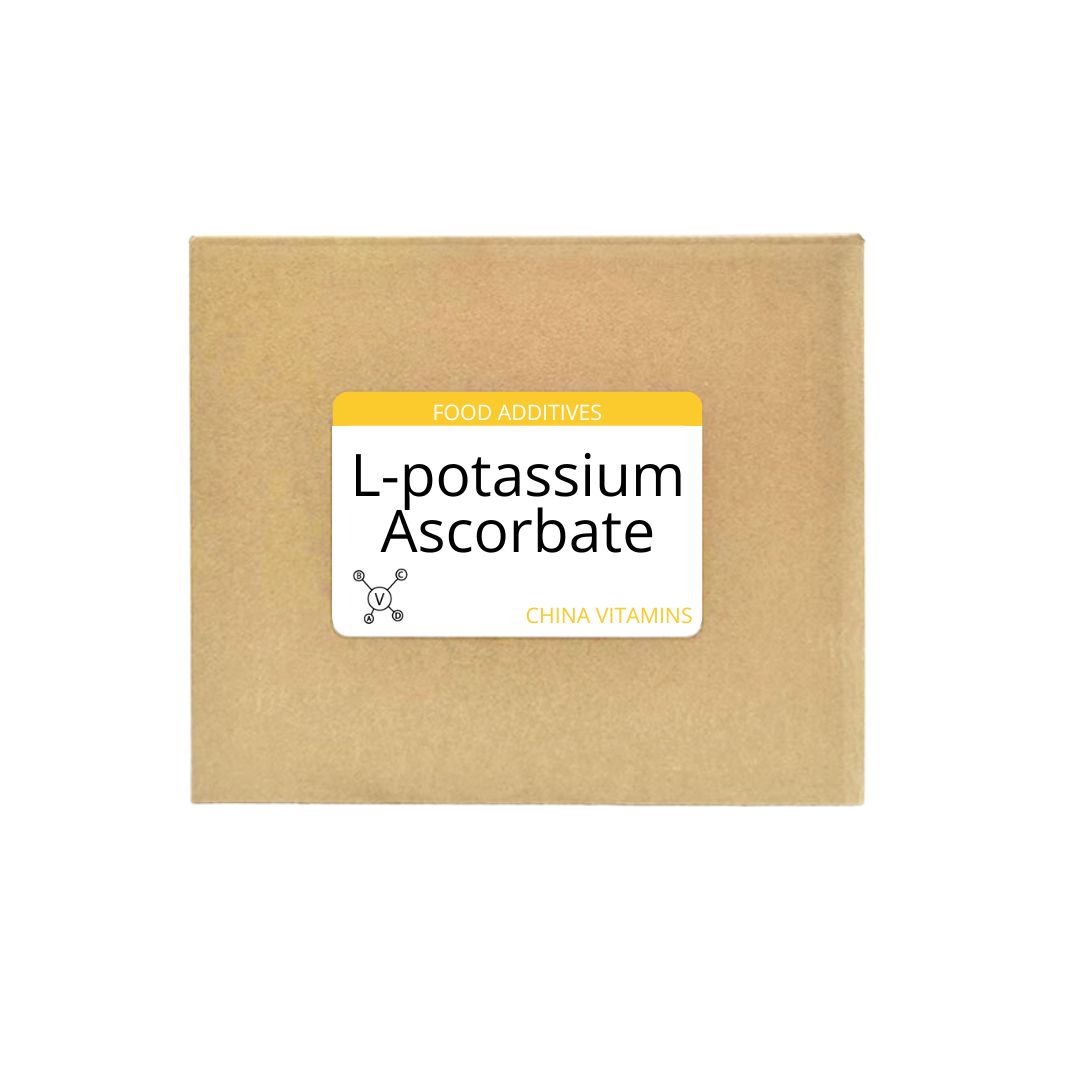
L-Potassium Ascorbate is a salt formed by combining L-Ascorbic acid (Vitamin C) with potassium. The primary components are L-Ascorbic acid and potassium. It is generally synthesized through a chemical reaction between ascorbic acid and a potassium source, such as potassium bicarbonate. L-Potassium Ascorbate is commonly used in the food industry as an antioxidant, preservative, and color retention agent [1]. It helps to prevent oxidation, extending the shelf life of food products and maintaining their natural color.
Production Process
The production of L-Potassium Ascorbate typically involves the following steps: First, L-Ascorbic acid is dissolved in a suitable solvent, such as water. Then, a potassium source, like potassium bicarbonate or potassium hydroxide, is added to the solution. The reaction is carefully controlled to ensure complete neutralization and formation of L-Potassium Ascorbate. The resulting solution is then purified, filtered, and dried to obtain the final product in the form of a crystalline powder [2]. Quality control measures, including HPLC testing, are implemented throughout the process to ensure the purity and potency of the L-Potassium Ascorbate.
Application Scenarios
L-Potassium Ascorbate is utilized in a variety of food applications. It is frequently added to processed fruits and vegetables to prevent browning and maintain their fresh appearance. In meat products, it acts as a preservative, inhibiting microbial growth and extending shelf life. Additionally, it is used in beverages to protect against oxidation and maintain flavor stability [3]. Its solubility and antioxidant properties make it a versatile ingredient for enhancing the quality and longevity of various food products.
Packaging and Storage
L-Potassium Ascorbate is typically packaged in multi-layer kraft paper bags with an inner polyethylene liner or in fiber drums to protect it from moisture and light. Standard packaging sizes are usually 25 kg per bag or drum. The product should be stored in a cool, dry, and well-ventilated area, away from direct sunlight and incompatible substances. Maintaining these storage conditions helps to ensure the stability and efficacy of the product throughout its shelf life [4].
Citations
[1]— National Center for Biotechnology Information (2024). PubChem Compound Summary for CID 23676569, Potassium ascorbate.
[2]— Food and Agriculture Organization of the United Nations. (1993). Compendium of Food Additive Specifications, Addendum 1. FAO.
[3]— EFSA Panel on Food Additives and Nutrient Sources added to Food (ANS). (2016). Scientific Opinion on the re-evaluation of ascorbic acid (E 300), sodium ascorbate (E 301) and calcium ascorbate (E 302) as food additives. EFSA Journal, 14(5), 4470.
[4]— Ullmann's Food and Feed, 3 Volume Set. Wiley-VCH, 2017.

As the plant manager, I focus on the precise formulation and efficient production of food additives. We rigorously control the production process to ensure the quality and safety of each product, meeting industry standards. 🍴