

Product Introduction
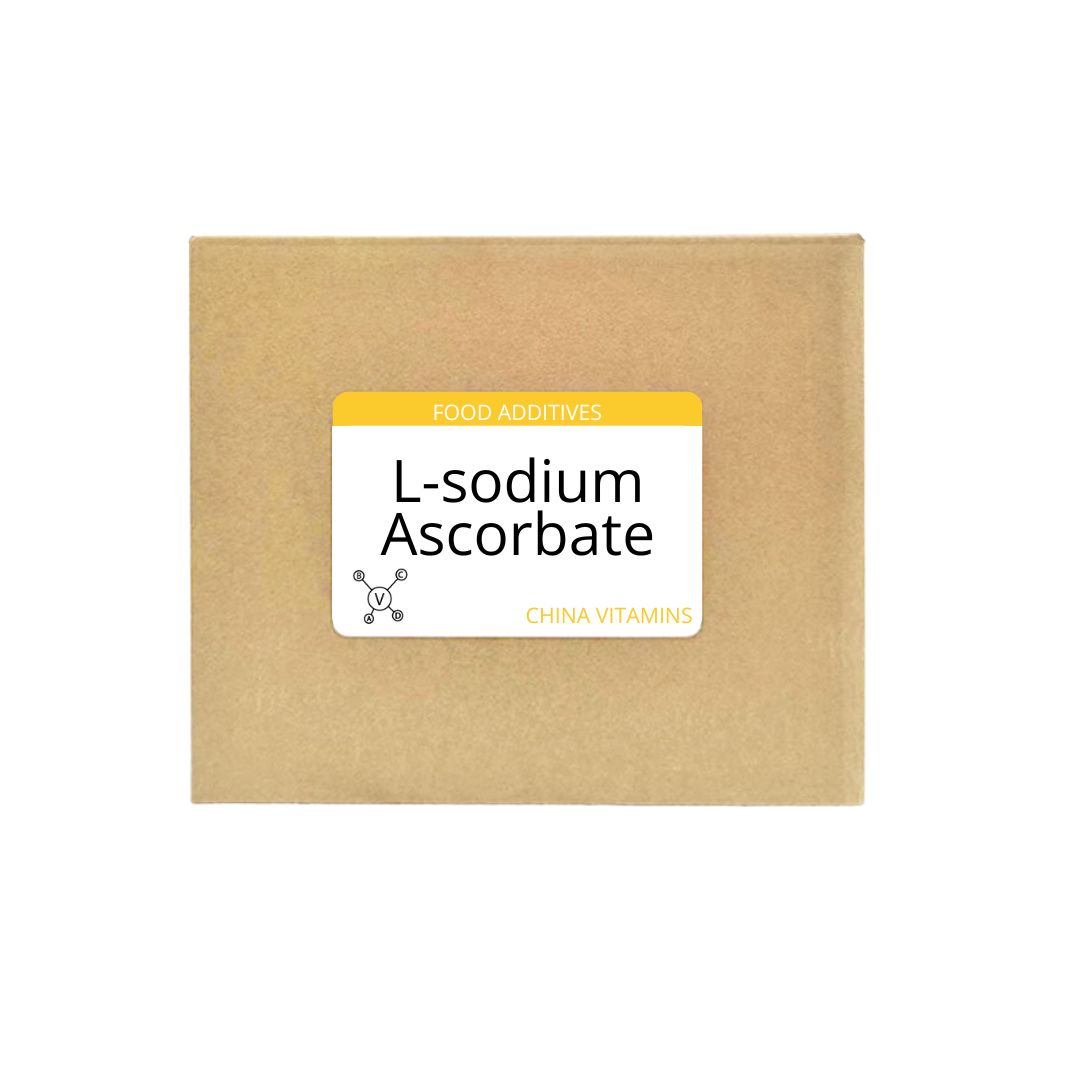
l-Sodium Ascorbate is primarily composed of ascorbic acid and sodium. It is derived through the neutralization of ascorbic acid with a sodium base, typically sodium bicarbonate or sodium hydroxide [1]. This compound is widely used in the food industry as an antioxidant, a preservative, and a nutrient supplement [2]. Its main function is to inhibit oxidation reactions, thereby preventing discoloration, rancidity, and the loss of nutritional value in food products [3].
Production Process
The production of l-Sodium Ascorbate generally involves several key steps. First, ascorbic acid, commonly derived from corn through fermentation and chemical synthesis, is dissolved in water [4]. Next, a sodium base is added to neutralize the ascorbic acid, forming l-Sodium Ascorbate. The solution is then filtered to remove any impurities. The resulting solution undergoes evaporation or spray drying to obtain the final crystalline product. Finally, the crystals are milled and sieved to achieve the desired particle size, ensuring consistency and optimal performance in various applications [5].
Application Scenarios
l-Sodium Ascorbate is used in a variety of food products. It is commonly added to processed meats to maintain color and prevent the formation of nitrosamines [6]. In beverages, it acts as an antioxidant to preserve flavor and prevent browning [7]. It is also used in baked goods to improve dough strength and extend shelf life [8]. Additionally, it can be found in fruit and vegetable products to prevent enzymatic browning and maintain vitamin C content [9].
Packaging and Storage
l-Sodium Ascorbate should be packaged in airtight containers to prevent exposure to moisture and air. The containers should be stored in a cool, dry, and well-ventilated area, away from direct sunlight and heat [10]. Proper packaging and storage conditions help maintain the product's stability and prevent degradation, ensuring that it retains its quality and effectiveness throughout its shelf life [11].
Citations:
[1] Kirk-Othmer Encyclopedia of Chemical Technology, Ascorbic Acid.
[2] Food and Agriculture Organization of the United Nations, "Guideline for Vitamin C in Food."
[3] Branen, A. L., Davidson, P. M., & Salminen, S. (Eds.). (2001). Food Additives (2nd ed.). Marcel Dekker.
[4] Ullmann's Encyclopedia of Industrial Chemistry, "Vitamins."
[5] Seidemann, J. (2005). World of sweeteners. Behr's Verlag.
[6] Shahidi, F., & Ho, C. T. (Eds.). (2005). Antioxidant measurement and applications. American Chemical Society.
[7] Potter, N. N., & Hotchkiss, J. H. (1995). Food science (5th ed.). Chapman & Hall.
[8] Stauffer, C. E. (1998). Emulsifiers in food technology. Eagan Press.
[9] Institute of Food Technologists. (2009). Comprehensive reviews in food science and food safety, 8(4).
[10] Codex Alimentarius Commission. (1999). General Standard for Food Additives.
[11] The United States Pharmacopeia, "Ascorbic Acid."

As the plant manager, I focus on the precise formulation and efficient production of food additives. We rigorously control the production process to ensure the quality and safety of each product, meeting industry standards. 🍴