

Product Introduction:
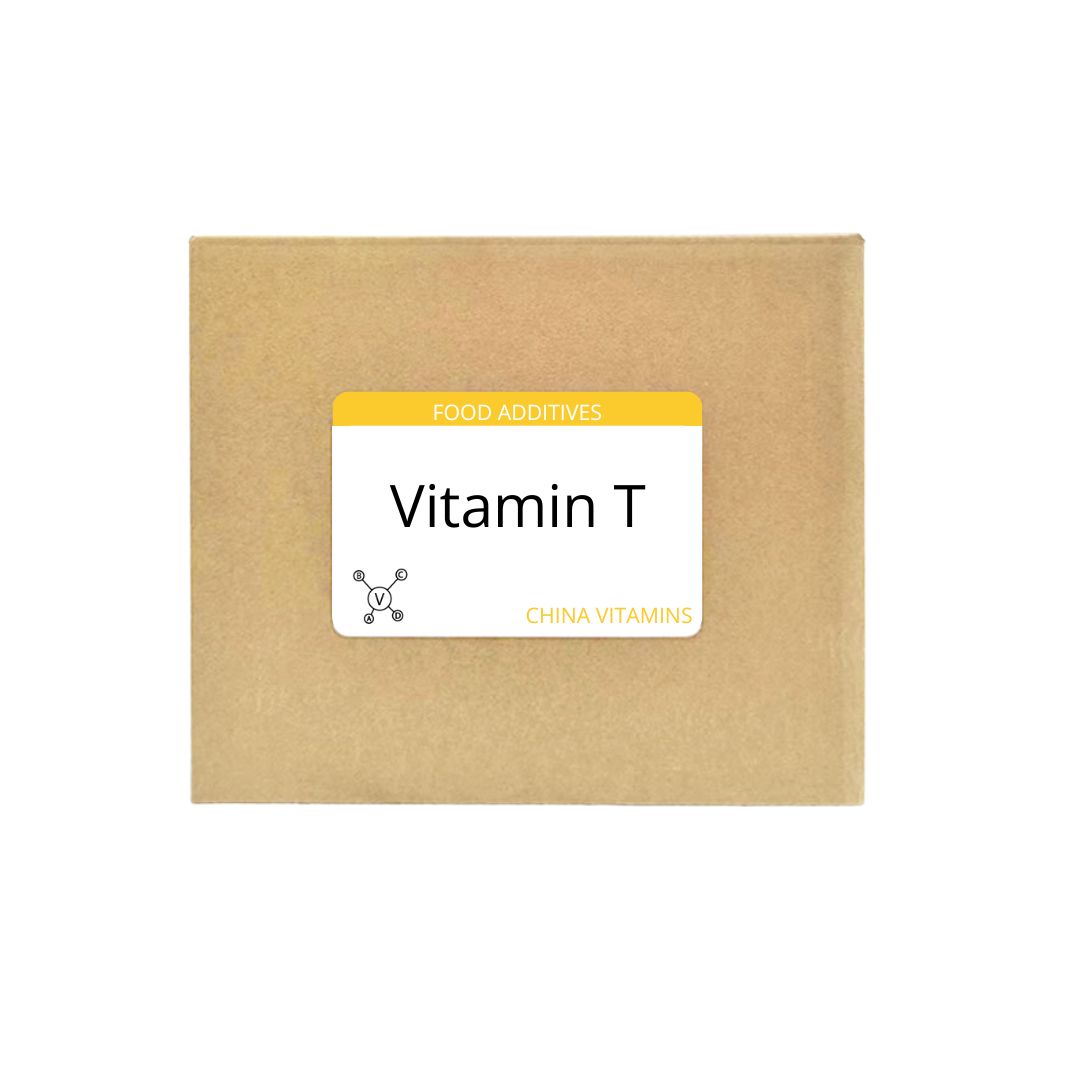
Vitamin T, otherwise known as Torutiline, or Toruline, is a water-soluble vitamin complex first isolated from the yeast Torula utilis [1]. The key components include amino acids, peptides, and growth factors. Primarily, the substance has been investigated for its potential to stimulate hematopoietic processes, it is sometimes referred to as a "growth factor" [2]. While not as widely recognized as other vitamins, Vitamin T has been explored for its role in supporting growth and metabolic functions. Consequently, it is commonly used as a nutrient in microbiological fermentation [3].
Production Process:
The production of Vitamin T typically involves the cultivation of Torula utilis yeast in a nutrient-rich medium. Following fermentation, the yeast cells are harvested and processed through various methods, such as heat treatment, enzymatic lysis, or mechanical disruption to extract the Vitamin T complex. The extract is then purified, concentrated, and dried into a powdered form, ensuring stability and ease of use in different applications [4]. Quality control measures, including HPLC testing, are implemented throughout the production process to ensure the final product meets the required standards.
Application Scenarios:
Vitamin T is employed in several application scenarios, most often as a nutritional supplement, where it is added to animal feed formulations to improve growth and overall health. It is also used as a fermentation nutrient in industrial microbiology, where it supports the growth of microorganisms in fermentation media, thus enhancing the production of various biochemicals [5]. Additionally, Vitamin T is an ingredient in specialized cell culture media.
Packaging and Storage:
Vitamin T should be packaged in airtight containers to protect it from moisture and light. Recommended storage conditions include keeping the product in a cool, dry place, away from direct sunlight and extreme temperatures. Under these conditions, the product typically maintains its quality and efficacy for up to two years [6].
Citations:
[1] Thorne, C. B., Genske, M. A., & Peterson, W. H. (1947). Properties of an Unidentified Growth Factor for Leuconostoc mesenteroides P-60 Present in Liver. Journal of Biological Chemistry, 170(2), 771–779.
[2] Cutter, H. C. (1943). Vitamin T. Experimental Medicine and Surgery. 1 (3): 233–240.
[3] Reed, G. (1982). Prescott and Dunn's Industrial Microbiology. 4th edition. Westport, Connecticut: AVI Publishing Company.
[4] Litchfield, J. H. (1983). Single-cell proteins. Science, 219(4585), 740–746.
[5] Ratledge, C., & Kristiansen, B. (2006). Basic Biotechnology. Cambridge University Press.
[6] Adapted from industry best practices and common storage guidelines for similar powdered supplements.

As the plant manager, I focus on the precise formulation and efficient production of food additives. We rigorously control the production process to ensure the quality and safety of each product, meeting industry standards. 🍴