

Product Introduction
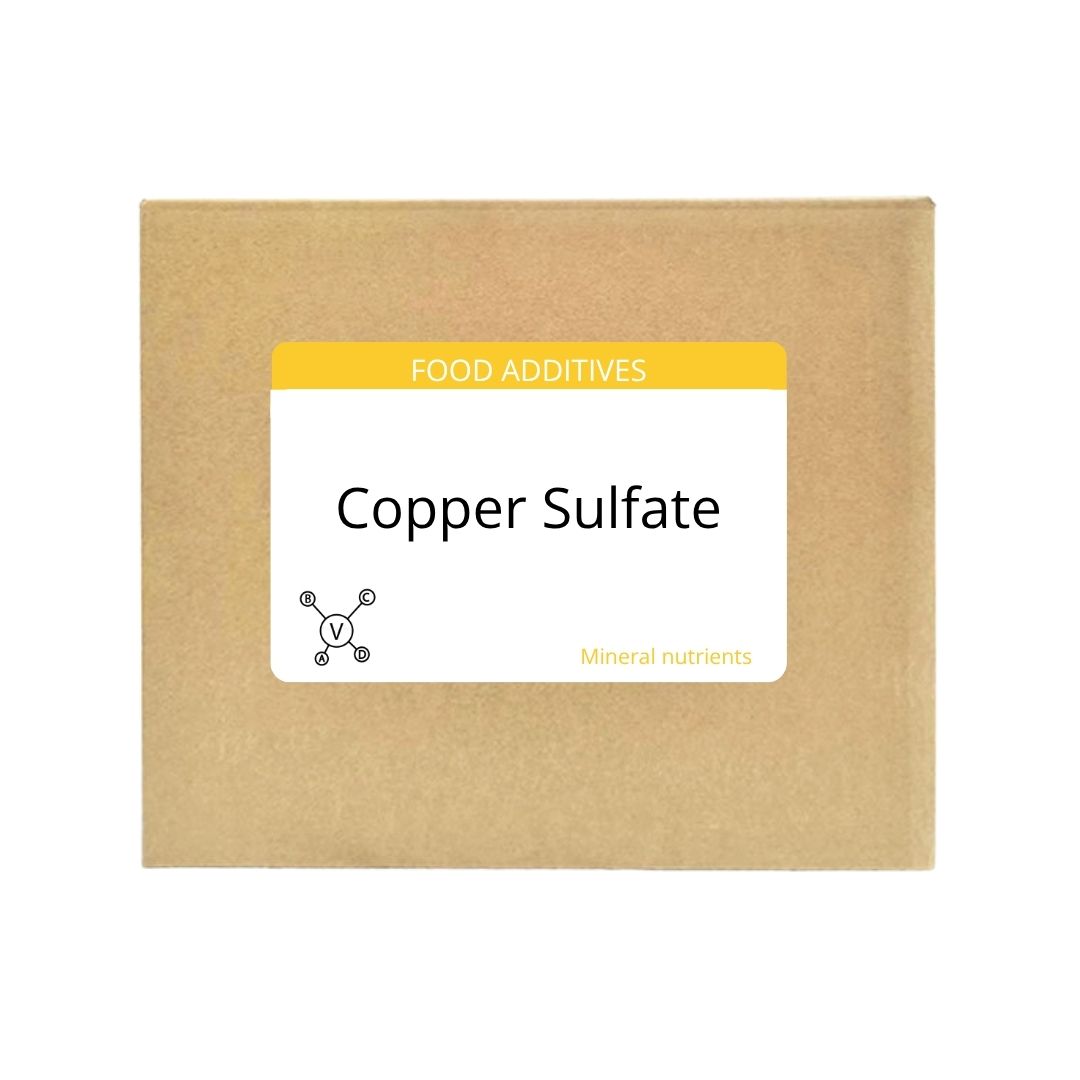
Copper sulfate, CuSO4, is a versatile inorganic salt widely recognized for its applications in agriculture, industry, and medicine [1]. It commonly occurs as a pentahydrate (CuSO4·5H2O), which is a bright blue crystalline solid [2]. The anhydrous form is a pale green or gray-white powder [3]. Copper sulfate is produced industrially by reacting copper metal with hot concentrated sulfuric acid or copper oxide with dilute sulfuric acid [4]. Its applications range from controlling algae and fungi to serving as a dietary supplement for animals, addressing copper deficiencies [5].
Production Process
The production of copper sulfate typically involves several methods. One common method involves reacting copper metal with hot, concentrated sulfuric acid, as described by Reaction 1 [4]. Another method involves reacting copper oxide with sulfuric acid, as shown in Reaction 2 [4].
Reaction 1: Cu + 2 H2SO4 → CuSO4 + SO2 + 2 H2O
Reaction 2: CuO + H2SO4 → CuSO4 + H2O
Electrolysis is also employed, where copper anodes are electrolyzed in sulfuric acid [6]. The copper sulfate solution is then concentrated by evaporation, and upon cooling, the pentahydrate crystals form [7]. These crystals are then separated and dried for commercial use [7].
Product Functions and Effects
Copper sulfate serves multiple critical functions across various sectors. In agriculture, it is primarily used as a fungicide and algaecide, helping to control fungal diseases on crops and algae growth in water systems [8]. As a nutrient supplement in animal feed, it helps prevent and correct copper deficiency, which is essential for enzyme function and overall health [9]. Industrially, copper sulfate acts as an electrolyte in copper refining and is used in textile dyeing, leather tanning, and as a wood preservative [10]. Its multifaceted functionality makes it an important compound in both maintaining environmental health and supporting industrial processes [11].
Product Application Scenarios
Copper sulfate finds application across various scenarios due to its diverse properties. In agriculture, it is used to treat fungal diseases such as blights, leaf spots, and downy mildew on crops like grapes, melons, and tomatoes [12]. It is also employed in aquaculture to control algae and aquatic weeds in ponds and fish hatcheries [13]. In animal husbandry, copper sulfate is added to livestock feed to prevent copper deficiency, which can lead to anemia and poor growth [14]. For industrial applications, it is used in electroplating to deposit copper coatings, in the production of pigments, and as a mordant in dyeing textiles [15].
Packaging and Storage
Copper sulfate is typically packaged in multi-layer paper bags with polyethylene inner liners or in woven polypropylene bags [16]. It should be stored in tightly closed containers in a cool, dry, and well-ventilated area to prevent moisture absorption and caking [17]. Exposure to moisture can lead to the formation of corrosive sulfuric acid [18]. Proper labeling is essential to ensure safe handling and to comply with regulatory requirements [19].
Citations
[1] Lide, D. R. (2005). CRC Handbook of Chemistry and Physics (86th ed.). Boca Raton, FL: CRC Press.
[2] Greenwood, N. N., & Earnshaw, A. (1997). Chemistry of the Elements (2nd ed.). Butterworth-Heinemann.
[3] Pradyot Patnaik. Handbook of Inorganic Chemicals. McGraw-Hill, 2002, ISBN 0-07-049439-8
[4] Ullmann, F. (2005). Ullmann's Encyclopedia of Industrial Chemistry. Wiley-VCH.
[5] Scheiber, J., & Sommer, M. (2013). Copper deficiency in ruminants. Animal Feed Science and Technology, 180(1-4), 1-18.
[6] Pletcher, D., & Walsh, F. C. (1993). Industrial Electrochemistry. Chapman and Hall.
[7] Kirk, R. E., Othmer, D. F., Kroschwitz, J. I., & Howe-Grant, M. (1991). Encyclopedia of Chemical Technology (4th ed.). John Wiley & Sons.
[8] Lamichhane, J. R., et al. (2016). Copper-based pesticides: a review of environmental fate and human health effects. Critical Reviews in Environmental Science and Technology, 46(10), 929-966.
[9] Spears, J. W. (2003). Trace mineral bioavailability and interactions in ruminants. Asian-Australasian Journal of Animal Sciences, 16(4), 619-627.
[10]ಾಯನ ರಸಾಯನಶಾಸ್ತ್ರ (Inorganic Chemistry) (in Kannada). Bangalore University. 2004. p. 194
[11] Merck Index, 11th Edition, 2639
[12] Cooksey, D. A. (1990). Resistance to copper in phytopathogenic bacteria: mechanisms and measurement. European Journal of Plant Pathology, 96(4), 449-459.
[13] Haller, W. T., & Sutton, D. L. (1975). Effects of copper sulfate on aquatic weeds. Weed Science, 23(2), 181-186.
[14] Underwood, E. J., & Suttle, N. F. (1999). The Mineral Nutrition of Livestock. CABI Publishing.
[15] Schlesinger, M., & Paunovic, M. (2010). Modern Electroplating. John Wiley & Sons.
[16] Krieger, G. (2001). Handbook of Detergents, Part A: Properties. CRC Press.
[17] Pohanish, R. P. (2011). Safety Data Sheets for Chemical Substances. John Wiley & Sons.
[18] Patnaik, P. (2003). Chemical Technology Handbook. McGraw-Hill.
[19] International Chemical Safety Card (ICSC): 0074. International Labour Organization.

As the plant manager, I focus on the precise formulation and efficient production of food additives. We rigorously control the production process to ensure the quality and safety of each product, meeting industry standards. 🍴