

Product Introduction
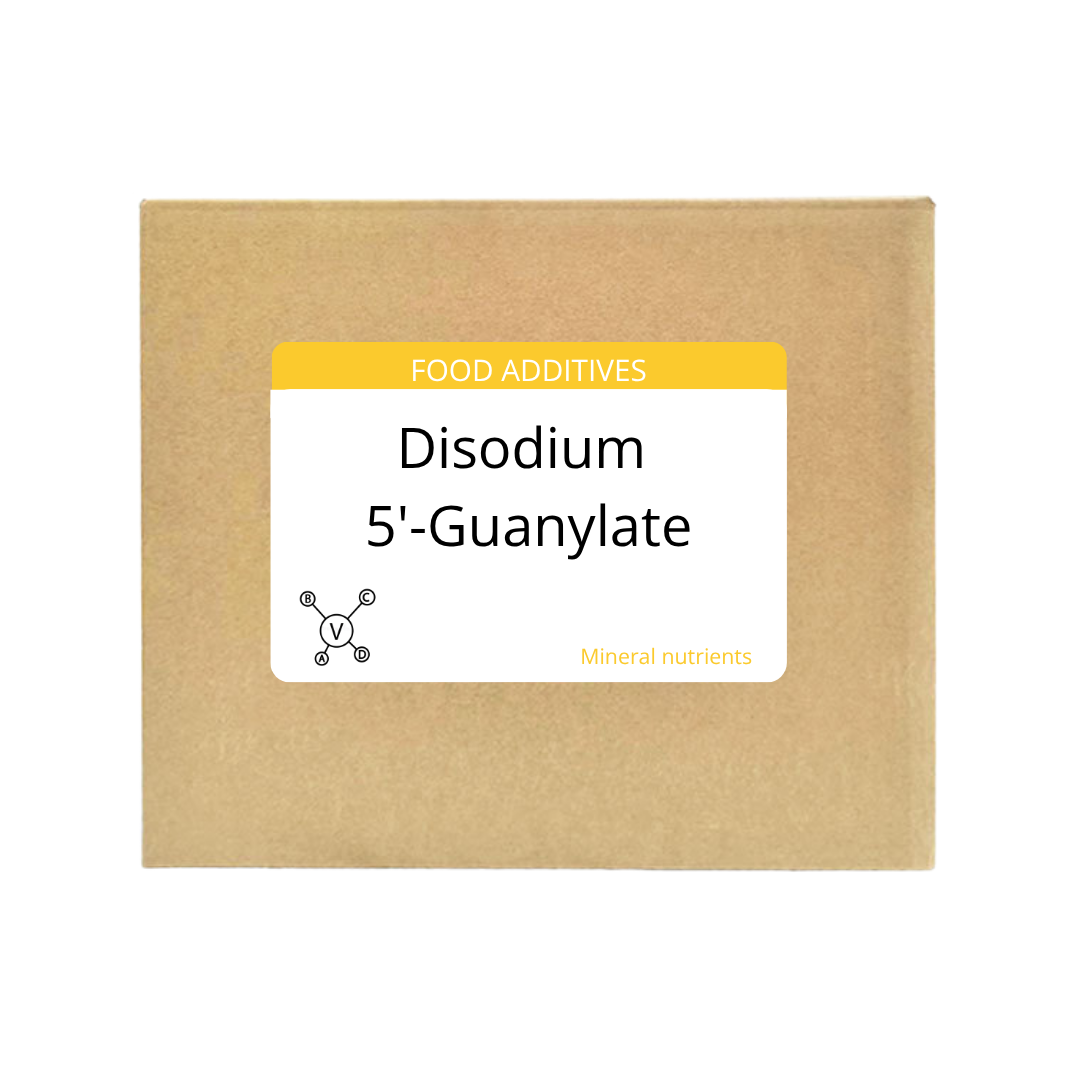
Disodium 5'-guanylate, also known as sodium 5'-guanylate or GMP, is a flavor enhancer commonly used in the food industry. It is derived from guanylic acid, a naturally occurring nucleotide present in both plants and animals [1]. It can be produced from dried fish or seaweed, or created via microbial fermentation [2]. Disodium 5'-guanylate enhances the umami taste of food, providing a savory and mouthwatering flavor, and it is often used in conjunction with monosodium glutamate (MSG) to create a synergistic effect, amplifying the overall taste [3].
Production Process
The production of disodium 5'-guanylate typically involves a fermentation process. Microorganisms are cultured to produce guanylic acid, which is then converted to disodium 5'-guanylate through enzymatic or chemical reactions, followed by purification, crystallization, and drying to obtain the final product [4].
Product Efficacy and Function
Disodium 5'-guanylate functions as a flavor enhancer by stimulating the umami taste receptors on the tongue, enhancing the savory notes in food. It does not have a significant flavor of its own, but it intensifies existing flavors, improving the overall palatability of various dishes [5].
Product Application Scenarios
Disodium 5'-guanylate is used in a wide range of food products, including soups, sauces, processed meats, snack foods, and instant noodles. It is added to enhance the flavor profiles, providing a richer and more satisfying taste experience [6].
Packaging and Storage
Disodium 5'-guanylate is typically packaged in airtight containers to prevent moisture absorption and maintain its quality. It should be stored in a cool, dry, and ventilated environment, away from direct sunlight and strong odors, to ensure its stability and extend its shelf life [7].
Citations
[1] Scientific Opinion on the safety of disodium 5'-guanylate (E 627), disodium 5'-inosinate (E 631), calcium 5'-guanylate (E 629), calcium 5'-inosinate (E 633), potassium 5'-guanylate (E 628) and potassium 5'-inosinate (E 632) as food additives. (2012). EFSA Journal, 10(6), 2761.
[2] Kuninaka, A. (1967). Nucleic acids as food flavours. Food Technology, 21(7), 29-33.
[3] Yamaguchi, S. (1991). Use of monosodium glutamate in food processing. Food Reviews International, 7(1), 1-43.
[4] Demain, A. L. (1972). Microbial production of nucleic acid derivatives. Progress in Industrial Microbiology, 11, 147-225.
[5] Kurihara, K. (2015). Umami the fifth basic taste: Emergence of umami research. Food Reviews International, 31(2), 171-198.
[6] Mariotti, M., Losi, G., & Favati, F. (2011). Use of nucleotide-based flavor enhancers in food products. Italian Journal of Food Science, 23(3), 231-239.
[7] MSDS for Disodium 5'-Guanylate. Chemical Supplier Company. Retrieved from their website.

As the plant manager, I focus on the precise formulation and efficient production of food additives. We rigorously control the production process to ensure the quality and safety of each product, meeting industry standards. 🍴