

Product Introduction
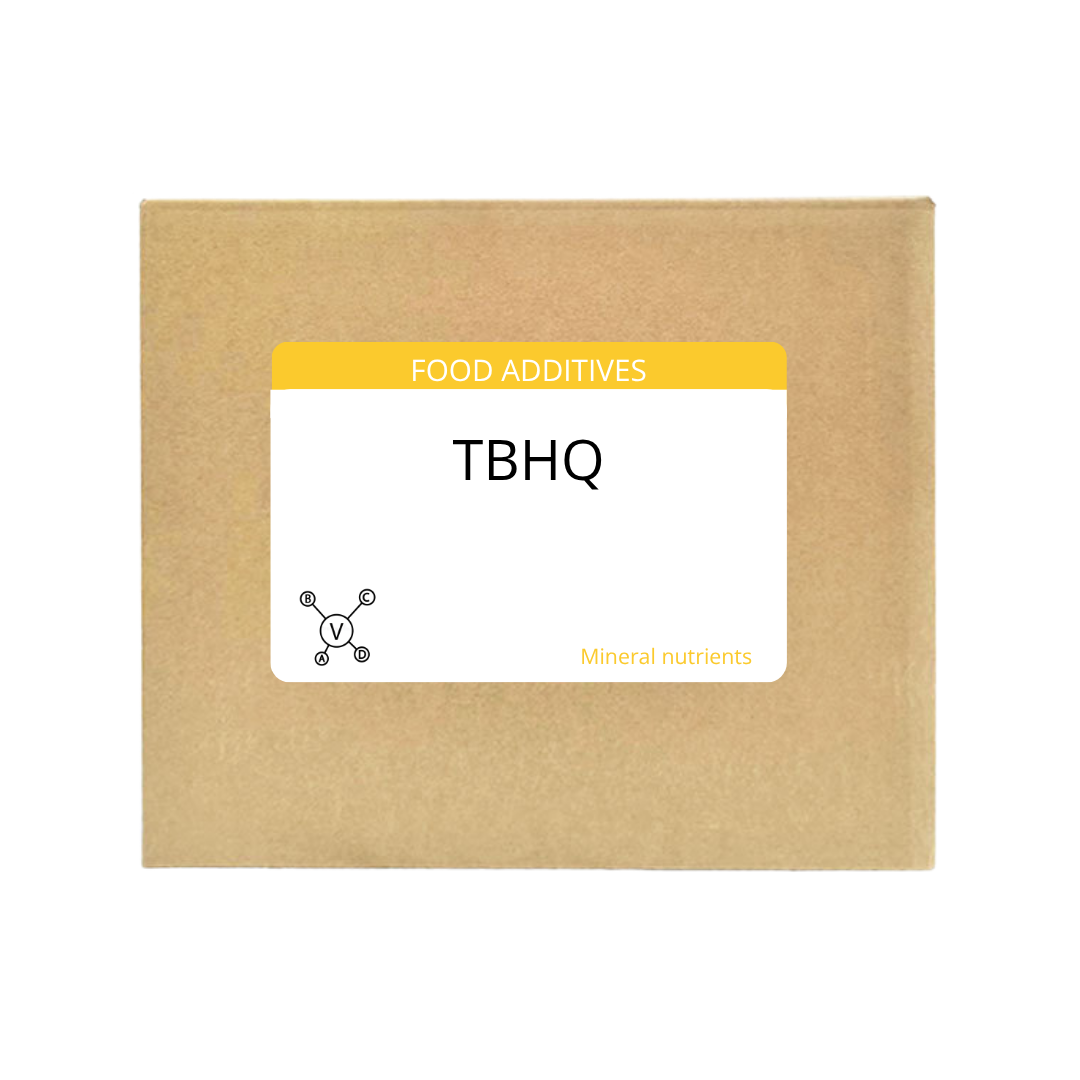
Tertiary butylhydroquinone, commonly referred to as TBHQ, is a synthetic aromatic organic compound. It functions primarily as an antioxidant, and it is derived from hydroquinone through a butylation process. TBHQ is widely utilized in the food industry to prevent oxidation and extend the shelf life of various products, particularly those high in fats and oils. Furthermore, it finds applications in cosmetics, resins, lacquers, and varnishes to inhibit oxidation and degradation.
Production Process
The production of TBHQ typically involves the butylation of hydroquinone. This process includes reacting hydroquinone with isobutylene, generally in the presence of an acid catalyst. The reaction results in the addition of a tert-butyl group to the hydroquinone molecule, forming TBHQ. The crude product is subsequently purified through distillation or crystallization to obtain the desired purity level for food and industrial applications, according to the Food and Drug Administration regulations [1].
Product Efficacy and Function
TBHQ's primary efficacy lies in its antioxidant properties. It effectively inhibits the oxidation of fats and oils by acting as a reducing agent, scavenging free radicals, and preventing the autocatalytic chain reaction of oxidation [2]. This helps to maintain the flavor, color, and overall quality of food products, preventing them from becoming rancid and extending their shelf life. Furthermore, TBHQ helps to stabilize certain polymers and chemicals, preventing their degradation due to oxidation [3].
Product Application Scenarios
TBHQ is used in a variety of application scenarios. It is commonly added to edible oils, fats, and fried foods to prevent rancidity. It can also be found in processed foods, such as crackers, snack foods, and some fast-food items, to maintain their quality and extend their shelf life [4]. Beyond the food industry, TBHQ is utilized as a stabilizer in cosmetics, resins, lacquers, and varnishes.
Packaging and Storage
TBHQ is typically packaged in airtight containers to prevent exposure to air and moisture. The containers are often made of materials such as plastic or metal to protect the compound from environmental factors. It is recommended to store TBHQ in a cool, dry, and well-ventilated area, away from direct sunlight and incompatible substances. Proper storage ensures the stability and efficacy of the product over its stated shelf life [5].
Citations:
[1] U.S. Food and Drug Administration. "CFR - Code of Federal Regulations Title 21." https://www.accessdata.fda.gov/scripts/cdrh/cfdocs/cfcfr/cfrsearch.cfm?fr=172.185
[2] Akoh, Casimir C., and David B. Min, eds. Food lipids: chemistry, functionality and stability. CRC press, 2017.
[3] Brydson, J. A. Plastics materials. Butterworth-Heinemann, 2017.
[4] Branen, A. L., Davidson, P. M., Salminen, S., & Thorngate, J. J. (Eds.). Food additives. CRC press, 2002.
[5] The National Center for Biotechnology Information. "PubChem Compound Summary for CID 21668, tert-Butylhydroquinone" https://pubchem.ncbi.nlm.nih.gov/compound/tert-Butylhydroquinone.

As the plant manager, I focus on the precise formulation and efficient production of food additives. We rigorously control the production process to ensure the quality and safety of each product, meeting industry standards. 🍴