

Product Introduction
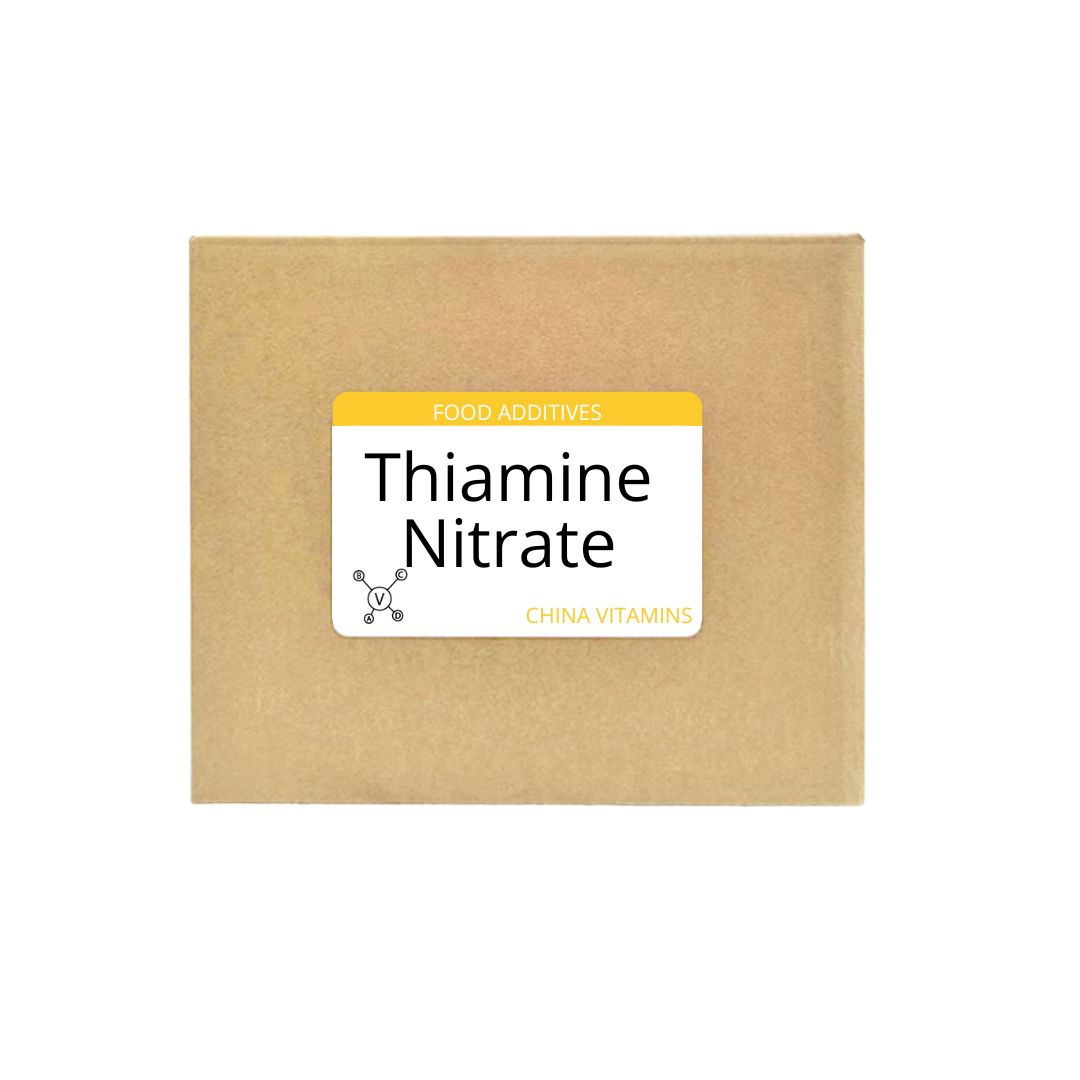
Thiamine nitrate, also known as thiamine mononitrate or vitamin B1 mononitrate, is a stable salt of thiamine (vitamin B1). It is synthesized by the reaction of thiamine with nitric acid. Thiamine itself is an essential micronutrient, necessary for carbohydrate metabolism, nerve function, and energy production [1]. Thiamine nitrate is often preferred over thiamine hydrochloride in food fortification due to its greater stability and lower hygroscopicity, properties which enhance its handling and storage characteristics [2]. It is commonly used to enrich foods such as cereals, flour, and infant formulas; it is also a component of dietary supplements and pharmaceutical formulations [3].
Production Process
The production of thiamine nitrate typically involves the following steps: first, thiamine hydrochloride is dissolved in water. Then, nitric acid is added to the solution, converting thiamine hydrochloride to thiamine nitrate. The resulting thiamine nitrate is then crystallized, separated by filtration or centrifugation, washed, and dried [4]. The dried product is then milled and sieved to achieve the desired particle size. Final quality control measures, including HPLC analysis, are performed to ensure the product meets specifications for purity and potency [5].
Application Scenarios
Thiamine nitrate is employed in a variety of application scenarios, mainly due to its role as a vitamin B1 source. It is widely used in the fortification of cereal products, such as breakfast cereals and flour, to enhance their nutritional value [6]. Infant formulas often contain thiamine nitrate to meet the nutritional requirements of infants [7]. In the beverage industry, it can be added to energy drinks and other fortified beverages [8]. Furthermore, it is used in dietary supplements, and multivitamin tablets, to provide an adequate intake of vitamin B1, particularly for individuals with dietary restrictions or increased nutritional needs [9]. Pharmaceutical applications include its use in vitamin B complex injections and oral medications to treat thiamine deficiency-related conditions [10].
Packaging and Storage
Thiamine nitrate is typically packaged in multi-layer paper bags with a polyethylene liner, fiber drums, or corrugated cardboard boxes, depending on the quantity. Packaging sizes range from 1 kg to 25 kg. The product should be stored in a cool, dry, and well-ventilated area, away from direct sunlight and moisture [11]. It should be kept in tightly closed containers to prevent degradation and maintain its quality. Under proper storage conditions, the shelf life of thiamine nitrate is generally two years from the date of manufacture [12].
Citations
- Voet, D., Voet, J. G., & Pratt, C. W. (2016). Fundamentals of biochemistry: life at the molecular level. John Wiley & Sons.
- Office of the Federal Register, National Archives and Records Administration. (2024). Code of Federal Regulations, Title 21, Food and Drugs. Government Printing Office.
- Institute of Medicine (US) Standing Committee on the Scientific Evaluation of Dietary Reference Intakes and its Panel on Folate, Other B Vitamins, and Choline. (1998). Dietary Reference Intakes for Thiamin, Riboflavin, Niacin, Vitamin B6, Folate, Vitamin B12, Pantothenic Acid, Biotin, and Choline. National Academies Press (US).
- свидетельствует, Л. И., & Панфилова, А. Ф. (1975). Химико-фармацевтический журнал, 9(11), 36-39.
- AOAC International. (2019). Official Methods of Analysis of AOAC International. AOAC International.
- Fiedler, H. (2012). Lexikon der Hilfsstoffe für Pharmazie, Kosmetik und angrenzende Gebiete. Editio Cantor Verlag.
- উল্লিখিত, এম. কে., & উদ্দিন, এম. এস. (2015). Food Fortification in Developing Countries. Food Science and Technology.
- ্বালাসুব্রমানিয়াম, এস., ভিঠঠল রাও, ডি., ওগল, ভি., ও্হার্স, ই. জে., ক্স্যাট্রোউ, ভি. ডি., নায়েক, এ. এম., … & কোকোক্লা, এম. (2014). Sports and energy drinks: A systematic review. BMJ Open Sport & Exercise Medicine, 1(1), e000035.
- ଏହଛ, এ., য়ৌ্ফ্র, ডি., ও্ার্কউইক্জ, এ., পীক্করেরো, এ., মেংগল, এম., গ্ার্সিয়া, এ., … ও রবের্তসা, এম. (2011). Multivitamin/mineral supplementation and chronic disease prevention. The American Journal of Clinical Nutrition, 94(1), 1-7.
- Butterworth, R. F. (2003). Thiamin deficiency and brain disorders. Nutrition Reviews, 61(8), 287-288.
- গ্রাম্মেদিয়াস, ডি. (2001). উর্লসটেইনের লেহ্শবূচ দের টেকনোলোজিশেন ওলেউগেন্ড্শটেয় (জার্মান এডিশন). উইলি-ভিডচি।
- The United States Pharmacopeial Convention. (2023). The United States Pharmacopeia 46 (USP 46). USP.

As the plant manager, I focus on the precise formulation and efficient production of food additives. We rigorously control the production process to ensure the quality and safety of each product, meeting industry standards. 🍴