

Product Introduction
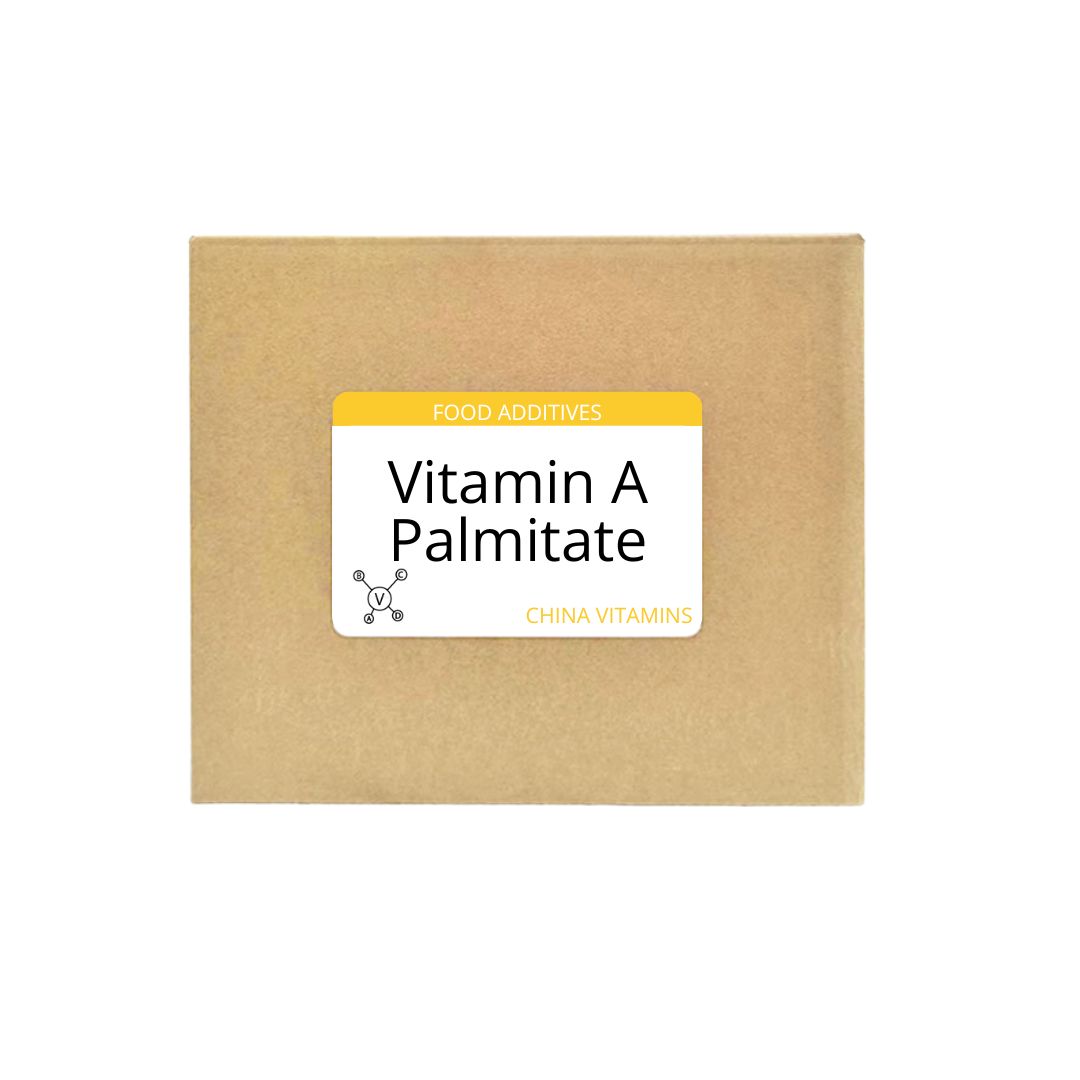
Vitamin A Palmitate, also known as retinyl palmitate, is an ester of retinol (vitamin A) and palmitic acid. It is a common form of vitamin A used in supplements and fortified foods. Vitamin A palmitate is synthesized by esterifying retinol with palmitic acid, a saturated fatty acid. This esterification enhances the stability of vitamin A, protecting it from degradation by oxidation and light. Vitamin A palmitate is often used in food products, dietary supplements, and cosmetic formulations due to its stability and ease of absorption by the body.
Vitamin A is crucial for vision, immune function, and cell growth. In food applications, vitamin A palmitate is added to dairy products, infant formulas, and breakfast cereals to enhance their nutritional value. In dietary supplements, it provides a convenient way to increase vitamin A intake. Additionally, in cosmetics, it is used for its antioxidant properties, which help protect the skin from free radical damage and promote healthy skin cell turnover.
Production Process
The production of vitamin A palmitate involves several key steps. First, retinol is sourced, either synthetically produced or extracted from natural sources such as fish liver oils. However, synthetic retinol is more commonly used due to its consistent quality and availability. Palmitic acid, a saturated fatty acid, is also obtained, typically derived from vegetable oils like palm oil.
The esterification process combines retinol and palmitic acid in a controlled chemical reaction, often catalyzed by an enzyme or a chemical catalyst. This reaction forms retinyl palmitate and water as a byproduct. After the esterification is complete, the mixture undergoes purification to remove any unreacted starting materials, catalysts, and byproducts. Common purification techniques include solvent extraction, distillation, and chromatography.
Following purification, the vitamin A palmitate is stabilized to prevent degradation. Antioxidants such as tocopherol (vitamin E) are often added to protect the retinyl palmitate from oxidation. The stabilized product is then formulated into the desired form, which may be an oily liquid, a solid beadlet, or an emulsified solution, depending on the intended application. The final product is tested for purity, potency, and stability to ensure it meets quality standards before being packaged and distributed.
Application Scenarios
Vitamin A palmitate finds wide application across various industries due to its stability and effectiveness as a vitamin A source. In the food industry, it is commonly used to fortify products such as milk, yogurt, margarine, and breakfast cereals, enhancing their nutritional profiles and helping to address vitamin A deficiencies in populations where these products are dietary staples [1]. Infant formulas also frequently contain vitamin A palmitate to ensure that infants receive adequate amounts of this essential nutrient for growth and development [2].
Dietary supplement manufacturers incorporate vitamin A palmitate into multivitamin tablets, capsules, and liquid supplements. These supplements are marketed to individuals looking to boost their vitamin A intake for overall health, vision support, and immune function [3]. The stability of vitamin A palmitate makes it a preferred choice for these applications, ensuring that the product retains its potency over its shelf life.
In the cosmetic industry, vitamin A palmitate is valued for its antioxidant and skin-conditioning properties. It is found in anti-aging creams, lotions, and serums, where it helps to reduce the appearance of fine lines and wrinkles by promoting collagen production and skin cell turnover [4]. Additionally, it protects the skin from damage caused by free radicals, contributing to a healthier and more youthful complexion. Its inclusion in sunscreens helps to mitigate the harmful effects of UV radiation [5].
Packaging and Storage
Vitamin A palmitate is typically packaged in containers that protect it from light, air, and moisture to maintain its stability and potency. Amber-colored glass bottles or opaque plastic containers are commonly used to shield the product from light exposure, which can degrade vitamin A over time. The containers are tightly sealed to prevent exposure to air and moisture, both of which can accelerate degradation.
For bulk quantities, vitamin A palmitate may be stored in drums or totes made of materials that are inert and non-reactive, such as stainless steel or high-density polyethylene (HDPE). These containers are designed to provide a robust barrier against environmental factors that could compromise product quality.
Recommended storage conditions for vitamin A palmitate include keeping it in a cool, dry place, away from direct sunlight and heat sources. Temperatures should be maintained between 2°C to 8°C (35°F to 46°F) to ensure optimal stability. Proper storage practices are essential to extend the shelf life of vitamin A palmitate and preserve its nutritional and functional properties [6].
Citations
- World Health Organization. (2011). Global prevalence of vitamin A deficiency in populations at risk 1995–2005. Geneva, Switzerland.
- Aggett, P. J., et al. (2002). "Essential fatty acids and their metabolites in infant nutrition." American Journal of Clinical Nutrition, 71(1), 1S-39S.
- National Institutes of Health (NIH). (n.d.). Vitamin A. Office of Dietary Supplements. Retrieved from https://ods.od.nih.gov/factsheets/VitaminA-HealthProfessional/
- Draelos, Z. D. (2005). "Cosmeceuticals." Clinics in Dermatology, 23(6), 627-629.
- Roberts, W. E. (2003). "Cosmeceuticals: advances and trends." Dermatologic Clinics, 21(1), 1-7.
- Institute of Food Technologists (IFT). (2016). Shelf Life of Foods: Theory and Practice. John Wiley & Sons.

As the plant manager, I focus on the precise formulation and efficient production of food additives. We rigorously control the production process to ensure the quality and safety of each product, meeting industry standards. 🍴