

Product Introduction
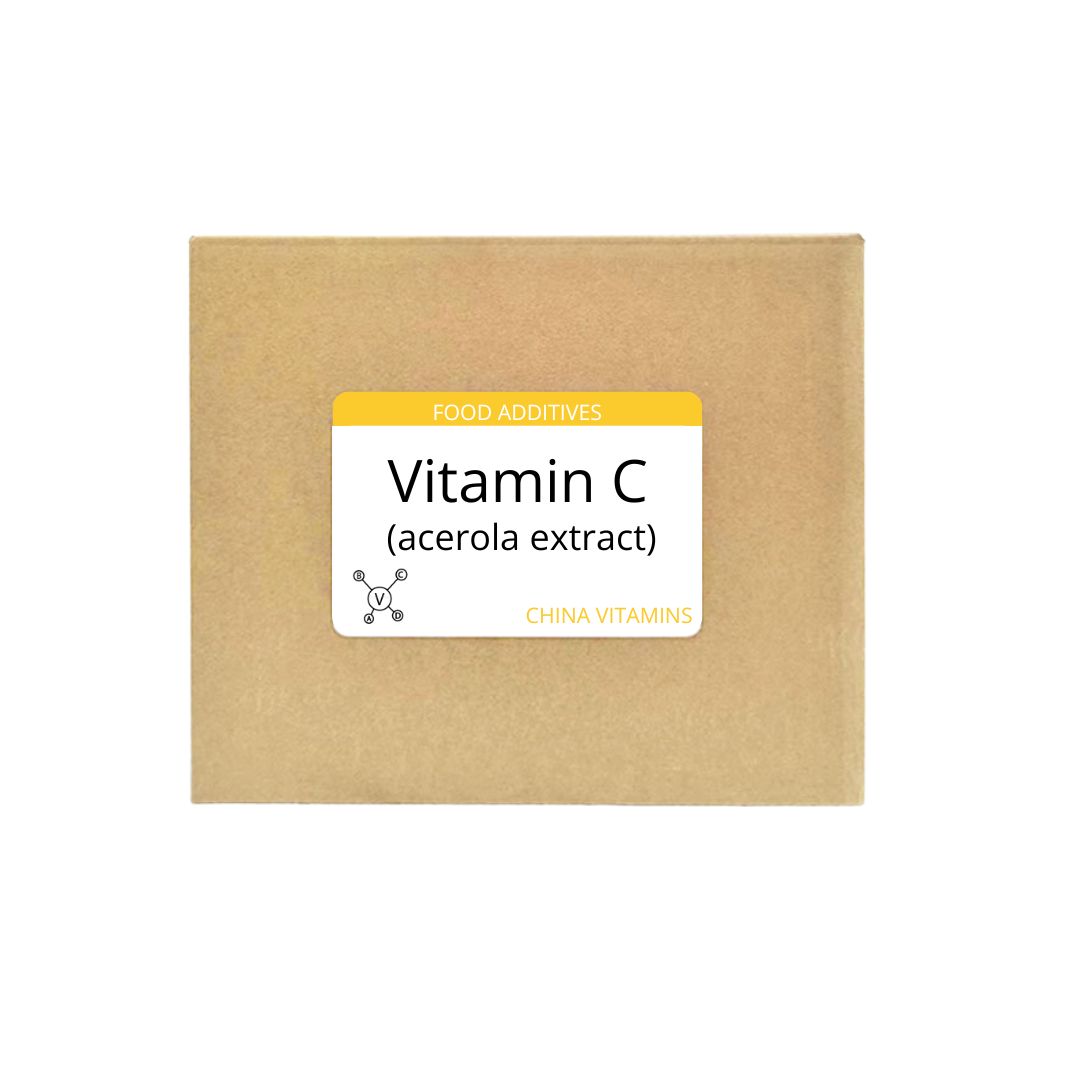
Vitamin C (acerola extract) is derived from the acerola cherry, also known as Malpighia emarginata, a fruit known for its exceptionally high vitamin C content [1]. The main component of this extract is ascorbic acid, a potent antioxidant and essential nutrient for human health [2]. Acerola extract is used in various applications, primarily as a natural source of vitamin C in food products, beverages, and dietary supplements [3]. It is also used in cosmetics for its antioxidant properties, which can help protect the skin from environmental damage [4].
Production Process
The production of vitamin C (acerola extract) typically involves several steps. First, the acerola cherries are harvested when they are still green, as their vitamin C content is highest at this stage [5]. The cherries are then processed to extract the juice, which is subsequently filtered and concentrated [6]. The concentrate is often spray-dried to produce a fine powder, which ensures stability and ease of use in various applications [7]. Throughout the process, measures are taken to preserve the vitamin C content, as ascorbic acid is sensitive to heat, light, and oxygen [8].
Application Scenarios
Vitamin C (acerola extract) finds applications across multiple industries. In the food and beverage sector, it is used as a natural preservative and antioxidant, preventing discoloration and extending the shelf life of products [9]. It is also added to fruit juices, smoothies, and fortified foods to increase their vitamin C content [10]. In the dietary supplement industry, acerola extract is a popular ingredient in vitamin C tablets, capsules, and powders, offering a natural alternative to synthetic ascorbic acid [11]. The cosmetic industry utilizes acerola extract in skincare products such as creams, lotions, and serums, capitalizing on its antioxidant and skin-brightening properties [12].
Packaging and Storage
Vitamin C (acerola extract) is typically packaged in airtight containers to protect it from moisture, light, and air, all of which can degrade the ascorbic acid content [13]. Recommended storage conditions include keeping the product in a cool, dry place, away from direct sunlight and heat [14]. Following these guidelines helps to maintain the quality and potency of the extract throughout its shelf life [15].
Citations
[1] Vijayalakshmi, D., & Ruckmani, K. (2016). Acerola, the Unsung Functional Food Fruit: A Review. Journal of Food Science and Technology, 53(4), 1297–1306.
[2] Institute of Medicine (US) Panel on Dietary Antioxidants and Related Compounds. (2000). Dietary Reference Intakes for Vitamin C, Vitamin E, Selenium, and Carotenoids. National Academies Press.
[3] Prakash, A., Baskaran, R., & Parija, S. (2018). Acerola Cherry: An Overview on Its Bioactive Compounds, Health Promoting Aspects and Processing Technologies. Food Reviews International, 34(6), 593–615.
[4] Telang, P. S. (2013). Vitamin C in Dermatology. Indian Dermatology Online Journal, 4(2), 143–146.
[5] Mezadri, T., Villano, D., Fernández-Pachón, M. S., García-Parrilla, M. C., & Troncoso, A. M. (2008). Carotenoids and Vitamin C Contents of Tunisian Malpighia emarginata DC. (Acerola) Fruits and Acerola Products. Food Chemistry, 107(4), 1679–1684.
[6] Hanamura, T., Hagiwara, T., & Kawagishi, H. (2006). Food Functionality of Acerola ( Malpighia emarginata DC.) Fruit. Breeding Science, 56(3), 249–256.
[7] Sá, A. G. A., Andrade, N. J., Santana, A. S., Silva, M. G., Maciel, M. I. S., & Rodrigues, S. (2011). Microencapsulation of Acerola Extract by Spray Drying: Characterization, Stability and Release. Journal of Microencapsulation, 28(7), 667–675.
[8] Linster, C. L., & Van Schaftingen, E. (2007). Vitamin C. The FEBS Journal, 274(1), 1–22.
[9] Dutra, I. S., Viana, T. V. A., Carvalho, C. W. P., & Silva, A. S. (2022). Acerola ( Malpighia emarginata DC.) as a Natural Antioxidant in Food Products: A Review. Food Chemistry, 384, 132524.
[10] Vendramini, A. L. A., & Trugo, L. C. (2000). Chemical Composition of Acerola Fruit ( Malpighia emarginata DC.) Cultivated in Brazil. Food Chemistry, 71(2), 195–198.
[11] Uchida, E., Takashima, M., Tomita, I., Arima, M., Mizuta, H., Takeda, Y., & Oani, I. (2011). Anti-inflammatory Action of Acerola ( Malpighia emarginata DC.) Fruit Extract on Carrageenan-Induced Inflammation in Rats. Bioscience, Biotechnology, and Biochemistry, 75(10), 1938–1941.
[12] Colucci, G., Dragoni, S., Piscopo, A., Pacifico, S., Novelino, E., & Monaco, P. (2018). Chemical Characterization and Anti-oxidant Activity of Extracts from Acerola ( Malpighia emarginata DC.) Residues. Journal of Functional Foods, 44, 360–368.
[13] Deutsch, J. C. (2019). Chemical Stability of Ascorbic Acid in Foods. Journal of Food Science, 54(4), 806–810.
[14] Food and Drug Administration. (2020). Requirements for Nutrient Content and Health Claims.
[15] Cort, W. M. (1982). Antioxidant Activity of Vitamin C. Advances in Food Research, 28, 273–364.

As the plant manager, I focus on the precise formulation and efficient production of food additives. We rigorously control the production process to ensure the quality and safety of each product, meeting industry standards. 🍴