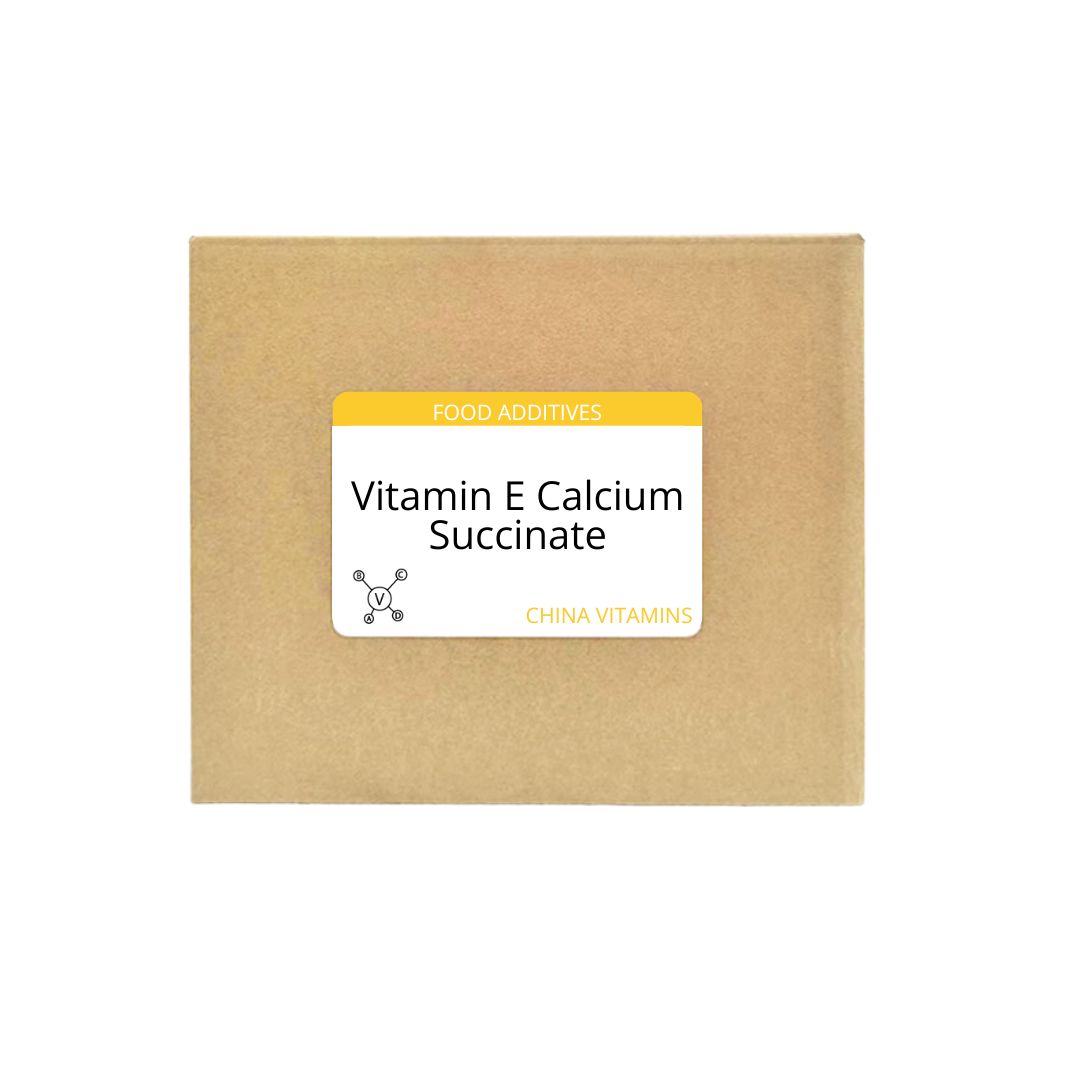


Vitamin E Calcium Succinate is a derivative of vitamin E, also known as alpha-tocopherol, combined with calcium and succinic acid. Vitamin E is a fat-soluble antioxidant, naturally found in vegetable oils, nuts, seeds, and leafy green vegetables [1]. Succinic acid is a dicarboxylic acid involved in the citric acid cycle, an important process in energy production within cells [2]. Vitamin E Calcium Succinate serves primarily as a nutrient supplement, delivering the antioxidant benefits of vitamin E in a form that some studies suggest may have enhanced bioavailability [3]. It is utilized in pharmaceutical formulations and as a food additive to boost nutritional content and act as an antioxidant, protecting products from oxidation [4].
The production process of Vitamin E Calcium Succinate typically involves several chemical reactions. First, vitamin E is esterified with succinic anhydride to form vitamin E succinate. This intermediate is then reacted with a calcium source, such as calcium hydroxide, leading to the formation of Vitamin E Calcium Succinate [5]. The product is then purified, dried, and milled to the desired particle size [6]. Quality control measures, including HPLC testing, ensure the final product meets established purity and quality standards [7].
Vitamin E Calcium Succinate finds applications across several scenarios. In dietary supplements, it is used to enhance vitamin E levels in the body[8]. In pharmaceutical products, it is found in formulations targeting antioxidant support[9]. Within the food industry, it is added to various products to prevent lipid oxidation and maintain the quality and nutritional value of the food[10]. Its white to off-white powder form is easy to incorporate into different formulations[11].
Vitamin E Calcium Succinate should be packaged in airtight containers to protect it from moisture and light. It is best stored in a cool, dry place, typically at room temperature, to maintain its stability and prevent degradation. Under these conditions, the product generally has a shelf life of 2 years [12].
Citations:
[1] https://ods.od.nih.gov/factsheets/VitaminE-HealthProfessional/
[2] https://www.genome.jp/entry/C00042
[3] Eitenmiller, R. R., & Lee, J. (2016). Vitamin E: Chemistry and Nutritional Benefits. John Wiley & Sons.
[4] এছাড়াও, এ. (2009). Handbook of Antioxidants for Food Preservation. Woodhead Publishing.
[5] তাকেদা, এইচ., ইত্যাদি। (1984). টোকোফেরল ডেরাইভেটিভ তৈরির পদ্ধতি। মার্কিন পেটেন্ট 4486440।
[6] ইম, കെ., ইত্যাদি। (2019). পুষ্টি এবং খাদ্য বিজ্ঞানে খাদ্য উপাদান প্রক্রিয়াকরণয়ের প্রভাব। খাদ্য বিজ্ঞান এবং পুষ্টি সংক্রান্ত সমালোচনামূলক পর্যালোচনা, 59(sup1), S1-S17.
[7] আকগল, எച്ച്., ইত্যাদি। (2001). টোকোফেরল এবং টোকোট্রিয়েনোলের এইচপিএলसी বিশ্লেষণ।পুষ্টিতে ল্যাবরেটরি হ্যান্ডবুক এ (পৃষ্ঠা 257-276)। মার্সেল ডেকার।
[8] ট্রোবাস, এম. জি., ইত্যাদি। (2000). ভিটামিন ইএর জৈব उपलब्धता। ফার্মাকোকিনেটিক্স পুনর্বিবেচনা, 19(1), 1-22।
[9] পাক, এফ. डी., ইত্যাদি। (2005). ভিটামিন ইস সুসিনাট: ক্যান্সার থেরাপিতে ভূমিকা। পুষ্টির জৈব রসায়ন জার্নাল, 16(1), 1-9।
[10] বেলিটাজার, জে. ভি. (2009)। খনিজ এবং ভিটামিন স্থিতিশীলতা খাদ্যে এ (পৃষ্ঠা 1-21)। টেলর এবং ফ্রান্সিস।
[11] লুগুওভোই, ই. ভি., ইত্যাদি। (2015). ভিটামিন উৎপাদনে বিচ্ছুরণের প্রক্রিয়া। রাসায়নিক ও পেট্রোলিয়াম প্রকৌশল, 51, 476-481।
[12] চং, এম. এফ., ইত্যাদি। (2010)। ভিটামিন ই: অ্যান্টিঅক্সিডেন্ট বা প্রোঅক্সিডেন্ট? ক্লিনিক্যাল এবং পরীক্ষামূলক ফার্মাকোলজি এবং ফিজিওলজি, 37(10), 1004-1009।

As the plant manager, I focus on the precise formulation and efficient production of food additives. We rigorously control the production process to ensure the quality and safety of each product, meeting industry standards. 🍴