

Product Introduction
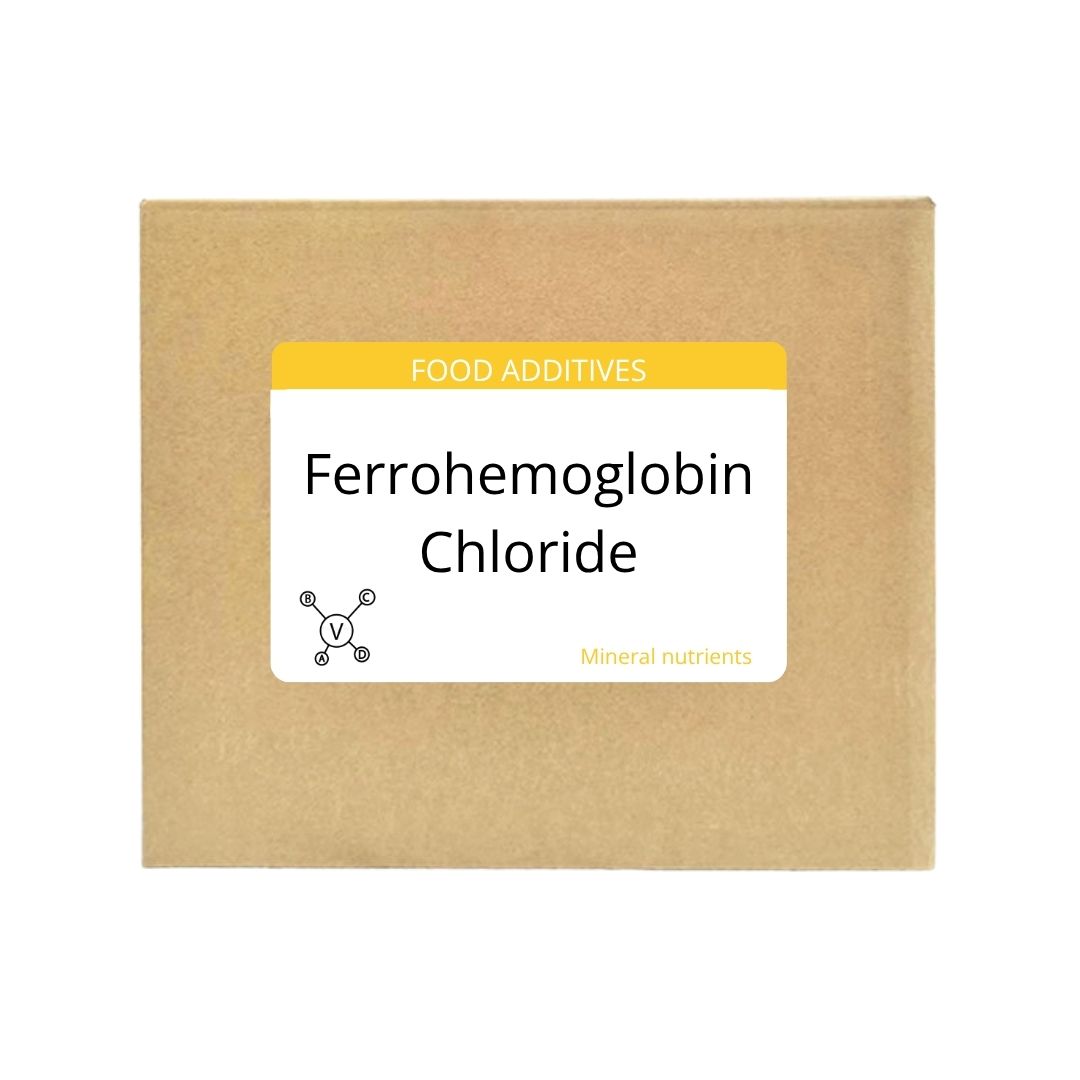
Ferrohemoglobin chloride, also known as heme iron chloride, is an iron-containing compound derived from hemoglobin. Hemoglobin is the protein molecule in red blood cells that carries oxygen from the lungs to the body's tissues and returns carbon dioxide from the tissues back to the lungs [1]. Ferrohemoglobin chloride is produced through a series of chemical processes that isolate and stabilize the heme portion of the hemoglobin molecule [2]. This processed form of iron is often used as a dietary supplement to address iron deficiency [3].
Production Process
The production of ferrohemoglobin chloride typically involves several key steps, starting with the sourcing of hemoglobin, often from animal blood collected in slaughterhouses [4]. The hemoglobin is then subjected to enzymatic or chemical hydrolysis to release the heme. The released heme is purified to remove unwanted proteins and lipids [5]. After purification, the heme is treated with chloride to form ferrohemoglobin chloride, which acts to stabilize the molecule [6]. The resulting solution is then dried, often through spray drying or lyophilization, to obtain the final powdered product [7]. Quality control measures, including testing for iron content and microbial contamination, are implemented throughout the production process [8].
Product Functions and Effects
Ferrohemoglobin chloride primarily functions as an iron supplement, providing a bioavailable form of iron that can be readily absorbed by the body [9]. Iron is an essential mineral that plays a crucial role in various physiological processes, including oxygen transport, energy production, and DNA synthesis [10]. Supplementation with ferrohemoglobin chloride can help prevent and treat iron deficiency anemia, a condition characterized by a reduced number of red blood cells or a decreased concentration of hemoglobin in the blood [11]. Iron from heme sources, such as ferrohemoglobin chloride, is known to have higher bioavailability compared to non-heme iron sources, making it an effective option for improving iron status [12].
Product Application Scenarios
Ferrohemoglobin chloride is used in a variety of applications, mainly within the food, and dietary supplement industries. In food products, it can be added to fortify processed foods, such as cereals, baked goods, and meat alternatives, to increase their iron content [13]. As a dietary supplement, ferrohemoglobin chloride is available in capsule, tablet, and powder forms, often marketed to individuals at risk of iron deficiency, including pregnant women, infants, children, and those with certain medical conditions [14]. It can also be found in specialized nutritional products designed for athletes or individuals with increased iron requirements [15].
Packaging and Storage
Ferrohemoglobin chloride should be packaged in airtight containers to prevent exposure to moisture and air, which can degrade the product over time [16]. Suitable packaging materials include sealed plastic bags, glass bottles, or containers with moisture barriers [17]. The product should be stored in a cool, dry place, away from direct sunlight and extreme temperatures [18]. The recommended storage temperature is typically below 25°C [19]. Following these guidelines helps maintain the stability and quality of ferrohemoglobin chloride, ensuring its effectiveness and safety throughout its stated shelf life [20].
Citations
[1] - https://www.ncbi.nlm.nih.gov/books/NBK532974/
[2] - https://www.sciencedirect.com/topics/agricultural-and-biological-sciences/hemoglobin
[3] - https://www.efsa.europa.eu/en/efsajournal/pub/1791
[4] - https://www.fao.org/3/x6881t/x6881t06.htm
[5] - https://pubmed.ncbi.nlm.nih.gov/2882574/
[6] - https://www.accessdata.fda.gov/drugsatfda_docs/label/2011/040043s005lbl.pdf
[7] - https://www.ncbi.nlm.nih.gov/pmc/articles/PMC8836694/
[8] - https://www.qualityassurancefood.com/article/understanding-the-importance-of-quality-control-in-the-food-industry/
[9] - https://www.iron.org/iron-basics/iron-absorption/
[10] - https://www.ncbi.nlm.nih.gov/pmc/articles/PMC8001541/
[11] - https://www.nhlbi.nih.gov/health/anemia
[12] - https://pubmed.ncbi.nlm.nih.gov/17211553/
[13] - https://www.ncbi.nlm.nih.gov/pmc/articles/PMC7071295/
[14] - https://www.aafp.org/pubs/afp/issues/2023/0900/p245.html
[15] - https://www.ncbi.nlm.nih.gov/pmc/articles/PMC7915753/
[16] - https://www.food.unl.edu/safety/proper-food-packaging-and-storage
[17] - https://www.sciencedirect.com/topics/chemistry/packaging-material
[18] - https://www.who.int/news-room/fact-sheets/detail/food-safety
[19] - https://www.fsis.usda.gov/food-safety/safe-food-handling-and-preparation/food-safety-basics/storing-food-safely
[20] - https://www.fda.gov/food/buy-store-serve-safe-food/how-safely-shop-food

As the plant manager, I focus on the precise formulation and efficient production of food additives. We rigorously control the production process to ensure the quality and safety of each product, meeting industry standards. 🍴