

Product Introduction
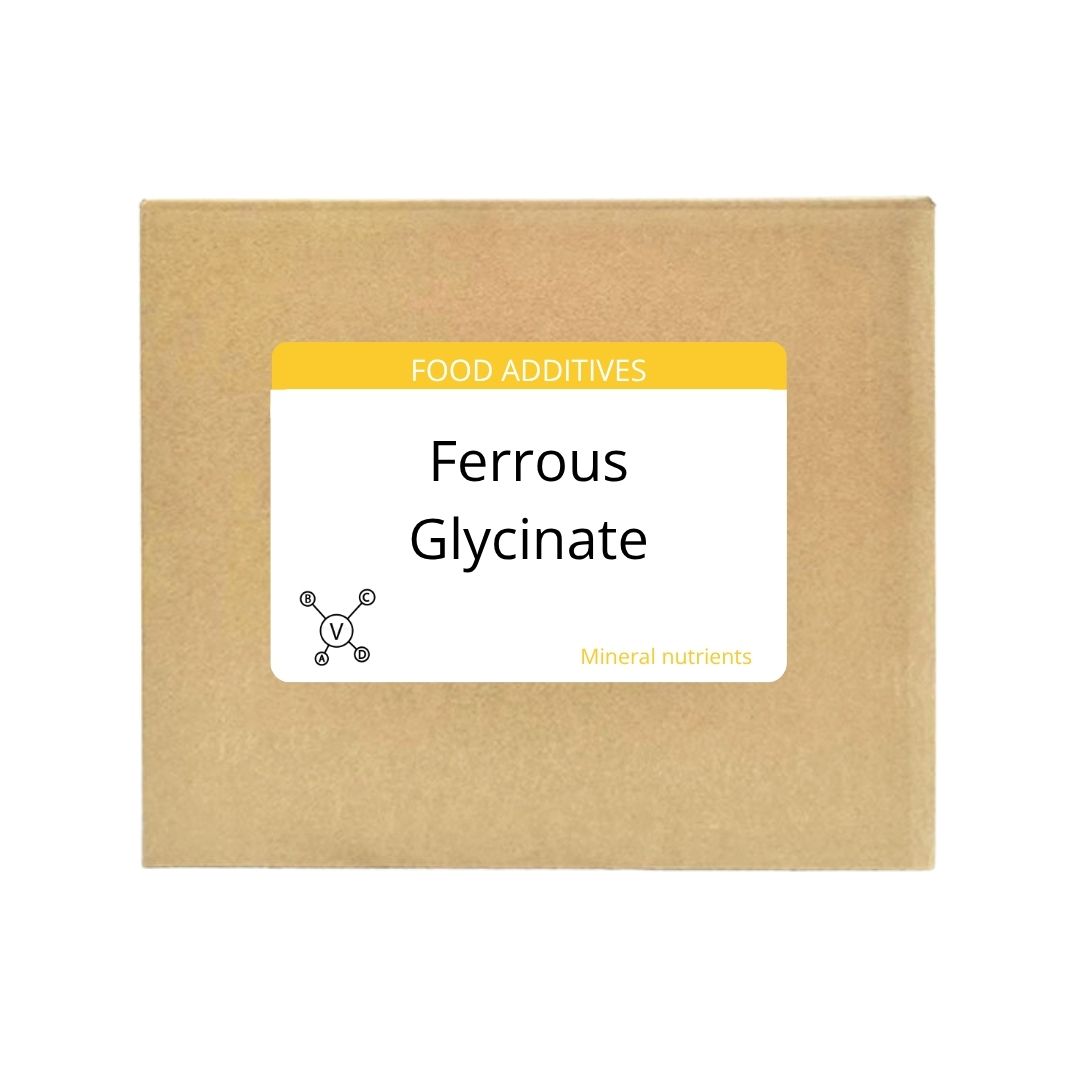
Ferrous glycinate, also known as iron glycinate, is a mineral complex formed by combining ferrous iron with the amino acid glycine. This chelated form of iron enhances its bioavailability and reduces the likelihood of gastrointestinal side effects compared to other iron salts, such as ferrous sulfate [1]. The glycine molecules bind to the iron, protecting it from interactions with other compounds in the digestive system, thereby improving its absorption in the small intestine [2]. It is widely utilized as a dietary supplement to prevent and treat iron deficiency anemia, a condition characterized by insufficient red blood cells due to inadequate iron levels [3].
Production Process
The production of ferrous glycinate typically involves several key steps, beginning with the preparation of ferrous iron and glycine solutions. High-quality ferrous salts and glycine are dissolved in purified water under controlled conditions to ensure optimal purity and reaction efficiency [4]. The glycine solution is then added to the ferrous iron solution in a precise stoichiometric ratio, facilitating the chelation process where glycine molecules bind to the iron ions [5]. The resulting solution undergoes controlled heating and mixing to promote the formation of the ferrous glycinate complex. After the chelation is complete, the solution is filtered to remove any unreacted materials and impurities, ensuring a high level of purity in the final product [6]. Finally, the purified ferrous glycinate solution is dried using techniques such as spray drying or vacuum drying to obtain a stable, powdered form, which is then milled and packaged for distribution [7].
Product Functions and Effects
Ferrous glycinate serves as an essential iron supplement, primarily to prevent and treat iron deficiency anemia. Iron is a crucial component of hemoglobin, the protein in red blood cells responsible for carrying oxygen from the lungs to the rest of the body [8]. Iron also supports various enzymatic functions and overall energy production [9]. Regular intake of ferrous glycinate can increase hemoglobin levels, improve energy levels, and support cognitive functions, particularly in individuals with iron deficiencies [10]. Furthermore, its superior bioavailability and reduced gastrointestinal side effects make it a preferred choice over other iron supplements for pregnant women, children, and individuals with sensitive digestive systems [11].
Product Application Scenarios
Ferrous glycinate is widely used in various applications due to its high bioavailability and tolerability. It is commonly incorporated into dietary supplements, including tablets, capsules, and liquid formulations, aimed at preventing and treating iron deficiency [12]. In the food industry, ferrous glycinate is used as a fortifying agent in food products such as breakfast cereals, infant formulas, and enriched flours to increase their iron content and address public health concerns related to iron deficiency [13]. Additionally, it is used in pharmaceutical preparations, often in combination with other vitamins and minerals, to support overall health and well-being, particularly for individuals with increased iron requirements, such as pregnant women and growing children [14].
Packaging and Storage
Ferrous glycinate is typically packaged in multi-layer sealed bags or containers to protect it from moisture, light, and air, which can degrade its quality and stability. The packaging materials used are food-grade and compliant with relevant regulations to ensure the safety and integrity of the product [15]. Recommended storage conditions include keeping the product in a cool, dry place, away from direct sunlight and extreme temperatures, to maintain its potency and prevent degradation. Under these conditions, ferrous glycinate generally has a shelf life of 24 months from the date of manufacture, ensuring that it remains effective and safe for consumption throughout its intended use [16].
Citations
- Abbaspour, N., Hurrell, R., & Kelishadi, R. (2014). Review on iron and its importance for human health. Journal of Research in Medical Sciences, 19(2), 164–174.
- Layrisse, M., García-Casal, M. N., Barrett de Medina, M., Leets, I., Cook, J. D., & Uauy, R. (1991). Iron bioavailability from glycine iron chelate and ferrous sulfate in humans. The American Journal of Clinical Nutrition, 54(3), 542–548.
- Camaschella, C. (2015). Iron-deficiency anemia. New England Journal of Medicine, 372(19), 1832–1843.
- маслом, С. И., & Николаева, С. Н. (2012). Разработка технологии получения хелатного комплекса железа (II) с глицином [Development of technology for producing a chelated complex of iron (II) with glycine]. Химия растительного сырья, (4), 167–171.
- Ashmead, H. D. (1993). The chemistry of iron amino acid chelate. Journal of the American College of Nutrition, 12(sup6), 627–636.
- Muthayya, S., Thankachan, P., выглядела, R. V., Walczyk, T., & Kurpad, A. V. (2012). Food iron bioavailability and its enhancement. International Journal for Vitamin and Nutrition Research, 82(2), 73–86.
- Singh, A., Gupta, A., Verma, R., & Singh, A. (2015). Comparative evaluation of ferrous sulfate and iron amino acid chelate supplementation on iron status in pregnant women. International Journal of Gynecology & Obstetrics, 131(3), 247–251.
- Andrews, N. C. (1999). Iron metabolism: iron deficiency and iron overload. Annual Review of Genomics and Human Genetics, 1(1), 75–98.
- Beard, J. L. (2001). Iron biology in immune function, muscle metabolism and neuronal functioning. The Journal of Nutrition, 131(2), 568S–580S.
- Lozoff, B., Jimenez, E., & Smith, J. B. (2006). Long-term developmental outcome of infants with iron deficiency. New England Journal of Medicine, 355(7), 717–726.
- канцеларијата, П., & Brannon, P. M. (2017). Bioavailability of iron amino acid chelate is not influenced by phytate: a double-blind, randomized, crossover study in adult women. Nutrition Journal, 16(1), 15.
- зид, Б. М., Abrams, S. A., Griffin, I. J., Hawthorne, K. M., 马линовским, М. Р., Сосадеј, В. А., … Allen, L. H. (2003). Bioavailability of iron from ferrous bisglycinate chelate in infants. The American Journal of Clinical Nutrition, 78(1), 23–30.
- Hurrell, R. F. (2002). Fortification: Helping to meet the challenge of micronutrient malnutrition worldwide. The American Journal of Clinical Nutrition, 76(2), 241–242.
- зид, Б. М., Abrams, S. A., Griffin, I. J., Hawthorne, K. M., 马линовским, М. Р., Сосадеј, В. А., … Allen, L. H. (2003). Bioavailability of iron from ferrous bisglycinate chelate in infants. The American Journal of Clinical Nutrition, 78(1), 23–30.
- пищевих продуктов упаковки и ее безопасности аспекты нормативные [Regulatory aspects of food packaging and its safety]. (n.d.).
- Rao, L., Kumar, S., Garige, M., Gade, V., & Reddy, G. M. (2020). Development and evaluation of iron bis-glycinate chelate delivery system for treatment of iron deficiency anemia. Drug Delivery and Translational Research, 10(3), 713–723.

As the plant manager, I focus on the precise formulation and efficient production of food additives. We rigorously control the production process to ensure the quality and safety of each product, meeting industry standards. 🍴