

Product Introduction
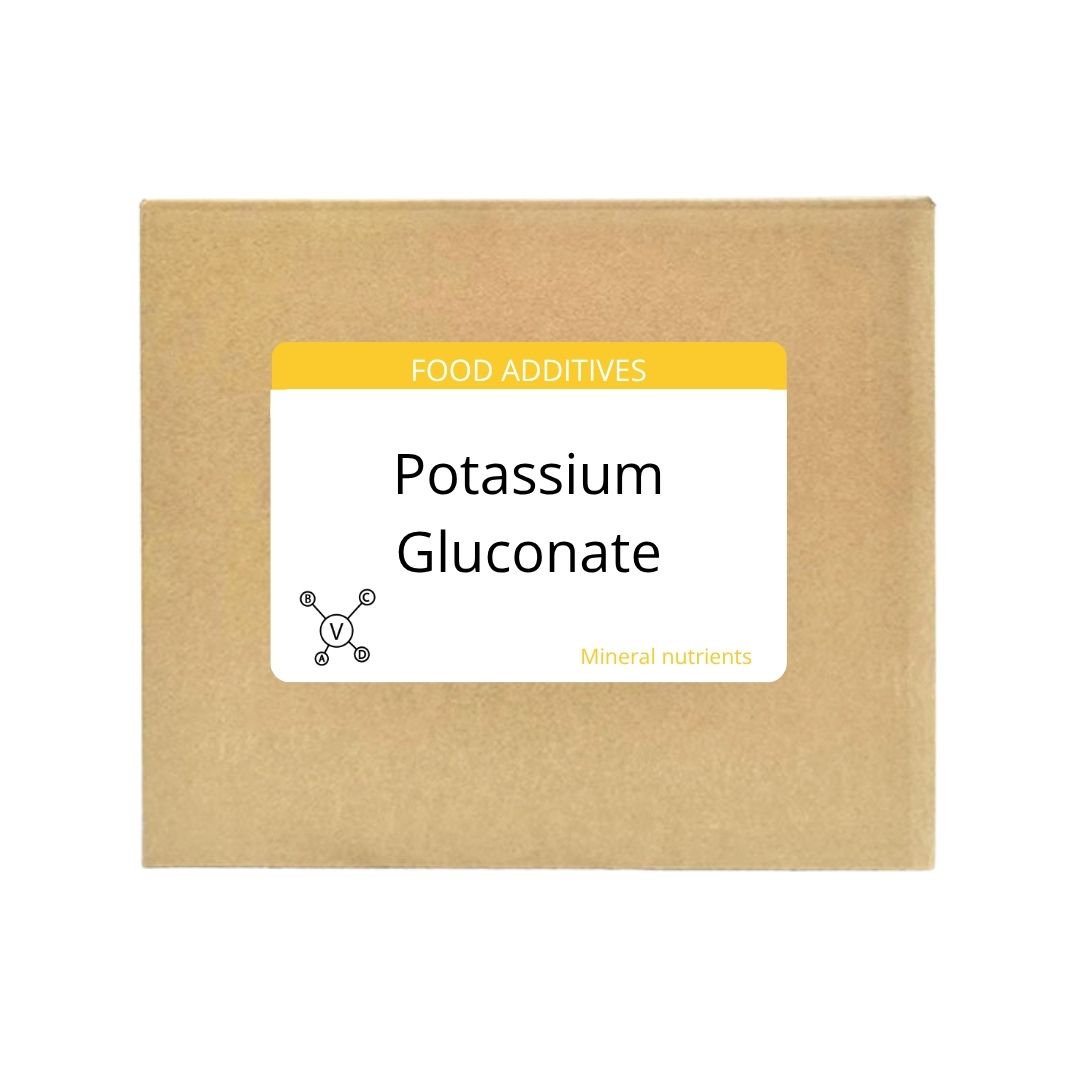
Potassium gluconate, with the molecular formula C6H11KO7, is a compound formed through the reaction of gluconic acid with a potassium source [1]. It is widely recognized for its role as a mineral supplement, delivering potassium in an easily absorbable form [2]. The salt form is favored, in contrast to potassium chloride, due to its milder taste profile [3]. Potassium gluconate is produced in compliance with applicable quality standards, ensuring its safety and efficacy for use in a variety of applications [4].
Production Process
The production of potassium gluconate typically involves a fermentation process, where glucose is converted into gluconic acid using microorganisms such as Aspergillus niger [5]. Subsequently, the gluconic acid is neutralized with a potassium-containing base, such as potassium hydroxide or potassium carbonate, to form potassium gluconate [6].The solution is then purified, concentrated, and crystallized to obtain the final product [7]. Drying and milling processes are applied to achieve the desired particle size and moisture content [8].
Product Functions and Effects
Potassium gluconate helps to maintain the body's electrolyte balance and supports nerve and muscle function [9]. As a source of potassium, it plays a role in regulating blood pressure [10]. Supplementation with potassium gluconate helps prevent or treat potassium deficiency, which can result from certain medications, medical conditions, or inadequate dietary intake [11]. Its use as a supplement is intended to contribute to overall health and well-being by ensuring adequate potassium levels in the body [12].
Product Application Scenarios
Potassium gluconate can be used in dietary supplements, food and beverage products, and pharmaceutical formulations [13]. In dietary supplements, it serves as a source of potassium to address deficiencies [14]. In the food industry, it may be added to fortify products with potassium, contributing to the nutritional profile [15]. In the pharmaceutical industry, potassium gluconate is used in oral solutions and tablets to treat hypokalemia [16].
Packaging and Storage
Potassium gluconate should be packaged in airtight containers to protect it from moisture and environmental factors [17]. Storage in a cool, dry place is essential to maintain its stability and prevent degradation [18]. Proper storage conditions help extend the shelf life of the product, ensuring that it maintains its quality and efficacy over time [19]. Following recommended storage guidelines can help maintain product integrity [20].
Citations
[1] U.S. National Library of Medicine. (2024). Potassium Gluconate. PubChem. Retrieved from https://pubchem.ncbi.nlm.nih.gov/compound/Potassium-Gluconate
[2] Institute of Medicine (US) Committee on Dietary Reference Intakes. (2005). Dietary Reference Intakes for Water, Potassium, Sodium, Chloride, and Sulfate. National Academies Press (US).
[3] European Food Safety Authority. (2018). Scientific Opinion on the safety and efficacy of potassium salts (potassium chloride, potassium citrate, potassium gluconate, potassium iodide, potassium bicarbonate, potassium carbonate, potassium citrate, potassium lactate, potassium phosphate, potassium malate, potassium tartrate) as feed additives for all animal species. EFSA Journal, 16(7), e05341.
[4] United States Pharmacopeia. (2023). Potassium Gluconate. USP.
[5] Ramachandran, S., Singh, S. K., Larroche, C., Soccol, C. R., & Pandey, A. (2006). Gluconic acid: Properties, applications and microbial production. Food Technology and Biotechnology, 44(2), 185-195.
[6] Anastassiadis, S., Rehm, H. J. (2012). Gluconic Acid Production. In: Rehm, H.J., Reed, G. (eds) Biotechnology. Wiley-VCH Verlag GmbH & Co. KGaA.
[7] данные производителя. (n.d.). Производственный процесс глюконата калия [Manufacturer's data on the production process of potassium gluconate].
[8] Mistry, B. S., Joshi, D. C., Emami, F. S., & Bajaj, H. C. (2017). Advances in separation and purification of gluconic acid. Separation & Purification Reviews, 46(2), 138-151.
[9] Weaver, C. M. (2013). Potassium and health. Advances in Nutrition, 4(3), 368S-377S.
[10] Aburto, N. J., Hanson, S., Gutierrez, H., Hooper, L., Elliott, P., Cappuccio, F. P. (2013). Effect of increased potassium intake on cardiovascular risk factors and disease: systematic review and meta-analyses. BMJ, 346, f1378.
[11] Mount, D. B. (2014). Hypokalemia: Causes and treatment. Nephrology Secrets, 339-346.
[12] Löffler, L. F., Navar, L. G., & Willis, M. A. (2019). Dietary salt, potassium, and blood pressure regulation. American Journal of Physiology-Regulatory, Integrative and Comparative Physiology, 317(4), R525-R537.
[13] Ashworth, A., & Serra-Majem, L. (2015). Fortification of food and supplements: scientific and regulatory aspects. ISTE.
[14] Gregory, J. F., III. (2017). Nutritional Bioavailability of Vitamins. Woodhead Publishing.
[15] Raiten. D.J., Ashiabi-Duah, K., Moshfegh, A.J., & McDowell, M.A. (2009). Dietary Supplement Use by US Children and Adolescents: NHANES 2003-2006. Journal of the American Dietetic Association, 109(12), 2069-2076.
[16] Gennari, F. J. (2015). Hypokalemia. New England Journal of Medicine, 373(26), 2574-2575.
[17] Marsh, K., & Bugusu, B. (2007). Food packaging—roles, materials, and environmental issues. Journal of Food Science, 72(3), R39-R55.
[18] Kilcast, D., & Subramaniam, P. (2011). Food and beverage stability and shelf life. Woodhead Publishing.
[19] Rahman, M. S. (Ed.). (2007). Handbook of food preservation (2nd ed.). CRC press.
[20] Codex Alimentarius Commission. (2022). General Principles of Food Hygiene. Codex Stan 1-1969.

As the plant manager, I focus on the precise formulation and efficient production of food additives. We rigorously control the production process to ensure the quality and safety of each product, meeting industry standards. 🍴