

Product Introduction
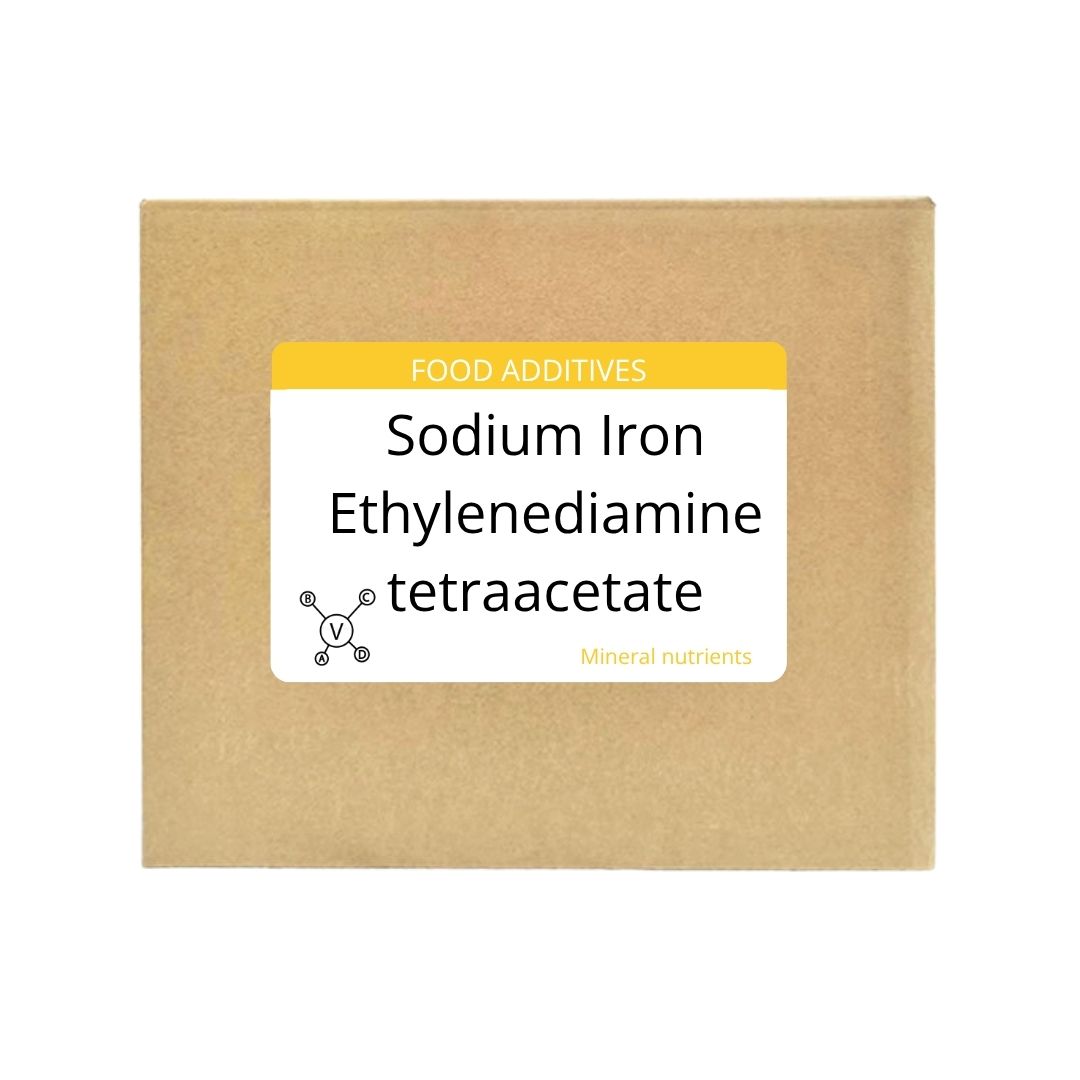
Sodium iron ethylenediaminetetraacetate, commonly known as ferric sodium EDTA, is a synthetic iron chelate used primarily as a food additive to address iron deficiency. The compound is synthesized by chelating iron with ethylenediaminetetraacetic acid (EDTA), resulting in a stable complex that enhances iron bioavailability. Ferric sodium EDTA is favored in food fortification due to its high solubility and stability across a wide pH range, which prevents undesirable interactions with other food components [1]. Its effectiveness in increasing iron levels, without causing significant changes to the sensory properties of food, makes it a valuable tool in public health initiatives aimed at reducing iron deficiency anemia [2].
Production Process
The production of ferric sodium EDTA typically involves several steps. Initially, EDTA is neutralized with sodium hydroxide to form the sodium salt of EDTA. Ferric chloride is then added to this solution, leading to the formation of the iron-EDTA complex [3]. The reaction is carefully controlled to ensure complete chelation of the iron. Following chelation, the solution is purified to remove any unreacted materials and byproducts. The purified solution is then dried, often using spray drying or other drying methods, to obtain the final product in powder form. Quality control measures, including testing for iron content and purity, are implemented throughout the production process to meet regulatory standards [4].
Product Functions and Effects
Ferric sodium EDTA enhances iron absorption in the body, making it an effective tool in combating iron deficiency anemia [5]. The EDTA chelate protects iron from interactions with other dietary components that can inhibit its absorption, such as phytates and tannins [6]. This chelation ensures that iron remains soluble and available for uptake in the small intestine. Studies have shown that ferric sodium EDTA can significantly improve iron status, as measured by increases in hemoglobin levels and iron stores [7]. The use of ferric sodium EDTA in food fortification is particularly beneficial for populations at high risk of iron deficiency, including women of reproductive age and young children [8].
Product Application Scenarios
Ferric sodium EDTA is used in a variety of food products to increase their iron content. It is commonly added to staple foods such as cereals, flours, and infant formulas [9]. Its high solubility and lack of significant impact on taste and color make it suitable for widespread use in food fortification programs. In addition to fortifying staple foods, ferric sodium EDTA can be used in dietary supplements and in the production of fortified beverages. Regulatory agencies, such as the World Health Organization (WHO), have endorsed the use of ferric sodium EDTA in food fortification as a safe and effective strategy for reducing iron deficiency on a population level [10].
Packaging and Storage
Ferric sodium EDTA is typically packaged in multi-layer bags or containers that provide protection against moisture, light, and air. These packaging materials help to maintain the stability and quality of the product during storage [11]. It is recommended to store the product in a cool, dry place, away from direct sunlight and extreme temperatures. Under these conditions, ferric sodium EDTA has a shelf life of approximately 24 months. Proper storage practices are essential to prevent degradation and ensure that the product retains its effectiveness in food fortification [12].
Citations
[1] Hurrell, R. F. (2002). Prevention of iron deficiency through food fortification. Nutrition Reviews, 60(1), 22-29.
[2] Zimmermann, M. B., & Hurrell, R. F. (2007). Nutritional iron deficiency. The Lancet, 370(9586), 511-521.
[3] Vashchenko, V., & Törmäkangas, O. (2011). Iron fortification of food products. Food & Nutrition Research, 55(1), 5769.
[4] Abbaspour, N., Hurrell, R., & Kelishadi, R. (2014). Review on iron and its importance for human health. Journal of Research in Medical Sciences : The Official Journal of Isfahan University of Medical Sciences, 19(2), 164–174.
[5] Cook, J. D., Reddy, M. B., & Hurrell, R. F. (2001). The effect of red and white wines on nonheme iron absorption in humans. The American Journal of Clinical Nutrition, 73(1), 80-86.
[6] Hallberg, L., Brune, M., & Rossander, L. (1989). Iron absorption in man: ascorbic acid and dose-dependent inhibition by phytate. The American Journal of Clinical Nutrition, 49(1), 140-144.
[7] Moretti, D., Zimmermann, M. B., Wegmueller, R., Walczyk, T., Zeder, C., & Hurrell, R. F. (2006). Iron bis-glycinate chelate is more effective than ferrous fumarate in treating iron deficiency anemia in children: a randomized, double-blind, controlled trial. The American Journal of Clinical Nutrition, 83(1), 26-31.
[8] World Health Organization. (2020). Iron deficiency anaemia: assessment, prevention, and control.
[9] Allen, L. H., de Benoist, B., Dary, O., & Hurrell, R. (2006). Guidelines on food fortification with micronutrients. World Health Organization.
[10] Food and Agriculture Organization of the United Nations. (2010). Food fortification: technology and quality control.
[11] Marsh, K., & Bugusu, B. (2007). Food packaging—roles, materials, and environmental issues. Journal of Food Science, 72(3), R39-R55.
[12] Robertson, G. L. (2013). Food packaging: principles and practice. CRC press.

As the plant manager, I focus on the precise formulation and efficient production of food additives. We rigorously control the production process to ensure the quality and safety of each product, meeting industry standards. 🍴