

Product Introduction
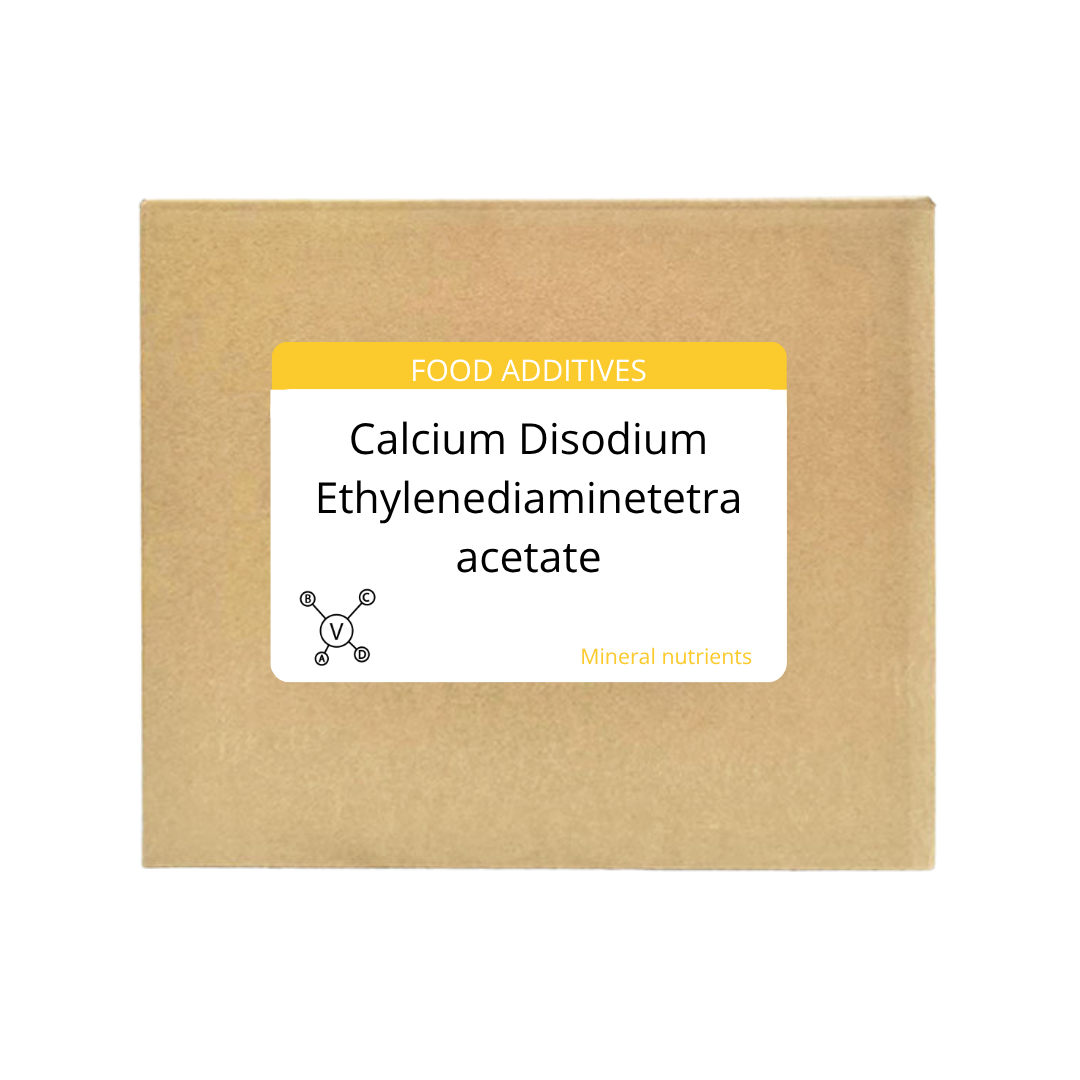
Calcium disodium ethylenediaminetetraacetate, commonly known as Calcium Disodium EDTA, is a synthetic food additive. It is derived from ethylenediaminetetraacetic acid (EDTA), and its primary function is to act as a preservative. [1] Calcium Disodium EDTA is used to prevent spoilage and maintain the color and flavor of various food products. It functions by binding to metal ions that can cause discoloration, rancidity, or other forms of degradation in food.
Production Process
The production of Calcium Disodium EDTA involves several chemical reactions. First, ethylenediamine is reacted with formaldehyde and sodium cyanide to produce EDTA. [2] The EDTA is then reacted with calcium chloride and sodium hydroxide to form Calcium Disodium EDTA. This process ensures that the final product is safe and effective for its intended use in food. Final product testing is performed to verify purity, quality, and compliance with regulatory standards, ensuring it is food-grade.
Product Efficacy and Function
Calcium Disodium EDTA is effective in preventing metal-catalyzed oxidation reactions. By sequestering metal ions like iron and copper, it inhibits these ions from participating in reactions that degrade food quality. This helps to maintain the original color, flavor, and texture of food products, extending their shelf life. [3] Furthermore, it is a water-soluble ingredient, which makes it easy to incorporate into various food formulations.
Product Application Scenarios
Calcium Disodium EDTA is used in a wide range of food applications. It is commonly found in canned vegetables, where it prevents discoloration and maintains the natural color of the vegetables. [4] It is also used in salad dressings, sauces, and mayonnaise to prevent rancidity and flavor loss. Additionally, it is utilized in processed fruits and beverages to preserve their appearance and taste.
Packaging and Storage
Calcium Disodium EDTA is typically packaged in multi-layer paper bags with polyethylene liners or in fiber drums to prevent contamination and moisture absorption. It should be stored in a cool, dry, and well-ventilated area, away from direct sunlight, heat, and incompatible substances. Proper storage conditions help to maintain its stability and efficacy over its shelf life, ensuring it performs as intended when used in food products.
Citations
- U.S. Food and Drug Administration. "Additional Information about EDTA in Food." FDA, https://www.fda.gov/food/food-additives-petitions/additional-information-about-edta-food.
- National Center for Biotechnology Information (NCBI). "Ethylenediaminetetraacetic acid." PubChem Compound Summary, https://pubchem.ncbi.nlm.nih.gov/compound/Ethylenediaminetetraacetic-acid.
- Liaquat, A., et al. "Ethylenediaminetetraacetic acid (EDTA) in food products: Uses, concerns and detoxification strategies." Critical Reviews in Food Science and Nutrition, 2021, https://doi.org/10.1080/10408398.2021.1981819
- Downs Scientific. "Calcium Disodium EDTA." Downs Scientific, https://www.downs scientific.com/products/calcium-disodium-edta.

As the plant manager, I focus on the precise formulation and efficient production of food additives. We rigorously control the production process to ensure the quality and safety of each product, meeting industry standards. 🍴