

Product Introduction
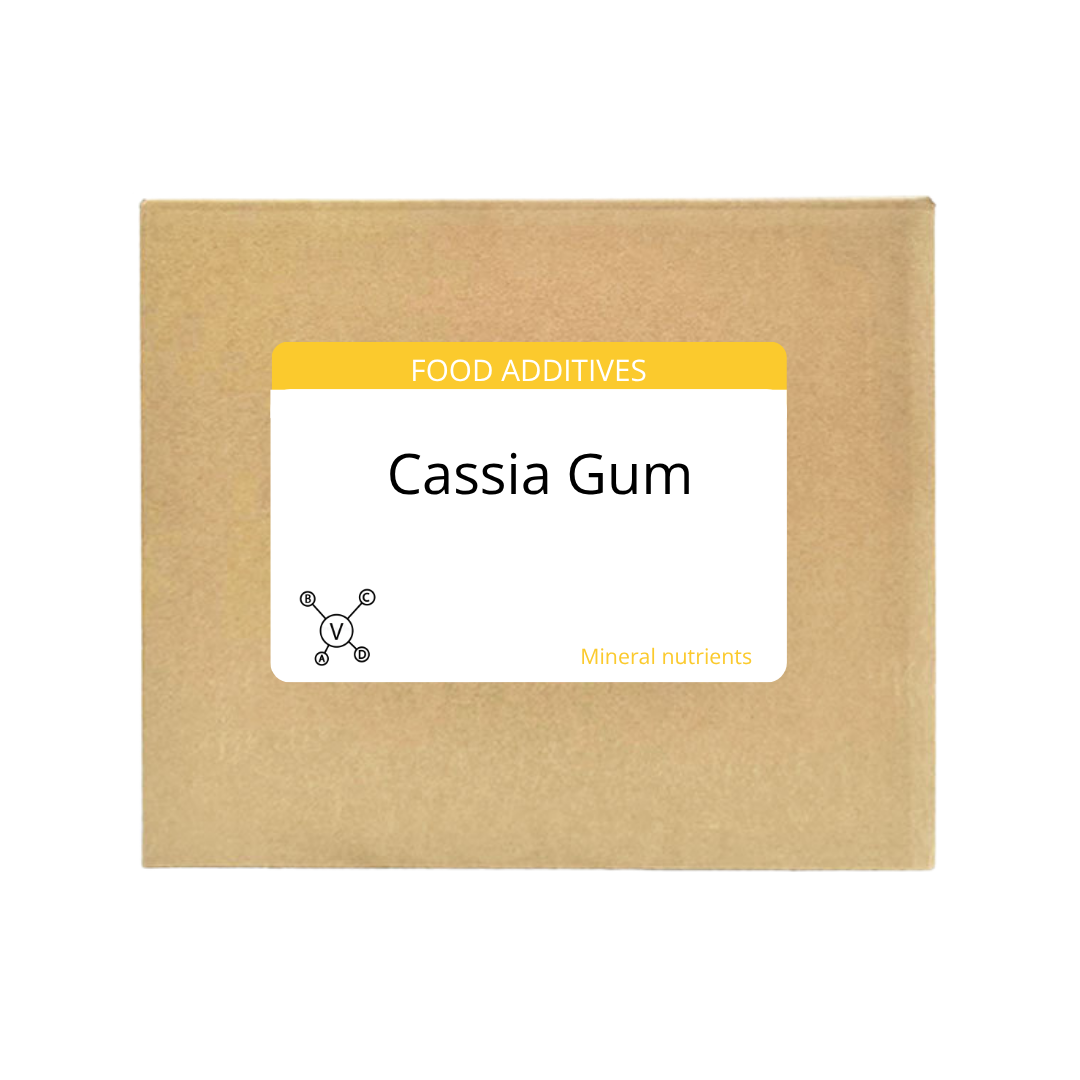
Cassia gum is a polysaccharide galactomannan, derived from the endosperm of cassia seeds, specifically Cassia tora or Cassia obtusifolia. It mainly consists of high molecular weight polysaccharides composed of galactose and mannose. This product functions primarily as a thickening agent, texturizer, and stabilizer in various food applications [1].
Production Process
The production of cassia gum typically involves several key steps. First, the cassia seeds are dehusked and milled to separate the endosperm. The endosperm is then subjected to grinding and purification processes to isolate the galactomannan-rich fraction. Further processing, which includes dissolving the material is water, filtration, and drying, yields the final cassia gum product. Quality control measures ensure the gum meets the required purity and viscosity standards [2].
Product Efficacy and Function
Cassia gum improves the texture and stability of food products, contributing to a better mouthfeel and preventing syneresis. It exhibits synergistic effects when used in combination with other hydrocolloids, such as carrageenan and xanthan gum, enhancing gel strength and thermal stability. Additionally, it provides binding properties in food formulations [3].
Product Application Scenarios
Cassia gum is widely employed in the food industry due to its versatile properties. It is commonly used in pet foods, canned meats, dairy products, and bakery items. As a stabilizer, it prevents the separation of components in emulsions and suspensions and it also functions as a gelling agent in desserts and processed foods [4].
Packaging and Storage
Cassia gum should be packaged in airtight containers to protect it from moisture and contamination. Store in cool, dry, and well-ventilated conditions to maintain its quality, prevent clumping, and extend its shelf life. Follow the manufacturer’s guidelines for specific storage recommendations.
Citations
[1] Yadav, D. N., & Johnston, J. W. (2020). Novel galactomannans from Cassia tora and C. obtusifolia seeds: A critical review. Food Hydrocolloids, 100, 105412.
[2] Sharma, V., & Tomar, S. K. (2022). Cassia tora gum: extraction, structural features, modifications and potential applications in food and other industries. International Journal of Biological Macromolecules, 223, 1373-1386.
[3] Li, Y., et al. (2021). Synergistic gelation of cassia gum and κ-carrageenan: Rheological properties and microstructure. Food Chemistry, 344, 128663.
[4] Mudgil, D., Barak, S., & Khatkar, B. S. (2014). Guar gum: processing, properties and food applications—A review. Journal of Food Science and Technology, 51, 409-418.

As the plant manager, I focus on the precise formulation and efficient production of food additives. We rigorously control the production process to ensure the quality and safety of each product, meeting industry standards. 🍴