

Product Introduction
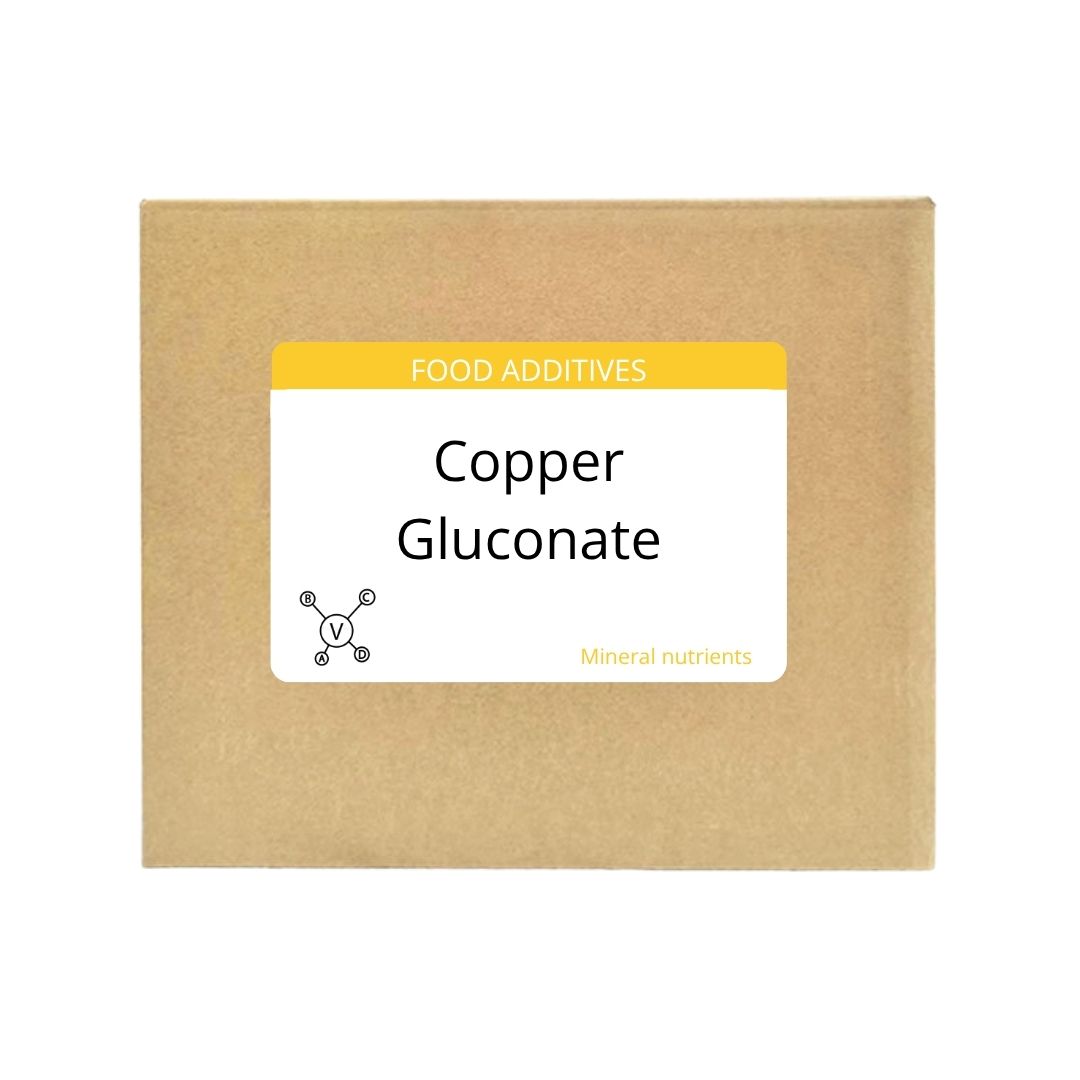
Copper gluconate is a copper salt of gluconic acid, produced by the reaction of gluconic acid with a copper source, such as copper carbonate or copper oxide [1]. This compound is favored in nutritional supplements and pharmaceutical formulations because of its bioavailability compared to other copper salts [2]. Copper is an essential trace element. It plays a crucial role in various physiological processes, including the formation of red blood cells, bone, and connective tissue, and it is also important for several enzyme systems [3].
Production Process
The production of copper gluconate generally involves several key steps. First, gluconic acid is produced through the fermentation of glucose, typically using microorganisms such as Aspergillus niger [4]. The resulting gluconic acid solution is then purified and reacted with a copper source like copper carbonate or copper oxide [5]. The reaction is carefully controlled to ensure the formation of copper gluconate with the desired purity and yield [6]. The final product is then crystallized, filtered, and dried to obtain the copper gluconate powder [7].
Product Functions and Effects
Copper gluconate serves primarily as a source of copper, an essential micronutrient. Copper is vital for the proper functioning of numerous enzymes, including ceruloplasmin, which is involved in iron metabolism, and cytochrome c oxidase, which is essential for energy production [8]. Copper also supports the development and maintenance of bone and connective tissue through its role in collagen and elastin synthesis [9]. Additionally, copper is important for the proper function of the nervous system and the production of melanin, which provides pigmentation for the skin and hair [10].
Product Application Scenarios
Copper gluconate is widely used in dietary supplements, often found in multivitamin and mineral formulations [11]. It is also used in the fortification of food products to increase their copper content, addressing potential deficiencies in the population [12]. In pharmaceutical applications, copper gluconate may be included in formulations designed to treat or prevent copper deficiency, which can occur in certain medical conditions or due to specific medications [13]. Furthermore, it can be found in some cosmetic products due to its potential antioxidant properties and role in maintaining skin health [14].
Packaging and Storage
Copper gluconate should be packaged in airtight containers to prevent exposure to moisture and air, which can degrade the product [15]. It is recommended to store the product in a cool, dry place, away from direct sunlight and extreme temperatures [16]. Under proper storage conditions, copper gluconate typically has a shelf life of 24 months, ensuring its quality and efficacy are maintained over time [17].
Citations
- এছাড়াওএছাড়াও আরো কিকিছু আছে, Ullmann's Encyclopedia of Industrial Chemistry. Weinheim: Wiley-VCH.
- Lönnerdal, B. (2000). Bioavailability of copper. The American Journal of Clinical Nutrition, 71(4), 1062s-1066s.
- ন্যাশনাল ইন্সটিটিউট অফ হেলথ (NIH). (n.d.). Copper - Health Professional Fact Sheet.
- Anastassiadis, S., Rehm, H. J. (2006). Gluconic acid production. Biotechnology Set, 6, 2819-2827.
- ঐ
- এছাড়াওএছাড়াও আরো কিকিছু আছে, Kirk-Othmer Encyclopedia of Chemical Technology. John Wiley & Sons, Inc.
- ঐ
- Osredkar, J., & Jeras, M. (2005). Copper and zinc, biological role and significance of copper/zinc imbalance. Journal of Trace Elements in Medicine and Biology, 19(1), 21-28.
- Milgrom, C., Atar, D., Carter, J. H., Finsen, V., Gurevich, M., Kanders, F., … & Stein, H. (1988). Copper and bone. Metabolism, 37(5), 448-452.
- Prota, G. (1988). Recent advances in the chemistry of melanogenesis. Journal of Investigative Dermatology, 91(6), 124s-127s.
- Office of Dietary Supplements - Copper. (n.d.).
- খাদ্য এবং কৃষি সংস্থা (FAO). (2001). Human vitamin and mineral requirements: Report of a joint FAO/WHO expert consultation, Bangkok, Thailand.
- Brewer, G. J. (2009). Copper toxicity in the general population. Clinical and Translational Science, 2(6), 420-422.
- Lupi, O., et al. (2014). Antioxidants and skin. Clinics in Dermatology, 32(5), 603-611.
- United States Pharmacopeia. USP 38-NF 33. Rockville, MD: United States Pharmacopeial Convention.
- European Medicines Agency. (2019). Guideline on stability testing: Stability testing of existing active substances and related finished products.
- খাদ্য রসায়ন কোডেক্স। (2018). Copper Gluconate.

As the plant manager, I focus on the precise formulation and efficient production of food additives. We rigorously control the production process to ensure the quality and safety of each product, meeting industry standards. 🍴