

Product Introduction
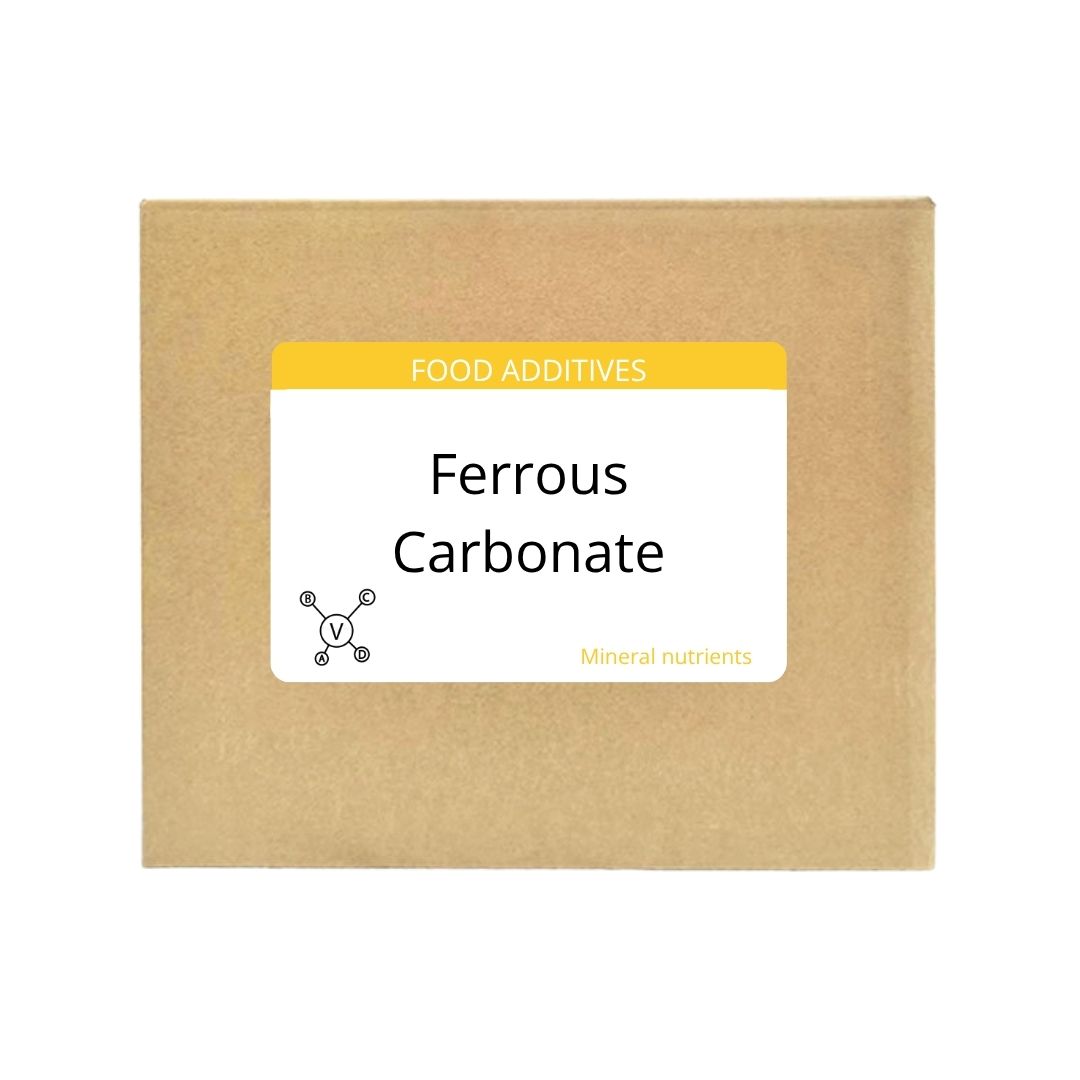
Ferrous carbonate, also known as siderite, is an inorganic compound with the chemical formula FeCO3. It naturally occurs as a mineral and is one of several iron-containing compounds used in various industrial and nutritional applications. The compound consists of iron cations (Fe2+) and carbonate anions (CO32-). Ferrous carbonate appears as a brownish-yellow powder, is sparingly soluble in water, and dissolves in acidic solutions. This compound is often considered as a source of iron in dietary supplements and animal feeds.
Production Process
Ferrous carbonate is produced through a chemical reaction between a ferrous salt solution and a carbonate salt solution. Manufacturers typically start with a solution of ferrous sulfate (FeSO4), which they then react with a solution of sodium carbonate (Na2CO3) or potassium carbonate (K2CO3). This reaction results in the precipitation of ferrous carbonate as a solid.
The chemical equation for this reaction, using sodium carbonate, is:
FeSO4(aq) + Na2CO3(aq) → FeCO3(s) + Na2SO4(aq)
Following precipitation, the solid ferrous carbonate is collected through filtration, then carefully washed to remove any residual sodium sulfate and other impurities. The washed ferrous carbonate is then dried under controlled conditions to remove moisture while preventing oxidation of the ferrous iron (Fe2+) to ferric iron (Fe3+). Finally, the dried ferrous carbonate is milled to achieve the desired particle size and packaged for various applications.
Product Functions and Effects
Ferrous carbonate serves primarily as a source of iron, an essential micronutrient involved in numerous physiological processes. Iron is a key component of hemoglobin, the protein in red blood cells responsible for carrying oxygen from the lungs to the rest of the body [1]. Additionally, iron is a component of myoglobin, which helps store oxygen in muscle cells [1].
Iron is also a cofactor for many enzymes involved in energy production and metabolism [2]. Adequate iron intake is crucial for preventing iron deficiency anemia, a condition characterized by fatigue, weakness, and impaired cognitive function [3]. Ferrous carbonate, when used as a dietary supplement or food additive, helps maintain healthy iron levels, supporting overall health and vitality.
Product Application Scenarios
Ferrous carbonate is utilized in several application scenarios, mainly focusing on its iron-supplementing properties. In the food industry, it serves as an iron fortifier in various food products, including breakfast cereals, flour, and infant formulas [4]. Its inclusion helps address iron deficiencies in populations with inadequate dietary intake.
In animal feed, ferrous carbonate is added to provide supplemental iron for livestock and poultry [5]. This ensures proper growth, development, and overall health of the animals. Additionally, ferrous carbonate finds use in certain pharmaceutical applications as an iron supplement to treat or prevent iron deficiency anemia [6].
Packaging and Storage
Ferrous carbonate is typically packaged in multi-layer paper bags with polyethylene liners. Also available are fiber drums, ensuring protection from moisture, air, and light. Proper packaging is essential to maintain the stability and prevent oxidation of the ferrous iron.
It should be stored in a cool, dry, and well-ventilated area, away from direct sunlight and incompatible substances like strong oxidizing agents [7]. Maintaining these storage conditions helps prolong the shelf life of the product and ensures its quality and effectiveness over time.
Citations
[1] Abbaspour, N., Hurrell, R., & Kelishadi, R. (2014). Review on iron and its importance for human health. Journal of Research in Medical Sciences, 19(2), 164–174.
[2] Beard, J. L. (2001). Iron biology in immune function, muscle metabolism and neuronal functioning. The American Journal of Clinical Nutrition, 73(3), 146S–158S.
[3] Iron Deficiency Anemia - NHLBI - NIH. (n.d.). Retrieved from https://www.nhlbi.nih.gov/health/iron-deficiency-anemia
[4] Hurrell, R. F. (2002). Prevention of iron deficiency through food fortification. Nutrition Reviews, 60(suppl 5), S20–S22.
[5] Spears, J. W. (2003). Trace mineral bioavailability and interactions in ruminant animals. Asian-Australasian Journal of Animal Sciences, 16(5), 791–801.
[6] Tolkien, Z. A., et al. (2015). Ferrous sulfate supplementation causes significant gastrointestinal side effects: a systematic review and meta-analysis. PLoS ONE, 10(2), e0117383.
[7] MSDS:Ferrous Carbonate. Retrieved from [Insert relevant MSDS source here]

As the plant manager, I focus on the precise formulation and efficient production of food additives. We rigorously control the production process to ensure the quality and safety of each product, meeting industry standards. 🍴