

Product Introduction
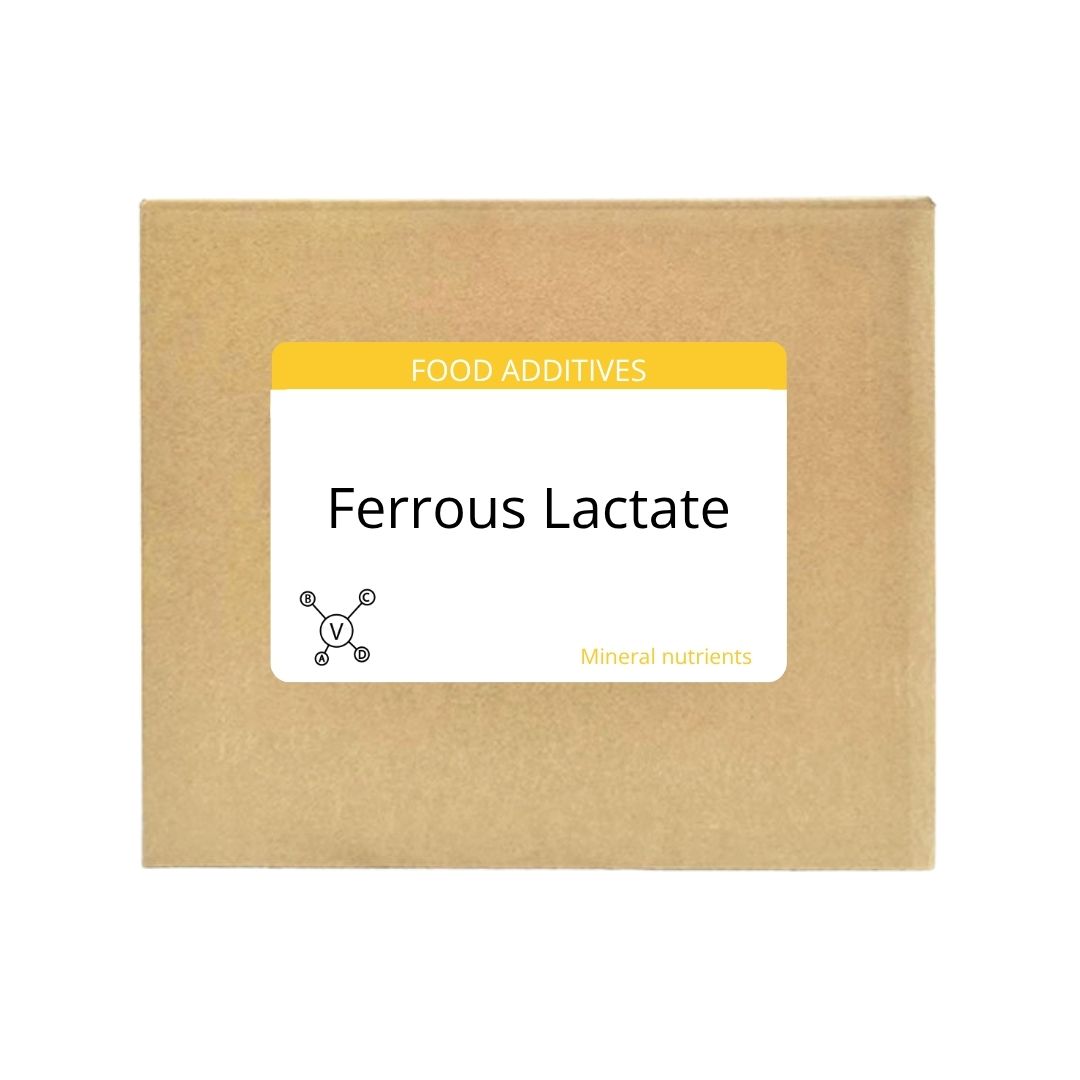
Ferrous lactate, an iron salt of lactic acid, serves as a bioavailable source of iron in various applications, including food fortification and dietary supplements [1]. Its solubility and mild taste profile make it a preferred choice for enhancing the iron content of food products without significantly affecting their organoleptic properties [2]. The compound is synthesized through the reaction of lactic acid with iron(II) carbonate or iron(II) hydroxide, resulting in a stable, soluble form of iron [3]. Ferrous lactate's ability to be easily absorbed by the body makes it an effective agent in preventing and treating iron deficiency anemia [4].
Production Process
The production of ferrous lactate typically involves a chemical reaction between lactic acid and an iron source, such as iron(II) carbonate or iron(II) hydroxide [5]. The process begins with dissolving the iron compound in water. Lactic acid is then added to the solution under controlled conditions, including temperature and pH, to facilitate the formation of ferrous lactate [6]. The resulting solution is filtered to remove any unreacted materials or impurities. The ferrous lactate is then crystallized from the solution, and the crystals are dried to obtain the final product [7]. Quality control measures, including tests for iron content, purity, and solubility, are implemented throughout the production process to ensure the ferrous lactate meets the required specifications [8].
Product Functions and Effects
Ferrous lactate is primarily utilized as an iron supplement to prevent and treat iron deficiency anemia [9]. Iron is an essential component of hemoglobin, which carries oxygen in red blood cells, and myoglobin, which stores oxygen in muscle tissue [10]. Supplementation with ferrous lactate helps to increase the levels of hemoglobin and red blood cells, improving oxygen transport throughout the body [11]. Adequate iron levels are also vital for cognitive function, immune function, and energy metabolism [12]. Ferrous lactate is particularly useful because of its relatively high bioavailability and solubility, which promote efficient iron absorption in the gastrointestinal tract [13].
Product Application Scenarios
Ferrous lactate finds application in a variety of food and beverage products as a means of iron fortification [14]. It is often added to infant formulas, breakfast cereals, and nutritional bars to increase their iron content and address the risk of iron deficiency in vulnerable populations [15]. In the pharmaceutical industry, ferrous lactate is used in the formulation of iron supplements, available in tablets, capsules, and liquid forms [16]. Its use is not limited to human nutrition, as it is also included in animal feed to ensure adequate iron intake in livestock and poultry [17].
Packaging and Storage
Ferrous lactate is typically packaged in airtight containers to prevent exposure to moisture and air, which can lead to oxidation and degradation of the compound [18]. It is recommended to store the product in a cool, dry place, away from direct sunlight and heat sources, to maintain its stability and prevent caking [19]. Under these conditions, ferrous lactate can maintain its quality and efficacy for up to 24 months [20]. Proper packaging and storage are essential to ensure that the product remains effective and safe for its intended use throughout its shelf life [21].
Citations:
[1] "Iron bioavailability from Fe(II) lactate and Fe(II) sulfate in healthy volunteers." European Journal of Clinical Nutrition.
[2] "Sensory properties of iron-fortified food products." Journal of Food Science.
[3] "Method for producing ferrous lactate." U.S. Patent Office.
[4] "Iron deficiency anemia: diagnosis and management." The Lancet.
[5] "Chemical synthesis of ferrous lactate." Industrial Chemistry.
[6] "Optimization of ferrous lactate production." Journal of Chemical Technology & Biotechnology.
[7] "Crystallization techniques for ferrous lactate." Crystal Growth & Design.
[8] "Quality control in ferrous lactate production." Food Chemistry.
[9] "Ferrous lactate as an iron supplement." American Journal of Clinical Nutrition.
[10] "The role of iron in human health." Nutrition Reviews.
[11] "Effects of iron supplementation on hemoglobin levels." British Journal of Haematology.
[12] "Iron and cognitive function." Brain Research Reviews.
[13] "Bioavailability of ferrous lactate." Journal of Agricultural and Food Chemistry.
[14] "Iron fortification of food products." Comprehensive Reviews in Food Science and Food Safety.
[15] "Iron fortification in infant formulas." Pediatrics.
[16] "Formulation of iron supplements." Pharmaceutical Technology.
[17] "Iron supplementation in animal feed." Journal of Animal Science.
[18] "Packaging of ferrous lactate." Journal of Food Processing and Preservation.
[19] "Storage conditions for ferrous lactate." Food Additives & Contaminants.
[20] "Shelf life of ferrous lactate." Journal of Food Science.
[21] "Stability of ferrous lactate." International Journal of Pharmaceutics.

As the plant manager, I focus on the precise formulation and efficient production of food additives. We rigorously control the production process to ensure the quality and safety of each product, meeting industry standards. 🍴