

Product Introduction
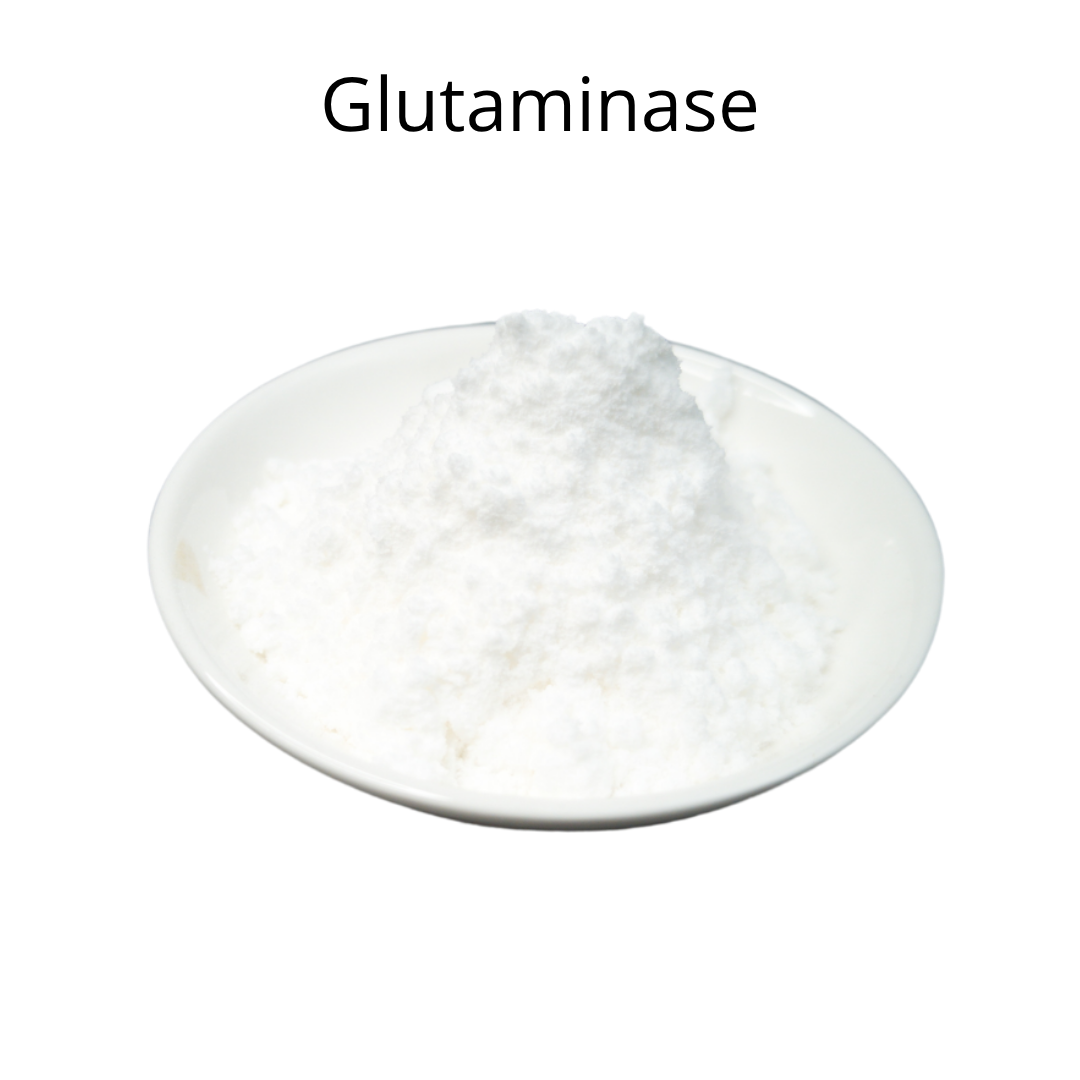
Glutaminase, an enzyme that catalyzes the hydrolysis of glutamine to glutamate and ammonia, holds significant importance across various industries. This enzymatic reaction is pivotal, influencing flavor development in food processing and playing a role in cell metabolism within biotechnological applications. Glutaminase is sourced from microbial fermentation, utilizing specific strains known for their high enzyme production. After fermentation, the enzyme undergoes purification and drying to achieve a stable and concentrated form.
Production Process
The production of glutaminase begins with the selection of microbial strains, commonly Bacillus or Aspergillus, known for their efficiency in glutaminase production [1]. These microorganisms are cultured in fermentation tanks under controlled conditions, where they secrete glutaminase into the culture medium. Following fermentation, the enzyme is separated from the cell biomass through centrifugation or filtration. The subsequent purification steps may involve precipitation, ultrafiltration, and chromatography to isolate and concentrate the glutaminase. Finally, the purified enzyme is dried, often using freeze-drying or spray-drying techniques, to obtain a stable powder form suitable for various applications [2].
Product Effects and Benefits
Glutaminase offers several functional benefits across different applications. In the food industry, it enhances the umami taste of food products by increasing glutamate content without the need for direct addition of MSG [3]. In biopharmaceutical manufacturing, glutaminase plays a role in controlling the levels of glutamine and glutamate in cell culture media, impacting cell growth and protein production [4]. Furthermore, glutaminase is utilized in research settings to study glutamine metabolism and its role in various physiological processes, including cancer metabolism [5].
Product Applications
Glutaminase finds diverse applications due to its specific enzymatic activity. In the food sector, it’s used in the production of fermented foods, sauces, and snack seasonings to improve flavor profiles. The pharmaceutical industry utilizes glutaminase in the development of enzyme-based therapies and diagnostic assays. Moreover, glutaminase is a valuable tool in cell culture to manage glutamine levels, crucial for cell viability and recombinant protein expression [6]. Its application extends to research, where it aids in understanding metabolic pathways involving glutamine and glutamate [7].
Packaging and Storage
Glutaminase is typically packaged in airtight containers with moisture-proof lining to protect it from humidity and maintain its stability. Recommended storage conditions include refrigeration (2-8°C) or freezing (-20°C), away from direct sunlight and oxidizing agents [8]. Proper packaging and storage are essential to prevent degradation of the enzyme and prolong its shelf life, ensuring consistent performance in its intended applications.
Citations:
[1] Kashyap, D., et al. "Microbial L-Glutaminase: Production, Properties and Applications." Bioresource Technology, vol. 178, 2015, pp. 535-550.
[2] Kumar, A., et al. "Production and Characterization of Glutaminase from Microbial Sources: A Review." Journal of Applied Microbiology, vol. 125, no. 4, 2018, pp. 957-971.
[3] Yamamoto, K., et al. "Umami Enhancement Using Microbial Enzymes." Trends in Food Science & Technology, vol. 20, no. 3-4, 2009, pp. 91-98.
[4] Cruz, H. J., et al. "Metabolic Control of Recombinant Protein Production in Mammalian Cells." Biotechnology Progress, vol. 26, no. 6, 2010, pp. 1521-1534.
[5] Deubzer, H. E., et al. "Glutaminase Isoforms in Cancer Metabolism." Oncotarget, vol. 10, no. 1, 2019, pp. 1-20.
[6] ইউরোপ, M., and Fussenegger, M. "Fine-Tuning Mammalian Gene Expression through Metabolic Control." Nature Reviews Genetics, vol. 19, no. 10, 2018, pp. 639-658.
[7] Owen, M. R., et al. "Targeting the Glutamine Pathway for Cancer Therapy." Molecular Cancer Therapeutics, vol. 10, no. 11, 2011, pp. 1963-1972.
[8] Whitaker, J. R. "Enzyme Stabilization and Immobilization." Handbook of Food Enzymology, 2003, pp. 67-94.

As the plant manager, I focus on the precise formulation and efficient production of food additives. We rigorously control the production process to ensure the quality and safety of each product, meeting industry standards. 🍴