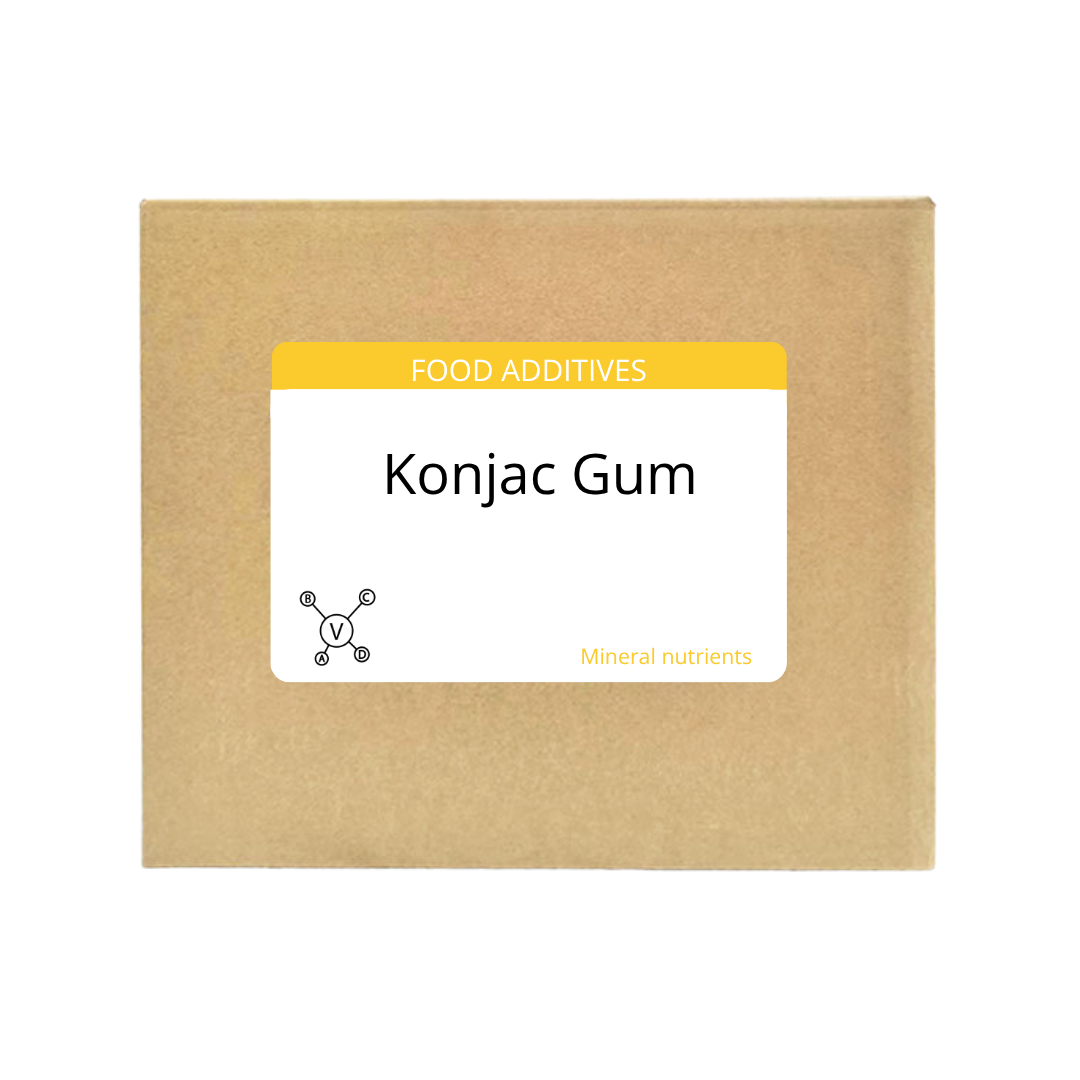


Konjac gum, also known as glucomannan, is a polysaccharide derived from the root of the konjac plant (Amorphophallus konjac). It is composed primarily of mannose and glucose units. Konjac gum is widely used in the food industry as a thickener, stabilizer, and gelling agent due to its ability to absorb water and form a viscous solution [1].
The production process of konjac gum involves several steps. First, the konjac roots are harvested, cleaned, and sliced. These slices are then dried and milled into a coarse powder. The glucomannan is extracted from the powder using water or alcohol. The extract is then purified, dried, and ground into a fine powder [2].
Konjac gum exhibits several beneficial functions. It has a high water-holding capacity, which contributes to its thickening and gelling properties. It is also a soluble fiber, which can promote satiety and regulate blood sugar levels [3]. Some studies suggest it may also contribute to cholesterol reduction [4].
Konjac gum finds application in a variety of food products. It is used in noodles, such as shirataki noodles, to provide a low-calorie alternative to traditional noodles. It is also used in desserts, jellies, and beverages to improve texture and stability. Furthermore, it can be found in vegan products as a substitute for gelatin [5].
Konjac gum should be packaged in airtight containers to prevent moisture absorption. It is essential to store it in a cool, dry, and ventilated environment, away from direct sunlight and heat. Under these conditions, the shelf life of konjac gum is typically 24 months [6].
Citations:
[1] Odenigbo, V. U., & Anyalogbu, E. A. (2020). Konjac Glucomannan: A Review on its physicochemical, nutritional and health properties. International Journal of Food Science and Nutrition, 5(5), 92-99.
[2] Chauhan, E. S., & Nayan Kumar, G. (2021). Konjac glucomannan: Processing, characterization and applications–A review. International Journal of Biological Macromolecules, 193, 1627-1637.
[3] Keithley, J. K., Swanson, B., Mikus, C., Tillman, M. D., DeLany, J. P., Horn, W., … & Vuksan, V. (2013). Glucomannan and obesity: a critical review. Alternative therapies in health and medicine, 19(6), 33.
[4] Sood, N., Baker, W. L., Coleman, C. I. (2008). Effect of glucomannan on plasma lipid and glucose concentrations, body weight, and blood pressure: systematic review and meta-analysis. American Journal of Clinical Nutrition, 88(4), 1167-1175.
[5] Chen, H. L., Cheng, H. C., Wu, W. T., Liu, Y. J., & Chu, S. C. (2006). Supplementation of konjac glucomannan into a low-fiber Chinese diet promoted bowel movement and improved colonic ecology in constipated adults. Journal of the American College of Nutrition, 25(1), 75-82.
[6] Information obtained from multiple suppliers' product specifications and safety data sheets for konjac gum.

As the plant manager, I focus on the precise formulation and efficient production of food additives. We rigorously control the production process to ensure the quality and safety of each product, meeting industry standards. 🍴