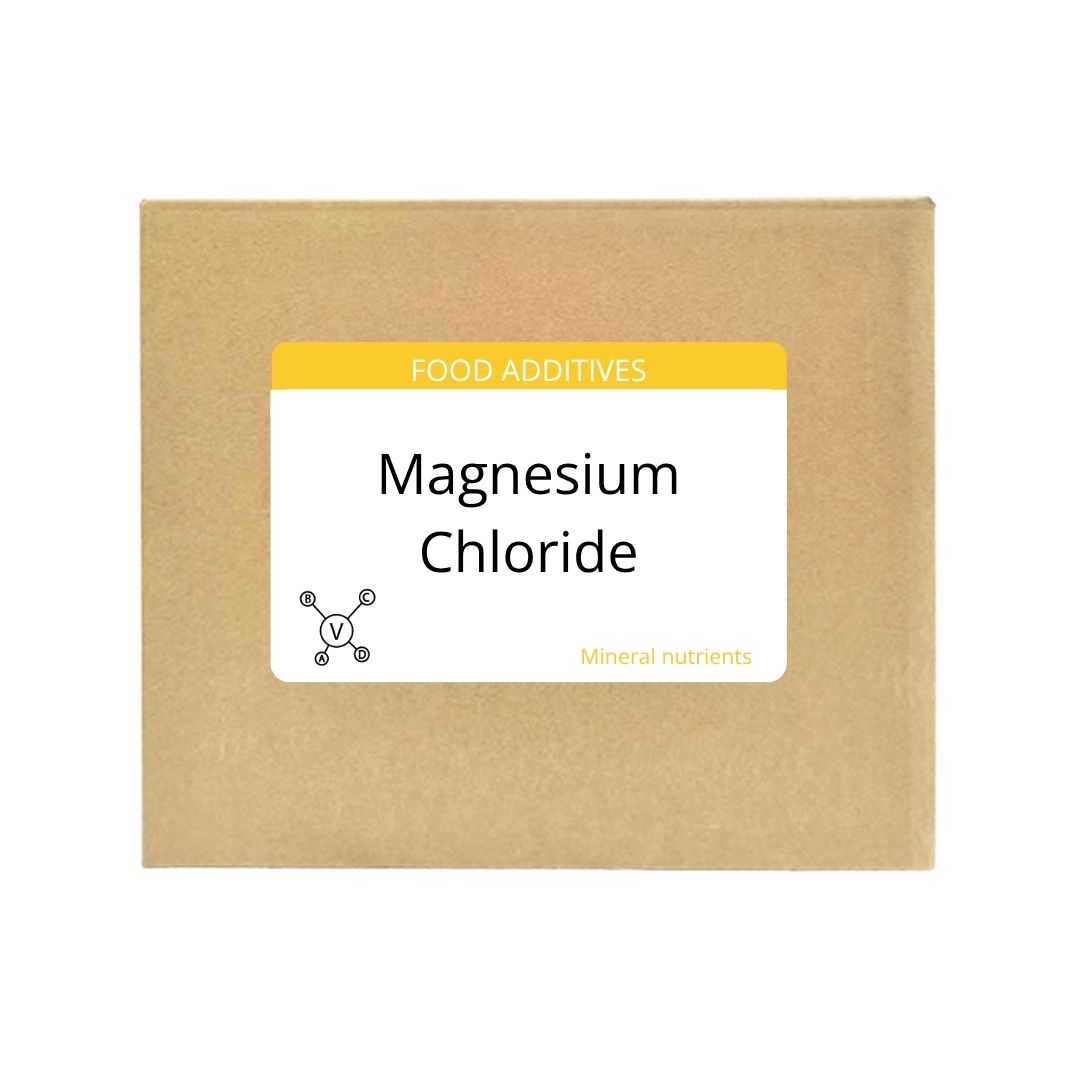


Magnesium chloride, commonly known as E511 in the food industry, is an inorganic salt with the chemical formula MgCl2. It typically appears as white flakes or a crystalline powder. It is often used for its properties as a food additive and protein stabilizer.
Magnesium chloride is produced through several methods, including extracting it from seawater, brine wells, and naturally occurring minerals such as carnallite. The extraction process generally involves evaporation and purification steps to isolate the magnesium chloride from other salts and impurities. Further processing, such as drying and milling, is conducted, to achieve the desired form and particle size.
As a food additive, magnesium chloride functions as a firming agent and flavor enhancer. It helps maintain the texture of processed foods and contributes a slightly bitter taste. It also plays a role in stabilizing proteins, preventing their denaturation during food processing and storage, enhancing the shelf life and quality of food products.
Magnesium chloride finds application in various food products, including tofu production, where it acts as a coagulant. It is used in the production of some dairy products and processed vegetables to improve texture and firmness. It is also employed in brewing to adjust water chemistry, which affects fermentation and the final flavor profile of beer [1].
Magnesium chloride should be stored in sealed containers, kept in a cool, dry place to prevent moisture absorption and maintain stability. Proper packaging ensures that the product retains its quality and efficacy over its specified shelf life.
Citations:
[1] Institute of Food Technologists (IFT). (2020). IFT Food Additives Book. Wiley.

As the plant manager, I focus on the precise formulation and efficient production of food additives. We rigorously control the production process to ensure the quality and safety of each product, meeting industry standards. 🍴