

Product Introduction
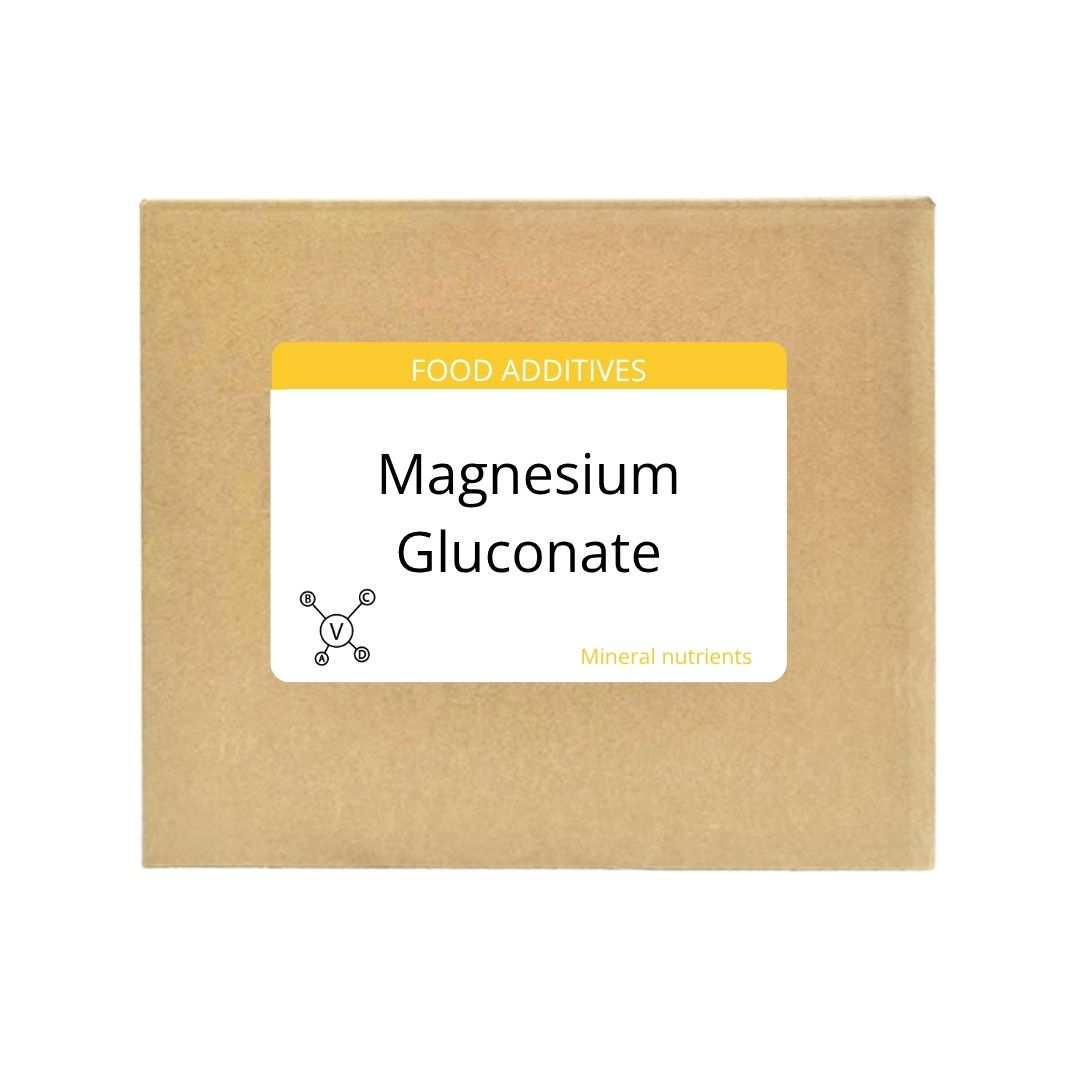
Magnesium gluconate is a compound, that combines magnesium with gluconic acid, which is derived from glucose [1]. It is often used as a mineral supplement, which aims to increase magnesium intake. Magnesium is an essential mineral involved in numerous biochemical processes in the body, including muscle and nerve function, blood glucose control, and blood pressure regulation [2]. Magnesium gluconate is favored, because of its high bioavailability, meaning it is easily absorbed in the digestive system [3].
Production Process
The production of magnesium gluconate typically involves reacting gluconic acid with a magnesium source, such as magnesium oxide or magnesium carbonate [4]. The reaction is conducted in an aqueous solution under controlled conditions, with factors, such as temperature and pH, carefully monitored to optimize the yield and purity of the final product. After the reaction is complete, the resulting magnesium gluconate solution is purified through filtration and crystallization [5]. The crystals are then dried and milled to achieve the desired particle size, meeting the standards for use in supplements and food products [6].
Product Functions and Effects
Magnesium gluconate is primarily used to prevent and treat magnesium deficiency [7]. Magnesium plays a vital role in maintaining normal muscle and nerve function; it keeps heart rhythm steady, supports, healthy immune system and bones, and helps regulate blood sugar levels and blood pressure [8]. Adequate magnesium intake is associated with a reduced risk of several chronic diseases, including cardiovascular disease, type 2 diabetes, and osteoporosis [9]. Furthermore, magnesium is involved in energy production, protein synthesis, and DNA replication, highlighting its importance for overall health and well-being [10].
Product Application Scenarios
Magnesium gluconate is widely used in dietary supplements, and it is available in various forms, including tablets, capsules, powders, and liquids [11]. It is often included in multivitamins and mineral supplements to help individuals meet their daily magnesium requirements [12]. In the food and beverage industry, magnesium gluconate can be added to fortified foods and beverages to increase their nutritional value [13]. Additionally, it is used in some pharmaceutical formulations as a source of magnesium [14]. People at risk of magnesium deficiency, include individuals, with poor diets, those with certain medical conditions (such as Crohn's disease or celiac disease), and older adults [15]. They may benefit from magnesium gluconate supplementation.
Packaging and Storage
Magnesium gluconate should be stored in a tightly sealed container to prevent exposure to moisture and air, which can degrade the product [16]. The storage area should be cool, dry, and protected from direct sunlight [17]. Under these conditions, magnesium gluconate typically has a shelf life of 24 months. Proper packaging materials such as multi-layer bags provide a barrier against moisture and oxygen, which is essential for maintaining the product's quality and efficacy [18]. Following these storage guidelines ensures that the magnesium gluconate remains stable, and effective until its expiration date [19].
Citations:
[1] https://www.sciencedirect.com/topics/pharmacology-toxicology-and-pharmaceutical-science/gluconic-acid
[2] https://ods.od.nih.gov/factsheets/Magnesium-HealthProfessional/
[3] https://www.ncbi.nlm.nih.gov/pmc/articles/PMC6520683/
[4] https://patents.google.com/patent/CN106986655A/en
[5] https://www.google.com/patents/US4229583
[6] https://www.uspharmacist.com/article/dietary-supplement-ingredients-part-2-what-to-look-for
[7] https://www.aafp.org/pubs/afp/issues/2009/0715/p157.html
[8] https://www.mayoclinic.org/drugs-supplements-magnesium/art-20362670
[9] https://www.ahajournals.org/doi/full/10.1161/CIRCRESAHA.118.312529
[10] https://www.ncbi.nlm.nih.gov/pmc/articles/PMC4455825/
[11] https://www.amazon.com/magnesium-supplement/s?k=magnesium+supplement
[12] https://www.webmd.com/diet/foods-high-in-magnesium
[13] https://www.ncbi.nlm.nih.gov/pmc/articles/PMC6316205/
[14] https://go.drugbank.com/drugs/DB09150
[15] https://www.ncbi.nlm.nih.gov/pmc/articles/PMC5786912/
[16] https://www.fda.gov/regulatory-information/search-fda-guidance-documents/guidance-industry-stability-testing-drug-substances-and-drug-products
[17] https://www.who.int/medicines/areas/quality_safety/quality_assurance/GuidelinesStabilityTestingWHOtrs953.pdf
[18] https://www.freemanscientific.com/news/choosing-the-right-pharmaceutical-packaging
[19] https://www.usp.org/

As the plant manager, I focus on the precise formulation and efficient production of food additives. We rigorously control the production process to ensure the quality and safety of each product, meeting industry standards. 🍴