

Product Introduction
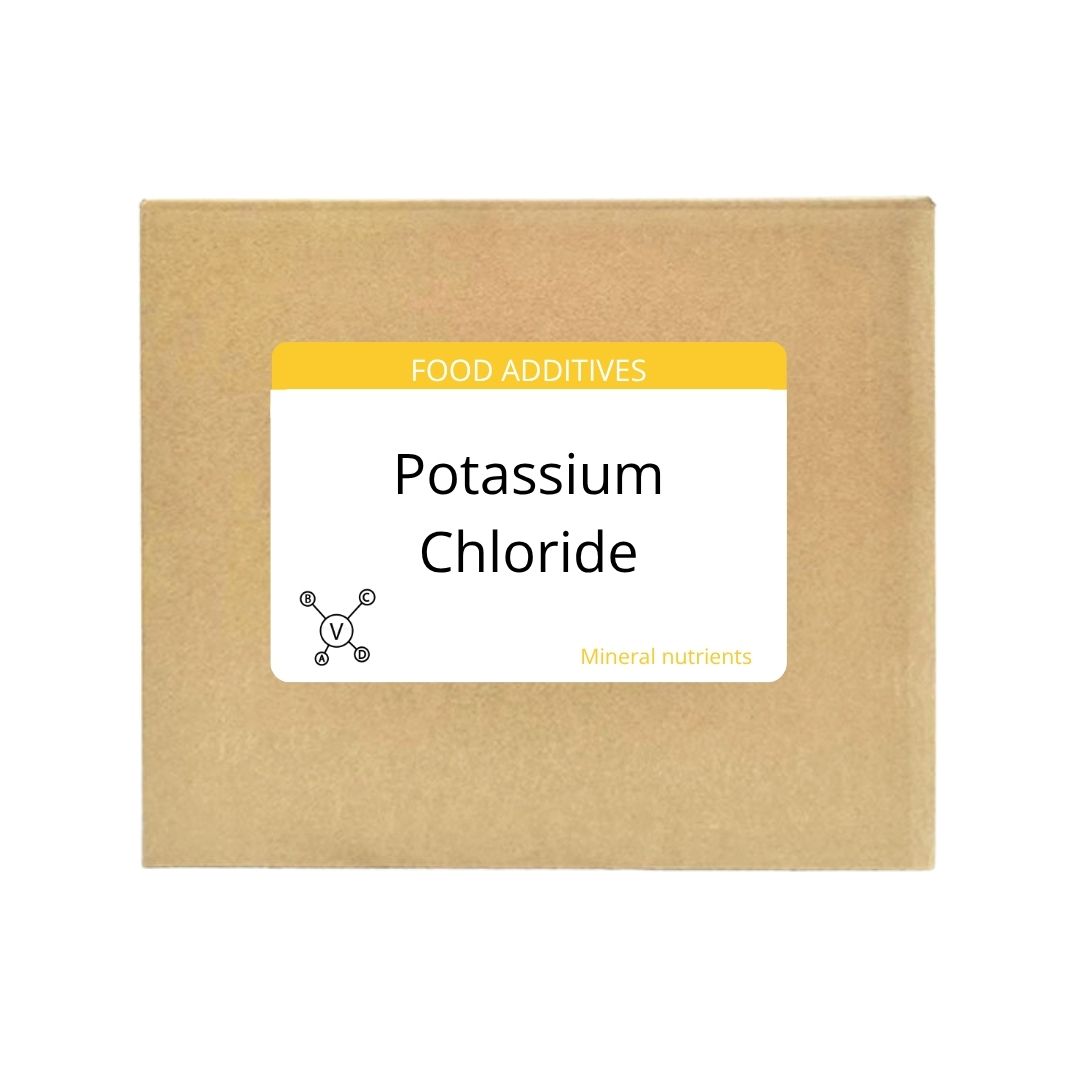
Potassium chloride is an ionic compound composed of potassium and chloride ions. It is naturally occurring as the mineral sylvite and can be extracted from potash ores or produced through solution mining and evaporation techniques [1]. As a white crystalline solid, potassium chloride is highly soluble in water and is commonly used in various industries due to its versatile properties [2].
Production Process
The production of potassium chloride typically involves several methods. One common method is the extraction from naturally occurring potash deposits, where the ore is mined and processed to separate potassium chloride from other minerals [3]. Another method involves solution mining, where water is injected into underground potash deposits to dissolve the potassium chloride, and the resulting solution is then pumped to the surface for evaporation and crystallization [4]. Additionally, potassium chloride can be produced through chemical synthesis, such as reacting potassium hydroxide with hydrochloric acid [5].
Product Functions and Effects
Potassium chloride serves multiple functions across various applications. In the food industry, it is used as a flavor enhancer, a salt substitute, and a nutrient supplement [6]. It is also used in intravenous solutions to treat or prevent potassium deficiency, a significant electrolyte [7]. In agriculture, potassium chloride is a common component of fertilizers, providing potassium, an essential nutrient for plant growth [8].
Product Application Scenarios
Potassium chloride finds applications in a wide array of scenarios. In the food industry, it is used in processed foods, beverages, and seasonings to reduce sodium content while maintaining flavor [9]. In the medical field, it is used in medications, intravenous fluids, and treatments for electrolyte imbalances [10]. Additionally, it is utilized in industrial processes such as the production of aluminum and the manufacturing of drilling fluids for oil and gas extraction [11].
Packaging and Storage
Potassium chloride is typically packaged in multi-layer paper bags, polyethylene bags, or fiber drums to protect it from moisture and contamination [12]. It should be stored in a cool, dry, and well-ventilated area, away from direct sunlight and incompatible substances such as strong oxidizing agents [13]. Proper storage conditions ensure the stability and quality of the product over its shelf life, usually recommended not to exceed two years from the date of manufacture [14].
Citations
[1] "Potassium Chloride." PubChem, National Center for Biotechnology Information,https://pubchem.ncbi.nlm.nih.gov/compound/Potassium-chloride.
[2] "Potassium Chloride Properties." ChemicalBook, https://www.chemicalbook.com/ChemicalProductProperty_EN_CB4827490.htm.
[3] "Potash Mining." Mosaic Company, https://www.mosaicco.com/products/potash.
[4] "Solution Mining." Intrepid Potash, https://www.intrepidpotash.com/our-operations/solution-mining.
[5] "Potassium Chloride Production." Ullmann's Encyclopedia of Industrial Chemistry, Wiley-VCH Verlag GmbH & Co. KGaA, 2000.
[6] "Salt Substitutes." American Heart Association, https://www.heart.org/en/healthy-living/healthy-eating/eat-smart/sodium/salt-substitutes.
[7] "Potassium Chloride Injection." MedlinePlus, U.S. National Library of Medicine, https://medlineplus.gov/druginfo/meds/a601158.html.
[8] "Potassium in Agriculture." International Plant Nutrition Institute (IPNI), http://www.ipni.net/potassium.
[9] "Sodium Reduction in Foods." World Health Organization, https://www.who.int/news-room/fact-sheets/detail/salt-reduction.
[10] "Potassium Supplements." Mayo Clinic, https://www.mayoclinic.org/drugs-supplements-potassium/art-20363204.
[11] "Drilling Fluids." Schlumberger, https://www.glossary.oilfield.slb.com/en/terms/d/drilling_fluid.
[12] "Potassium Chloride SDS." Sigma-Aldrich, https://www.sigmaaldrich.com/MSDS/MSDS/DisplayMSDSPage.do?country=US&language=en&productNumber=P9541.
[13] "Storage of Chemicals." Prudent Practices in the Laboratory: Handling and Management of Chemical Hazards,National Academies Press, 2011.
[14] "Shelf Life Extension." Institute of Food Technologists (IFT), http://www.ift.org.

As the plant manager, I focus on the precise formulation and efficient production of food additives. We rigorously control the production process to ensure the quality and safety of each product, meeting industry standards. 🍴