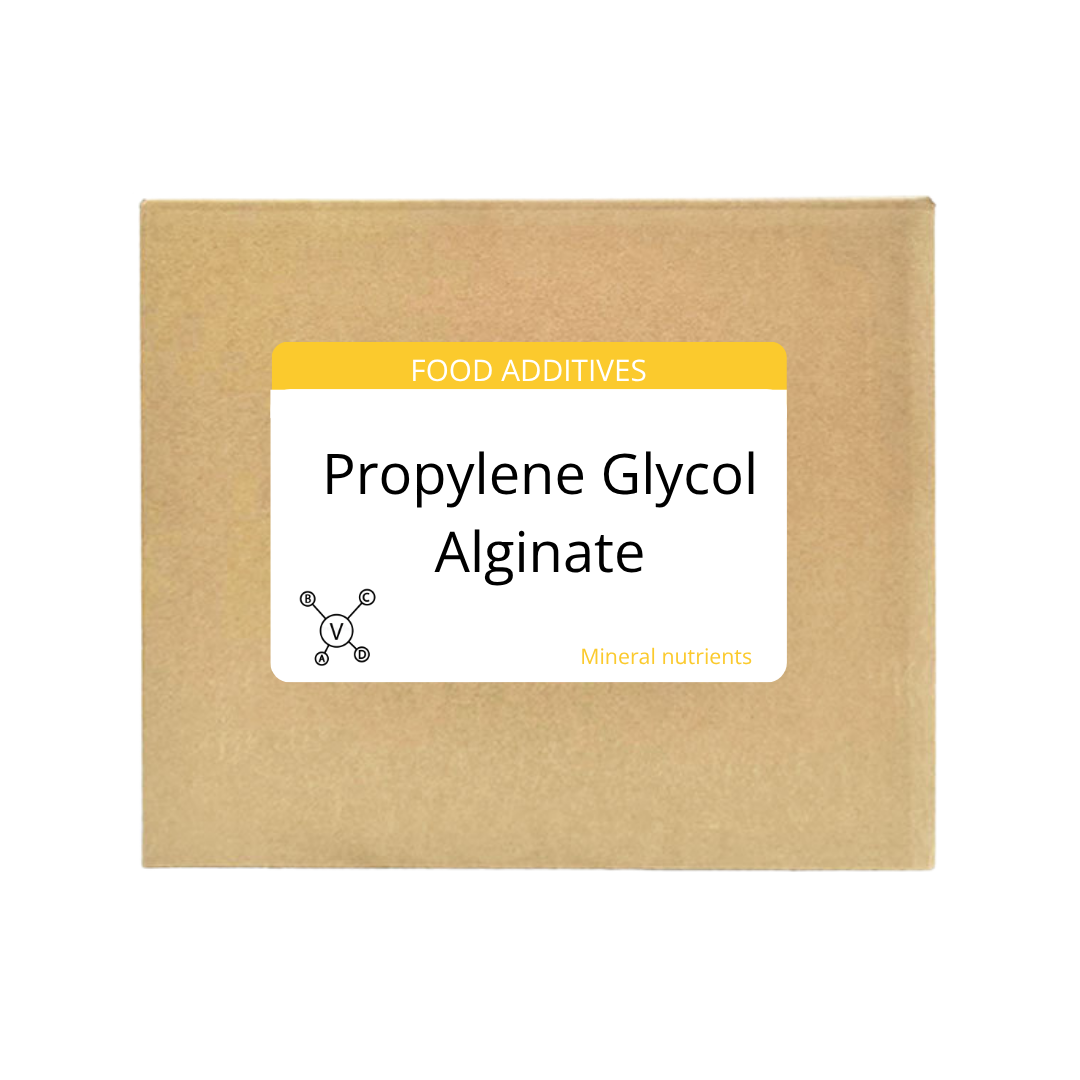


Propylene glycol alginate is derived from alginic acid, a naturally occurring polysaccharide found in brown seaweed. It is produced by esterifying alginic acid with propylene glycol. The primary function of propylene glycol alginate is to act as a stabilizer in food products, preventing the separation of mixtures, and improving the texture of foods such as sauces and dressings [1]. It is also commonly used in beverages to enhance the mouthfeel and stabilize foam [2].
The production process of propylene glycol alginate involves several steps. First, alginic acid is extracted from brown seaweed. This substance is then reacted with propylene oxide under controlled conditions to form propylene glycol alginate. The resulting product is purified, dried, and milled to achieve the desired particle size [3].
Propylene glycol alginate is effective in preventing protein precipitation in acidic conditions. It also exhibits emulsifying properties, which improve the stability and texture of food and beverage products [4]. Additionally, its thickening capabilities contribute to the desired viscosity in various applications [5].
This ingredient is used in a variety of food and beverage applications, including salad dressings, sauces, fruit juices, and beer. In salad dressings, it stabilizes the emulsion and prevents oil separation. In fruit juices, it inhibits sedimentation and maintains a uniform consistency. In beer, it can improve foam stability and clarity [6].
Propylene glycol alginate is typically packaged in multi-layer paper bags or fiber drums with polyethylene liners to protect against moisture and contamination. It should be stored in a cool, dry, and well-ventilated area, away from direct sunlight and incompatible substances, to maintain its quality and extend its shelf life [7].
Citations
[1] Baird, I. M., et al. "Handbook of Hydrocolloids." Woodhead Publishing, 2009.
[2] Glicksman, M. "Food Hydrocolloids: Volume II." CRC Press, 1983.
[3] Whistler, R. L. "Industrial Gums: Polysaccharides and Their Derivatives." Academic Press, 1993.
[4] Phillips, G. O., and P. A. Williams. "Handbook of Hydrocolloids." Second Edition. Woodhead Publishing, 2009.
[5] Imeson, A. "Food Stabilisers, Thickeners and Gelling Agents." Blackwell Publishing, 2010.
[6] Moretti, V. M., et al. "Stabilization of beer with polysaccharide preparations." Journal of the Institute of Brewing, 2002, 108(3), 316-322.
[7] Product data sheet.example.com

As the plant manager, I focus on the precise formulation and efficient production of food additives. We rigorously control the production process to ensure the quality and safety of each product, meeting industry standards. 🍴