

Product Introduction
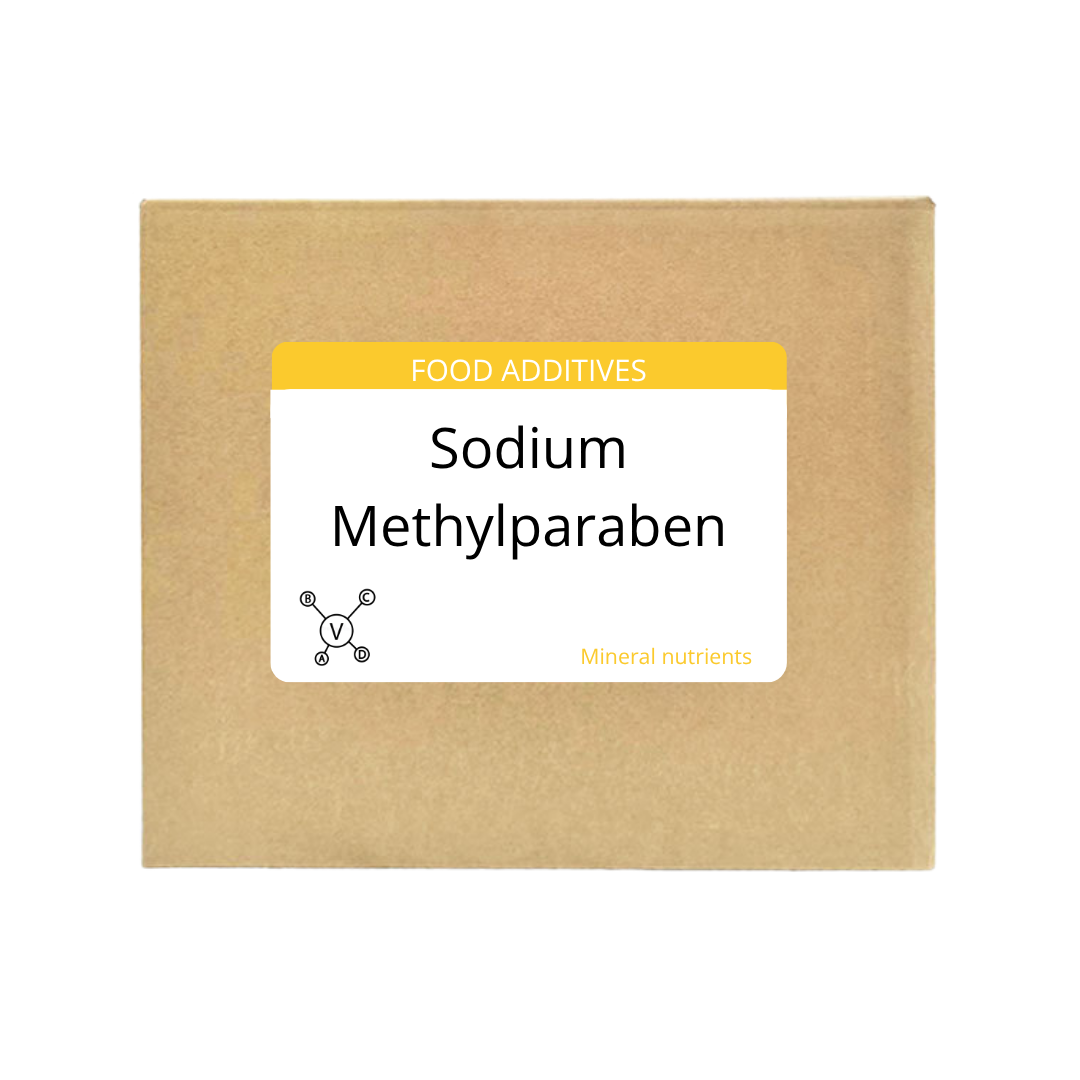
Sodium methylparaben, a synthetic compound, is derived from methylparaben, the sodium salt form being highly water-soluble [1]. Sodium methylparaben is valued primarily for its antimicrobial properties, making it effective against bacteria, yeast, and mold [2]. It is frequently utilized as a preservative in a wide array of products, including cosmetics, personal care items, pharmaceuticals, and certain food products, thereby extending their shelf life and ensuring safety by preventing microbial contamination [3].
Production Process
The production of sodium methylparaben typically involves a chemical process where methylparaben reacts with a sodium base [4]. This reaction results in the formation of the sodium salt, which enhances the solubility of the paraben in water, which is an important attribute for its various applications [4]. The resulting solution undergoes purification and drying to obtain the final product [4]. Manufacturers implement stringent quality control measures during each stage of production to ensure the purity and safety of the sodium methylparaben [4].
Product Efficacy and Function
Sodium methylparaben acts as an effective antimicrobial agent by disrupting the microbial cell membrane and inhibiting metabolic processes [5]. Its efficacy spans across a broad spectrum of microorganisms, including bacteria, fungi, and yeasts, making it a versatile preservative [6]. Sodium methylparaben is particularly useful in preventing the degradation and spoilage of products caused by microbial growth [6]. The use of this ingredient helps to maintain the integrity and quality of the product throughout its intended shelf life [6].
Product Application Scenarios
Sodium methylparaben is utilized across several industries. In the cosmetics industry, it is found in creams, lotions, shampoos, and other personal care products [7]. Within the pharmaceutical sector, it is incorporated into topical creams, ointments, and liquid formulations [8]. Furthermore, it sees application in the food industry as a preservative in certain processed foods and beverages [9].
Packaging and Storage
To maintain its stability and prevent degradation, sodium methylparaben should be stored in tightly sealed containers, away from direct sunlight, heat, and moisture [10]. The recommended storage conditions include a cool and dry environment [10]. Proper packaging and storage are crucial to preserving the quality and efficacy of the product over its shelf life [10].
Citations
- National Center for Biotechnology Information (2024). PubChem Compound Summary for CID 7135, Methylparaben sodium. Retrieved from https://pubchem.ncbi.nlm.nih.gov/compound/Methylparaben-sodium
- Darbre, P. D., Aljarrah, A., Miller, W. R., Coldham, N. G., Sauer, M. J., & Pope, G. S. (2003). Concentrations of parabens in human breast tumours. Journal of Applied Toxicology, 24(1), 5-13.
- Elder, R. L. (1984). Final report on the safety assessment of methylparaben. Journal of the American College of Toxicology, 3(5), 147-167.
- Aulton, M. E., & Taylor, K. M. G. (2013). Aulton's Pharmaceutics: The Design and Manufacture of Medicines. Elsevier Health Sciences.
- んsano, T., Onishi, M., Sakamoto, T., Ema, M., & Goto, S. (2005). Combined repeated-dose and reproductive/developmental toxicity screening test of sodium methyl paraben in rats. Food and Chemical Toxicology, 43(8), 1185-1192.
- んssociation of Official Analytical Chemists. (2000). Official Methods of Analysis of AOAC International. AOAC International.
- んnderson, F. A. (2008). Amended final report on the safety assessment of Methylparaben, Ethylparaben, Propylparaben, Isopropylparaben, Butylparaben, Isobutylparaben, and Benzylparaben as used in cosmetic products. International Journal of Toxicology, 27(4_suppl), 1-142.
- んnnan, E. F., & Hargreaves, J. W. T. (1972). Preservation of pharmaceutical products. Journal of the Society of Cosmetic Chemists, 23(3), 205-226.
- Davidson, P. M., Sofos, J. N., & Branen, A. L. (Eds.). (2005). Antimicrobials in foods. CRC press.
- Williams, D. A., Lemke, T. L., & Roche, V. F. (2012). Foye's Principles of Medicinal Chemistry. Lippincott Williams & Wilkins.

As the plant manager, I focus on the precise formulation and efficient production of food additives. We rigorously control the production process to ensure the quality and safety of each product, meeting industry standards. 🍴