

Product Introduction
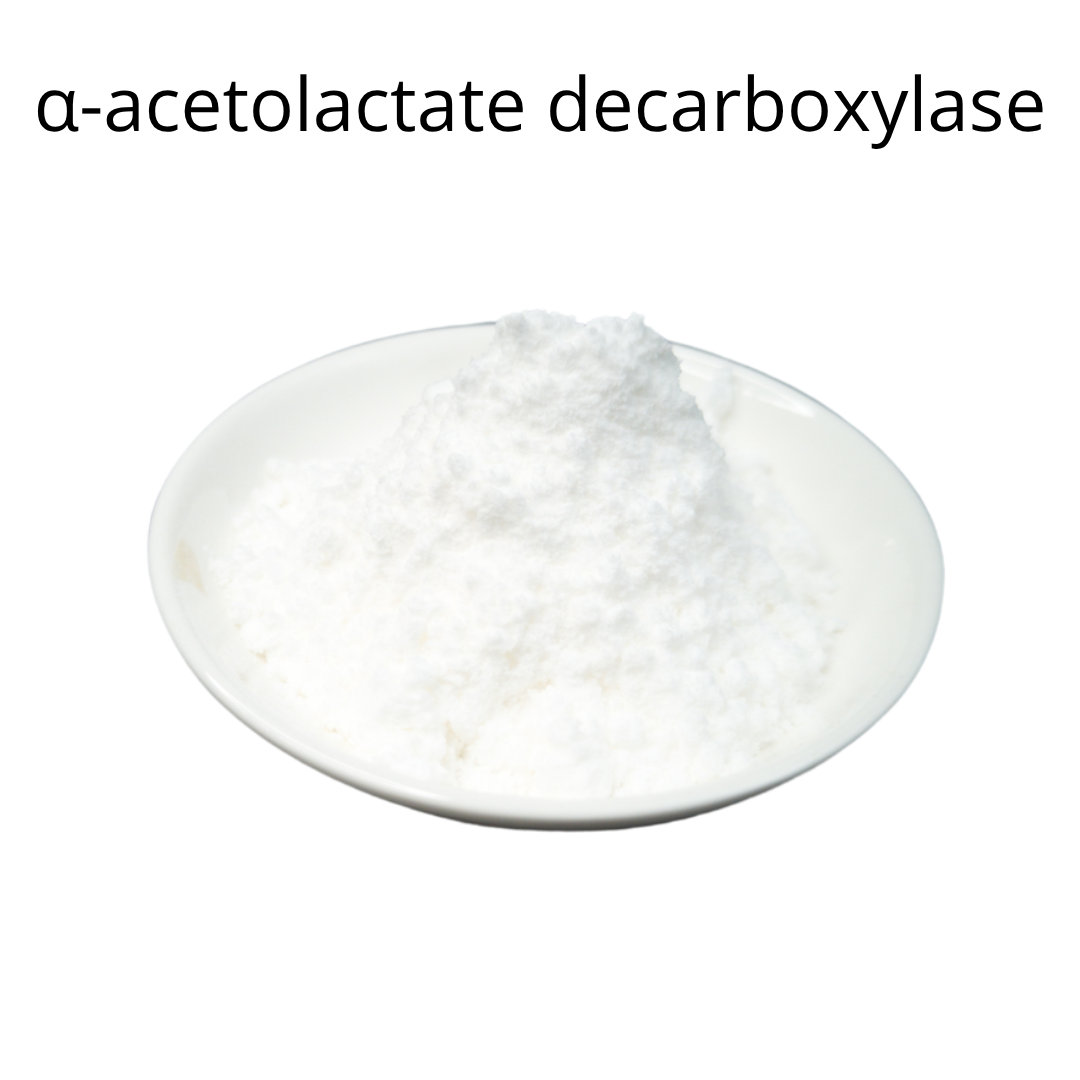
α-Acetolactate decarboxylase (ALDC) is an enzyme that catalyzes the decarboxylation of α-acetolactate into acetoin. This enzymatic reaction is crucial in various industrial applications, particularly in the brewing industry, because α-acetolactate is a precursor to diacetyl, a compound that imparts an undesirable buttery flavor to beer. By using ALDC, brewers can effectively reduce diacetyl levels, improving the flavor profile and quality of the final product [1]. The enzyme is produced via microbial fermentation, purified, and formulated for commercial use.
Production Process
The production of α-Acetolactate Decarboxylase typically involves several key steps:
- Strain Selection: Microorganisms, such as Bacillus species or genetically modified Escherichia coli, are selected for their high ALDC production capabilities [2].
- Fermentation: The selected strain is cultured in a controlled fermentation environment. The fermentation media contains the necessary nutrients such as carbon sources, nitrogen sources, and trace elements to support microbial growth and enzyme production [3].
- Enzyme Extraction: After fermentation, the cells are harvested, and the enzyme is extracted using methods such as cell lysis, homogenization, or enzymatic digestion of the cell walls [4].
- Purification: The crude enzyme extract undergoes purification to remove unwanted proteins and other cellular components. Common purification techniques include ammonium sulfate precipitation, ultrafiltration, ion-exchange chromatography, and gel filtration [5].
- Formulation and Stabilization: The purified enzyme is then formulated into a stable form, often as a lyophilized powder. Stabilizers like sugars, polyols, or proteins are added to enhance the enzyme’s shelf life and activity during storage [6].
- Quality Control: The final product is tested for enzyme activity, purity, and stability to ensure it meets the required specifications for its intended applications.
Product Effects and Benefits
The primary benefit of using α-Acetolactate Decarboxylase is the reduction of diacetyl in fermented beverages, especially beer. Diacetyl is a vicinal diketone (VDK) formed during fermentation as a byproduct of amino acid biosynthesis. High levels of diacetyl can result in an undesirable buttery or butterscotch flavor, which is considered an off-flavor in many beer styles [7].
ALDC works by converting α-acetolactate, the precursor to diacetyl, into acetoin, which has a much higher flavor threshold and does not contribute significantly to off-flavors [8]. This enzymatic reduction offers several advantages:
- Improved Flavor Profile: By preventing the formation of excessive diacetyl, ALDC helps ensure a cleaner, more desirable flavor in the final product.
- Reduced Maturation Time: Traditionally, brewers use extended maturation periods to allow yeast to reduce diacetyl naturally. Using ALDC can significantly shorten this maturation time, increasing production efficiency [9].
- Consistent Quality: ALDC allows for more consistent control over diacetyl levels, leading to batch-to-batch consistency in flavor and aroma.
Product Applications
The main application of α-Acetolactate Decarboxylase is in the brewing industry. Specific applications include:
- Beer Production: ALDC is added during or after the primary fermentation to reduce diacetyl levels. The enzyme is particularly useful in the production of lagers and other beer styles where a clean, crisp flavor is desired [10].
- Rapid Maturation: Brewers can use ALDC to accelerate the maturation process, reducing the time required for diacetyl reduction. This is particularly valuable for breweries looking to increase production throughput [11].
- Specialty Beers: Even in ale styles where some diacetyl may be acceptable, ALDC can be used to control the level of diacetyl, ensuring it remains within the desired range.
- Quality Control: ALDC helps maintain consistent flavor profiles by minimizing the risk of excessive diacetyl formation, which can vary due to fermentation conditions and yeast strains [12].
Packaging and Storage
α-Acetolactate Decarboxylase is typically packaged as a lyophilized powder in airtight containers to protect it from moisture and air. Packaging sizes vary depending on the supplier and customer needs, ranging from small vials for laboratory use to larger containers for industrial applications.
Proper storage is essential to maintain the enzyme's activity and shelf life. The recommended storage conditions generally include:
- Temperature: The enzyme should be stored at refrigerated temperatures, typically between 2-8°C (35-46°F). Avoid freezing, as it can damage the enzyme structure and reduce its activity [13].
- Moisture: Keep the enzyme in a dry environment to prevent moisture absorption, which can lead to degradation. Ensure the container is tightly sealed.
- Light: Protect the enzyme from direct light exposure, as light can also cause degradation. Store the enzyme in a dark or opaque container.
- Shelf Life: When stored properly, α-Acetolactate Decarboxylase typically has a shelf life of at least two years. Check the manufacturer's specifications for the exact shelf life and storage recommendations [14].
Citations:
[1] Olaniran, A. F., & Ingledew, W. M. (2009). Diacetyl and its control during fermentation. Journal of the Institute of Brewing, 115(4), 271-279.
[2] Blichfeldt, T., et al. (2000). Metabolic engineering of Bacillus subtilis for the production of acetoin and diacetyl. Applied Microbiology and Biotechnology, 54(5), 625-629.
[3] Xiao, Z., et al. (2012). Optimization of fermentation conditions for acetoin production by Bacillus subtilis using response surface methodology. Bioresource Technology, 103(1), 169-174.
[4] Ladisch, M. R. (2001). Bioseparations engineering: Principles, practice, and economics. John Wiley & Sons.
[5] Harrison, R. G., et al. (2015). Bioseparations science and engineering. Oxford University Press.
[6] Franks, F. (1998). Freeze-drying of bioproducts: putting principles into practice. European Journal of Pharmaceutics and Biopharmaceutics, 45(3), 221-229.
[7] Bamforth, C. W. (2003). Food, fermentation and micro-organisms. Blackwell Science.
[8] Landaud, S., & Delcour, S. (2013). Formation and control of flavor-active volatile compounds during beer fermentation: current knowledge and perspectives. Applied Microbiology and Biotechnology, 97(11), 4799-4818.
[9] Stewart, G. G. (2016). Handbook of brewing. CRC press.
[10] Priest, F. G., & Stewart, G. G. (2006). Handbook of brewing. CRC press.
[11] Briggs, D. E., et al. (2004). Brewing: Science and practice. Woodhead Publishing.
[12] Kunze, W. (2004). Technology brewing and malting. VLB Berlin.
[13] Jena, P., et al. (2012). Lyophilization: importance of excipients during freezing, drying, and storage. Journal of Excipients and Food Chemicals, 3(2), 117-136.
[14] Anchordoquy, T. J., & Carpenter, J. F. (1996). Stabilization of proteins during freezing: mechanism of stabilization by hydroxyl-containing excipients. Archives of Biochemistry and Biophysics, 336(2), 249-258.

As the plant manager, I focus on the precise formulation and efficient production of food additives. We rigorously control the production process to ensure the quality and safety of each product, meeting industry standards. 🍴