

Product Introduction
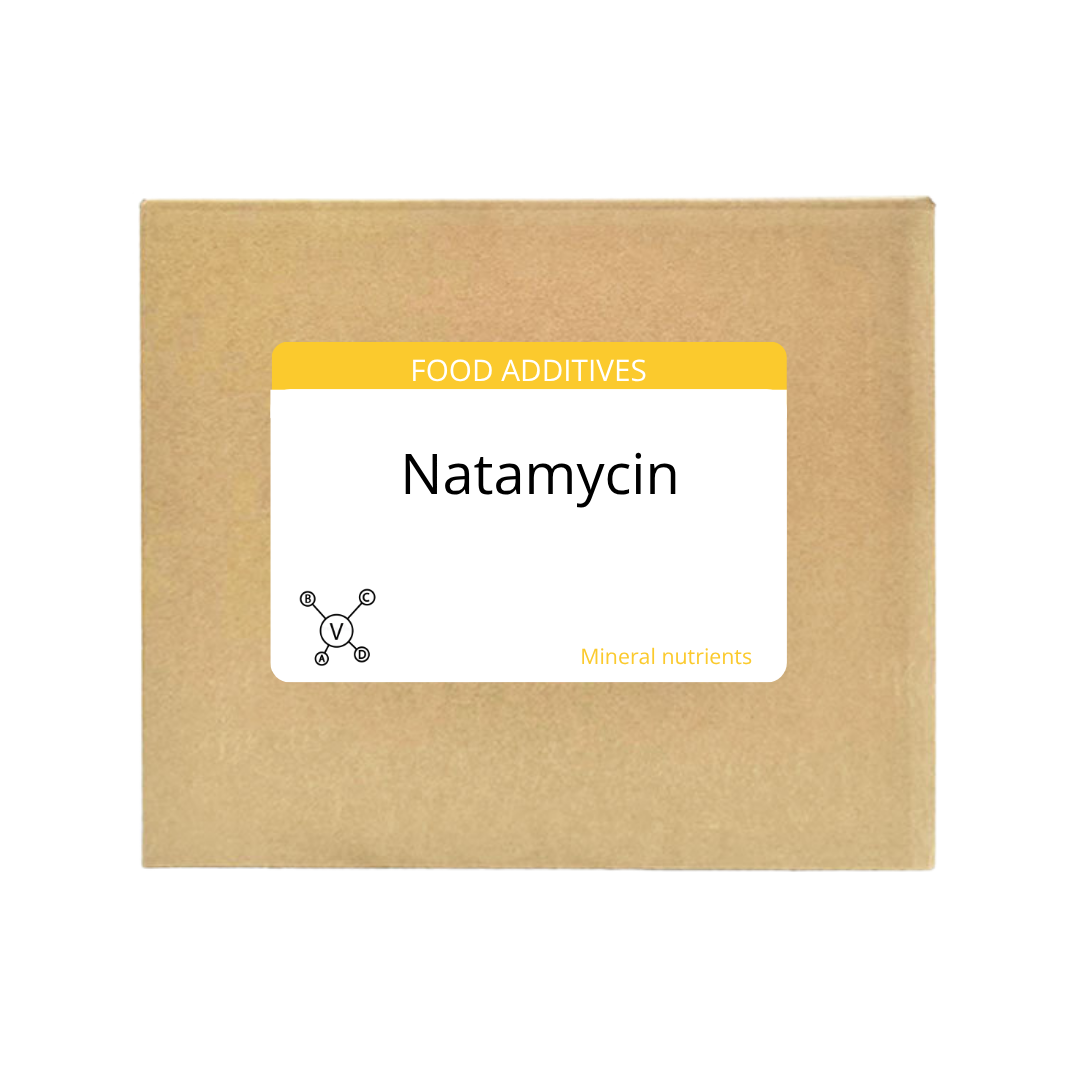
Natamycin, an antifungal agent, is derived from Streptomyces natalensis, a bacterium commonly found in soil.[1] It is primarily used as a food preservative to inhibit the growth of molds and yeasts, extending the shelf life of various products.[2] Natamycin is effective at low concentrations, making it suitable for use on the surface of foods, such as cheese, and in beverages.[3]
Production Process
The production of natamycin involves fermentation, recovery, and purification steps.[4] First, Streptomyces natalensis is cultured in a nutrient-rich medium under controlled conditions to facilitate natamycin production.[4] After fermentation, the natamycin is extracted from the fermentation broth using solvents.[4] The extracted natamycin undergoes several purification steps, including filtration and crystallization, to obtain the final product.[4] The purified natamycin is then dried and milled into a powder form.[4]
Product efficacy and function
Natamycin exhibits a broad spectrum of antifungal activity by binding to ergosterol, a vital component of fungal cell membranes.[5] This interaction disrupts membrane integrity, leading to cell leakage and ultimately inhibiting fungal growth.[5] It is effective against a wide range of molds and yeasts, but does not affect bacteria, preventing spoilage in food products without altering their natural bacterial flora.[6]
Product Application Scenarios
It is commonly used to prevent fungal growth on cheese, yogurt, and other dairy products.[7] It is applied to the surface of sausages to prevent mold formation during curing and storage.[7] Natamycin can be used in fruit juices, wines, and other beverages to inhibit yeast and mold growth.[7] It can also be applied on baked goods to prolong shelf life and prevent spoilage.[7]
Packaging and Storage
Natamycin is typically packaged in airtight containers to protect it from moisture and light.[8] It should be stored in a cool, dry, and dark environment, ideally at temperatures below 15°C, to maintain its stability and efficacy.[8] When stored properly, natamycin can maintain its quality for up to 24 months from the date of manufacture.[8]
Citations
- Struyk, H., Hoette, I., Drost, S., Waisvisz, J. M., & van Eijk, T. B. (1957). Pimaricin, a new antifungal antibiotic. Antibiotics annual, 4, 878-885.
- Delves-Broughton, J. (2005). Natamycin. Food science and technology series, 173-193.
- Thomas, L. V. (1978). Use of pimaricin for surface treatment of cheese. Dairy Industries International, 43(6), 15-17.
- Karahadian, C., Josephson, D. B., & Lindsay, R. C. (1985). Influence of nitrogen source on growth and natamycin (= pimaricin) production by Streptomyces natalensis. Journal of food protection, 48(1), 63-67.
- Te Welscher, Y. M., van Leeuwen, M. R., de Kruijff, B., & Driessen, A. J. (2010). Natamycin inhibits fungal growth by binding specifically to ergosterol without permeabilizing the membrane. Journal of Biological Chemistry, 285(39), 30796-30802.
- De Vries, J., & Gulliver, D. (2015). Uses of Pimaricin in food preservation. Food Additives: Uses, Safety and Regulatory Aspects. John Wiley & Sons, Ltd.
- Eckner, K. F. (2008). Application of natamycin in foods. Food Safety Magazine, 14(3), 62-67.
- Guildford, H., & Peeters, E. (2022). The stability of natamycin in food products and model solutions stored at different temperatures. Food chemistry, 373, 131432.

As the plant manager, I focus on the precise formulation and efficient production of food additives. We rigorously control the production process to ensure the quality and safety of each product, meeting industry standards. 🍴