

Product Introduction
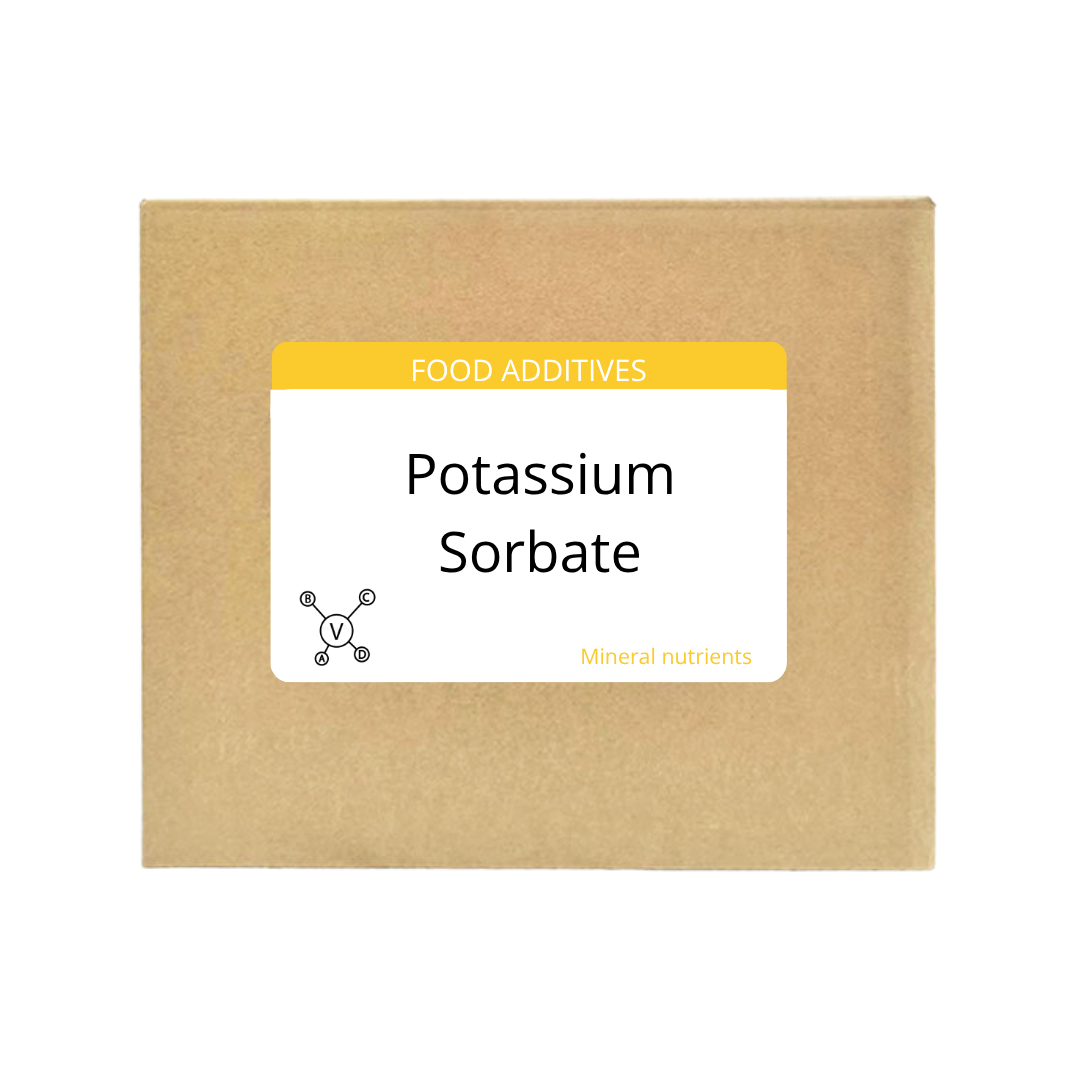
Potassium sorbate is primarily derived from sorbic acid, which can be synthesized or naturally occurring, and it is created by neutralizing sorbic acid with potassium hydroxide [1]. It is widely used as a food preservative because it, effectively inhibits the growth of molds, yeasts, and some bacteria [2]. This additive is commonly found in cheese, baked goods, syrups, and dried fruits, contributing to the extension of their shelf life [3].
Production Process
The production of potassium sorbate typically involves several key steps; first, sorbic acid is produced through the condensation of ketene and crotonaldehyde [4]. Next, the sorbic acid is reacted with potassium hydroxide, often in an aqueous solution, to form potassium sorbate [5]. The solution is then purified and dried to obtain the final product in the form of a crystalline powder or granules [5]. Quality control measures are implemented throughout the process to ensure the purity and safety of the potassium sorbate [5].
Product Efficacy and Function
Potassium sorbate functions primarily as a preservative by inhibiting microbial growth [6]. It disrupts the cell membrane function in microorganisms, preventing their proliferation [7]. This is particularly effective against fungi and yeasts making it ideal for preserving foods prone to mold and spoilage [6]. It is generally recognized as safe (GRAS) by regulatory bodies when used at permitted levels [8].
Product Application Scenarios
Potassium sorbate is used in a wide array of food products. It can be found in dairy products like cheese and yogurt, baked goods, processed fruits and vegetables, beverages, and condiments, where it prevents spoilage and maintains product quality [9]. It is also utilized in wines to prevent refermentation, thus ensuring stability [10]. Additionally, potassium sorbate sees use in personal care products and pharmaceuticals as a preservative [9].
Packaging and Storage
Potassium sorbate is typically packaged in multi-layer paper bags, fiber drums, or plastic containers to protect it from moisture and air [11]. It should be stored in a cool, dry, and well-ventilated area, away from direct sunlight and incompatible substances [11]. Proper storage conditions help maintain its stability and extend its shelf life, usually up to 24 months [11]. Following these guidelines ensures that the product retains its quality and effectiveness [11].
Citations:
[1] Sofos, J. N., & Beuchat, L. R. (2011). Antimicrobials in food (3rd ed.). CRC press.
[2] Davidson, P. M., Sofos, J. N., & Branen, A. L. (2005). Antimicrobials in foods (3rd ed.). CRC press.
[3] Branen, A. L., Davidson, P. M., & Sofos, J. N. (Eds.). (2002). Food Additives. Marcel Dekker.
[4] Kroschwitz, J. I. (Ed.). (2004). Encyclopedia of chemical technology (5th ed.). Wiley.
[5] Kapoor, A., & Kailappan, R. (2015). Food Preservation by Modified Atmosphere, Handbook of Food Preservation, 291-305.
[6] Stratton, J. E., & Taylor, S. L. (1991). Effects of pH, sodium chloride, and temperature on theAntimicrobial Activity of Sorbic Acid. Journal of Food Protection, 54(5), 334-337.
[7] Eklund, T. (1983). The antimicrobial effect ofweak acids in foods. Food Technology, 37(11), 107-115.
[8] U.S. Food and Drug Administration. (2023). CFR - Code of Federal Regulations Title 21.
[9]қтаева, Н. Д., & Якубова, М. М. (2021). Изучение микробиологической безопасности пищевой продукции с использованием сорбата калия. Вопросы науки и образования,

As the plant manager, I focus on the precise formulation and efficient production of food additives. We rigorously control the production process to ensure the quality and safety of each product, meeting industry standards. 🍴