

Product Introduction
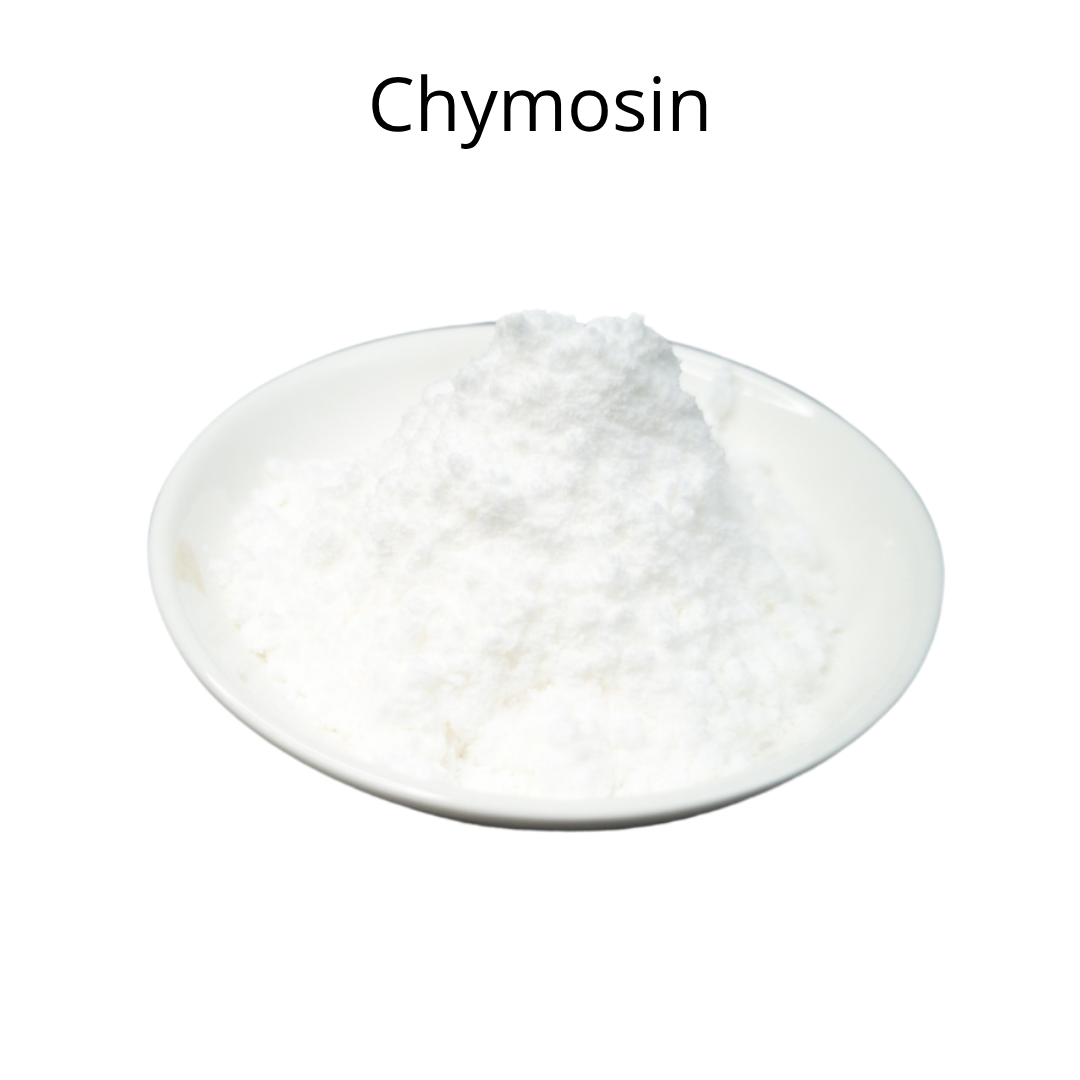
Chymosin, also known as rennin, is an aspartic protease enzyme that is crucial in the production of cheese. It is naturally found in the gastric juice of young mammals, specifically in the fourth stomach chamber (the abomasum) of unweaned calves [1]. Chymosin's primary function is to coagulate milk, a vital step in cheese-making.
Production Process
Traditionally, chymosin was extracted directly from the stomachs of slaughtered calves, a product known as animal rennet [2]. However, due to the increasing demand for cheese and ethical concerns, alternative production methods have been developed. These include microbial fermentation and genetically engineered chymosin production.
- Animal Rennet Extraction: The abomasa of slaughtered calves are dried, cleaned, and then cut into small pieces. These pieces are then immersed in a brine solution or weak acid to extract the chymosin enzyme. The crude extract is filtered and purified to obtain the final rennet product [3].
- Microbial Fermentation: Certain fungi, such as Rhizomucor miehei and Rhizomucor pusillus, produce enzymes with milk-clotting capabilities [4]. These microorganisms are cultivated in large fermenters, and the enzymes they produce are extracted and purified for use in cheese-making.
- Genetically Engineered Chymosin: This method involves inserting the chymosin gene into microorganisms like Escherichia coli, Aspergillus niger, or Kluyveromyces lactis. These genetically modified microorganisms produce chymosin during fermentation, which is then isolated and purified [5]. Genetically engineered chymosin is now widely used in the cheese industry due to its consistent quality and availability.
Product Effects and Benefits
The primary effect of chymosin is the coagulation of milk, which is essential for cheese production. Specifically, chymosin cleaves the κ-casein protein in milk, destabilizing the casein micelles and causing them to aggregate, forming a gel-like structure known as curd [6].
Benefits of using chymosin in cheese-making include:
- Efficient Coagulation: Chymosin provides a highly efficient and specific enzymatic action, leading to uniform and predictable coagulation of milk.
- Improved Curd Firmness: The use of chymosin results in a firmer curd, which is easier to cut and process, leading to better cheese texture and yield.
- Enhanced Cheese Flavor: Chymosin contributes to the development of characteristic cheese flavors during ripening, as it continues to break down proteins into smaller peptides and amino acids [7].
- Vegetarian Alternatives: Microbial and genetically engineered chymosin offer vegetarian-friendly alternatives to animal rennet, catering to a broader consumer base.
Product Applications
Chymosin is predominantly used in the dairy industry, with its main application being cheese production [8]. Various types of cheese rely on chymosin for their manufacturing process, including:
- Hard Cheeses: Cheddar, Parmesan, and Swiss cheeses use chymosin to achieve the desired curd firmness and texture.
- Soft Cheeses: Brie and Camembert also utilize chymosin, though often in combination with other enzymes or acids to achieve their characteristic soft and creamy textures.
- Processed Cheeses: Chymosin can be used in the production of processed cheeses to improve their texture and melting properties.
In addition to cheese production, chymosin has other minor applications, such as in the production of certain protein hydrolysates and in some pharmaceutical processes [9].
Packaging and Storage
Chymosin is typically packaged in airtight containers to prevent moisture absorption and maintain its enzymatic activity. Packaging materials often include:
- Sealed Plastic Containers: High-density polyethylene (HDPE) or polypropylene (PP) containers are commonly used to provide a barrier against moisture and air.
- Foil Pouches: Aluminum foil pouches with inner plastic liners offer excellent protection against light, moisture, and oxygen [10].
Proper storage conditions are crucial for preserving the activity of chymosin. Recommended storage guidelines include: - Temperature: Store chymosin in a cool, dry place, ideally between 2°C and 8°C (35°F and 46°F).
- Humidity: Keep the product away from high humidity environments to prevent clumping and loss of activity.
- Light: Protect chymosin from direct sunlight and strong light sources, as light exposure can degrade the enzyme.
- Shelf Life: When stored according to the recommended conditions, chymosin typically maintains its activity for up to two years. Always check the manufacturer's specifications for specific shelf-life information.
Citations:
[1] Fox, P. F., Uniacke-Lowe, T., McSweeney, P. L. H., & O'Mahony, J. A. (2017). Dairy chemistry and biochemistry. Springer.
[2] Walstra, P., Geurts, T. J., Noomen, A., Jellema, A., & van Boekel, M. A. J. S. (1999). Dairy technology: Principles of milk properties and processes. Marcel Dekker.
[3] Singh, T. P. (2004). Enzymes in food processing. Blackwell Publishing.
[4] Boy, E. A., Lüthi, D., Hotz, B., Gremminger, A., & Zimmermann, M. B. (2016). Potential of micronutrient-biofortified staple crops for improving the iron, zinc, or vitamin A status of population groups. Annals of the New York Academy of Sciences, 1390(1), 55–71.
[5] Johnson, M. E. (2001). Genetically modified chymosin in cheese making. Journal of Dairy Science, 84(E. Suppl), E17–E21.
[6] Horne, D. S. (1998). Casein interactions: Casting light on the black boxes, the structure in dairy products—An overview. International Dairy Journal, 8(3), 171–177.
[7] McSweeney, P. L. H. (2004). Biochemistry of cheese ripening. International Journal of Dairy Technology, 57(2–3), 127–144.
[8] Law, B. A. (1992). Cheese: Chemistry, physics and microbiology. Springer Science & Business Media.
[9] Balaban, M. O., & Marshall, M. R. (1987). Use of enzymes in food processing. CRC Press.
[10] Coles, R., McDowell, D., & Kirwan, M. J. (2003). Food packaging technology. Blackwell Publishing.

As the plant manager, I focus on the precise formulation and efficient production of food additives. We rigorously control the production process to ensure the quality and safety of each product, meeting industry standards. 🍴