

Product Introduction
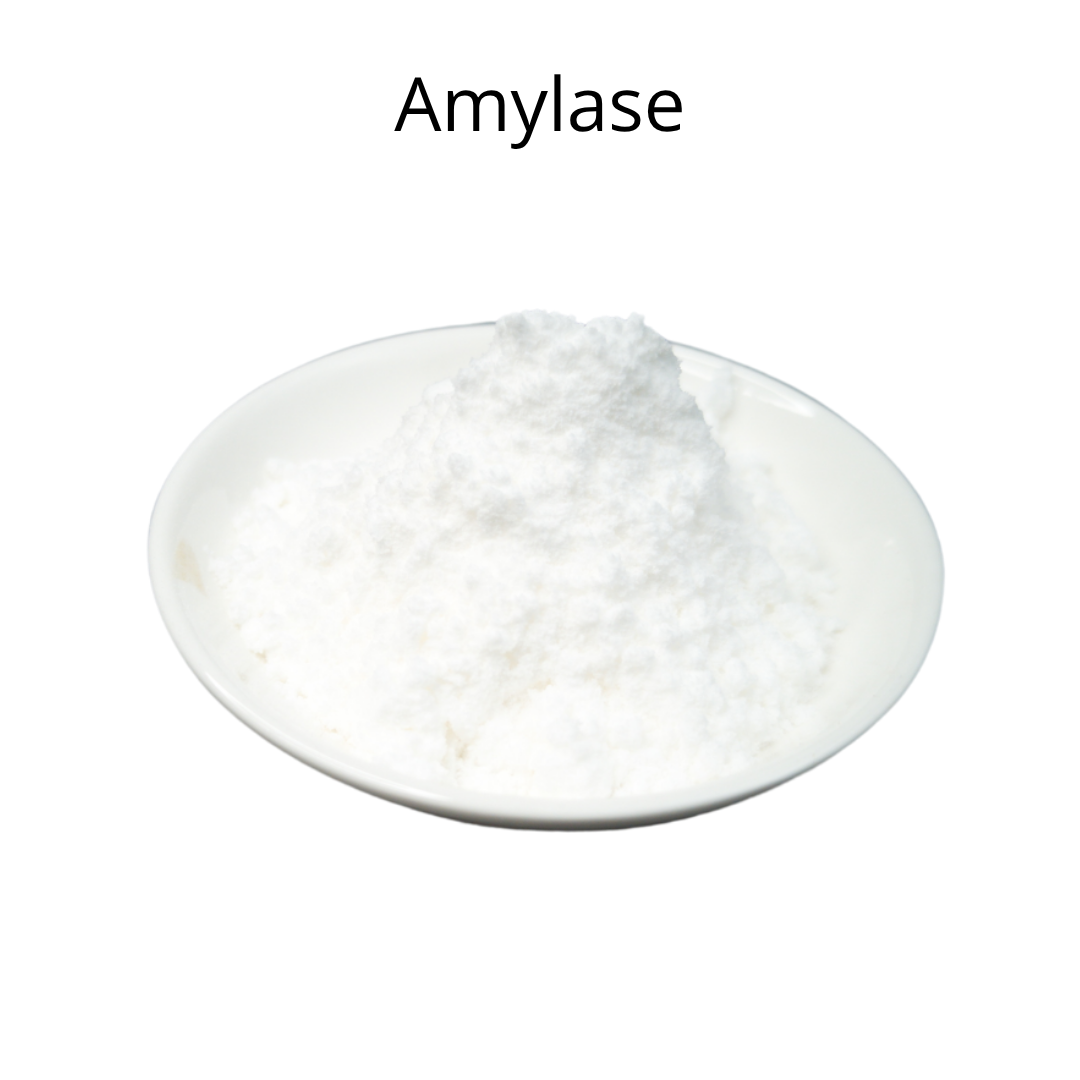
Amylase is an enzyme that catalyzes the hydrolysis of starch into sugars. It is present in the saliva of humans and some other mammals where it begins the chemical process of digestion. Amylase enzymes are produced by microbes ,plants, and animals [3]. Industrial amylases are often sourced from microorganisms due to the high quantities that can be produced and the relative ease of genetic manipulation. Amylases are a class of enzymes that break down starch molecules into smaller, simpler sugars ,such as maltose and glucose. These enzymes play vital roles in various biological processes, including digestion and fermentation. They are also indispensable in numerous industrial applications, ranging from food processing to textile manufacturing.
Production Process
The production of amylase typically involves microbial fermentation. Microorganisms such as Bacillus subtilis, Bacillus licheniformis, and Aspergillus oryzae are commonly used for industrial production [4]. The fermentation process begins with the preparation of a growth medium containing carbohydrates, nitrogen sources, and other essential nutrients. The selected microorganism is then inoculated into the medium and allowed to grow under controlled conditions, including temperature, pH, and aeration. As the microorganisms grow, they secrete amylase into the fermentation broth. Once the fermentation is complete, the amylase enzyme is recovered and purified through a series of steps, including filtration, precipitation, and chromatography. The purified amylase is then dried and formulated into a final product.
Product Effects and Benefits
Amylase offers several significant effects and benefits across various applications. In the food industry, it improves the texture, flavor, and digestibility of baked goods, cereals, and processed foods. In the textile industry, it acts as a desizing agent, efficiently removing starch-based coatings from fabrics to enhance dye uptake and finish quality [5]. In the detergent industry, amylase aids in the removal of starch-based stains from clothing and other textiles, improving cleaning efficacy. Moreover, in the biofuel industry, amylase facilitates the breakdown of starch into fermentable sugars, which are then converted into ethanol.
Product Applications
Amylase is widely applied across diverse industries. In the food industry, it is used in baking to improve dough handling and enhance the softness and volume of bread. It is also used in the production of corn syrup and other sweeteners. In the textile industry, amylase is crucial for desizing fabrics prior to dyeing and finishing processes. In the detergent industry, it is incorporated into laundry detergents to remove starch-based stains from clothing. Additionally, amylase plays a vital role in the biofuel industry, where it is used to convert starch from crops such as corn and wheat into fermentable sugars for ethanol production . Furthermore, the pharmaceutical industry uses amylase in digestive aids.
Packaging and Storage
Amylase is typically packaged in airtight containers to prevent moisture absorption and maintain its stability. It should be stored in a cool, dry place away from direct sunlight and excessive heat. Proper storage conditions ensure that the enzyme retains its activity and effectiveness over an extended period. Following these guidelines helps to prolong the shelf life and maintain the quality of the amylase product.
Citations:
[1]Fuwa, H. (1954). Mechanism of starch degradation by enzymes. I. Microscopical observations of starch granules during digestion by amylases. Journal of Biochemistry, 41(5), 583-603.
[2]van der Maarel, M. J., van Lieshout, J. N., van der Veen, B. E., & Dijkhuizen, L. (2002). Properties and applications of starch-converting enzymes of the α-amylase family. Journal of Biotechnology, 94(2), 137-155.
[3]Pandey, A., Nigam, P., Soccol, C. R., Singh, D., & Mohan, R. (2000). Advances in microbial amylases. Biotechnology advances, 18(8), 699-720.
[4] Priest, F. G. (1977). Extracellular enzyme synthesis in the genus Bacillus. Bacteriological reviews, 41(3), 711.
[5] Kumar, D., & Satyanarayana, T. (2014). Microbial amylases: production and applications. In Microbial enzymes (pp. 291-355). Springer, Berlin, Heidelberg.

As the plant manager, I focus on the precise formulation and efficient production of food additives. We rigorously control the production process to ensure the quality and safety of each product, meeting industry standards. 🍴