

Product Introduction
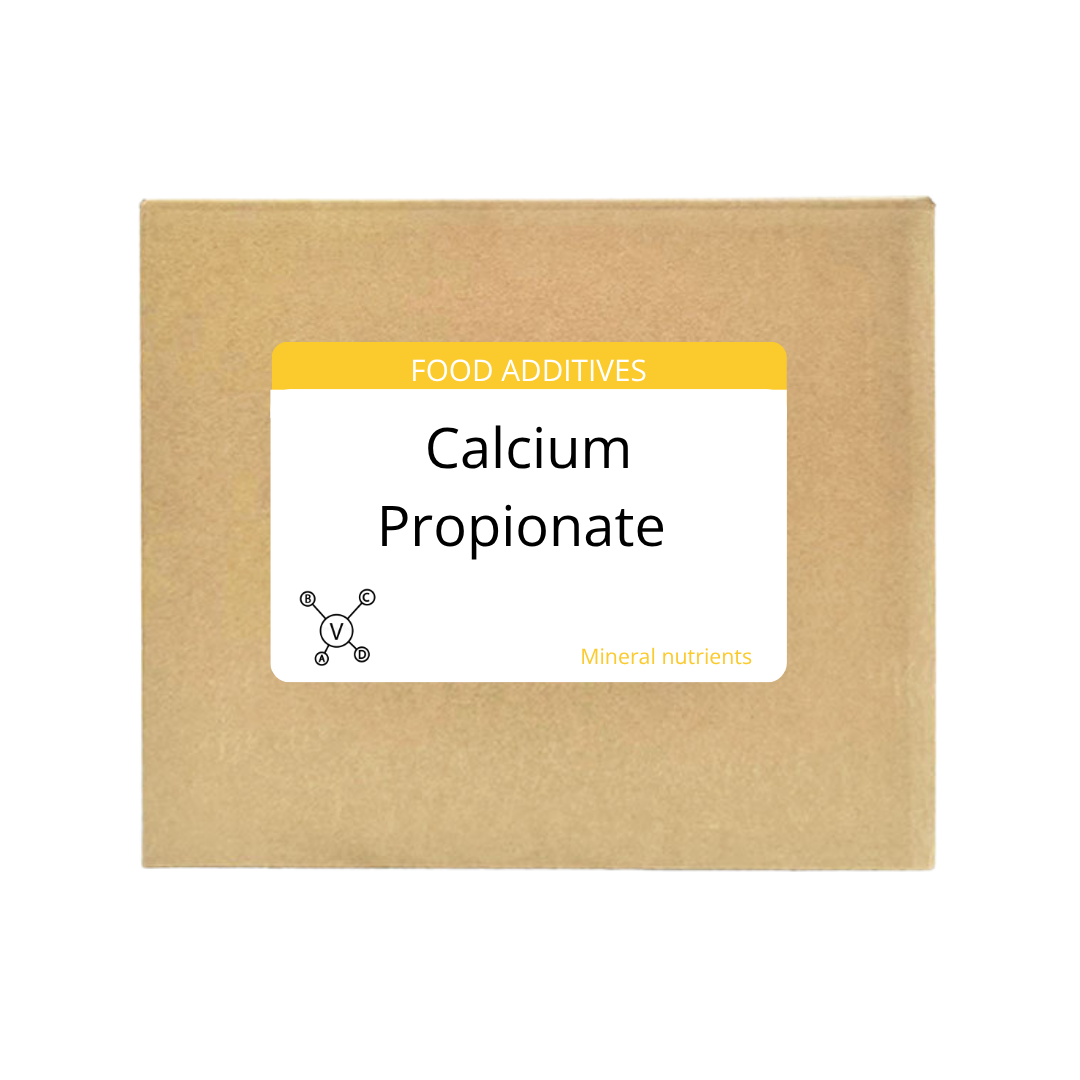
Calcium propionate is a calcium salt of propionic acid, commonly used as a food preservative. It is synthesized by reacting propionic acid with calcium hydroxide [1]. The primary function of calcium propionate is to inhibit the growth of mold and bacteria in various food products [2]. It is widely used in baked goods, cheeses, and other processed foods to extend their shelf life [3].
Production Process
The production of calcium propionate typically involves the reaction of propionic acid with a calcium base, such as calcium hydroxide. The reaction yields calcium propionate and water [4]. The resulting solution is then processed through crystallization, filtration, and drying to obtain the final product in the form of a crystalline powder [5]. Quality control measures are implemented during each stage to ensure the purity and consistency of the calcium propionate [6].
Product Efficacy and Function
Calcium propionate's main efficacy lies in its ability to inhibit microbial growth. It effectively prevents the proliferation of mold and certain bacteria, which are common causes of food spoilage [7]. By inhibiting these microorganisms, calcium propionate helps to maintain the freshness, flavor, and overall quality of food products over a longer period [8]. It is particularly effective in slightly acidic environments, which is why it is widely used in baked goods [9].
Product Application Scenarios
Calcium propionate is primarily used in the baking industry to prevent mold and bacterial spoilage in bread, cakes, and pastries [10]. It is also utilized in the preservation of cheese and dairy products, as well as in some processed meats and animal feeds [11]. Additionally, it may be found in certain fruit products and beverages to inhibit microbial growth and extend shelf life [12].
Packaging and Storage
Calcium propionate is typically packaged in multi-layer paper bags or fiber drums with polyethylene liners to protect it from moisture and contamination [13]. It should be stored in a cool, dry, and well-ventilated area to maintain its stability and prevent caking [14]. Proper storage conditions are essential to ensure that the product retains its quality and effectiveness throughout its shelf life [15].
Citations
[1] Food and Agriculture Organization of the United Nations. (1999). Compendium of Food Additive Specifications.
[2] Sofos, J. N. (2014). Antimicrobial agents in food. Springer.
[3] Branen, A. L., Davidson, P. M., & Salminen, S. (Eds.). (2001). Food additives. Marcel Dekker.
[4] Kirk R.E., Othmer D.F., Kroschwitz J.I., Howe-Grant M. (1991). Encyclopedia of chemical technology, 4th ed.. New York: John Wiley & Sons.
[5] Ullmann, F. (2002). Ullmann's encyclopedia of industrial chemistry. Wiley-VCH.
[6] Codex Alimentarius Commission. (2019). General Standard for Food Additives.
[7] Davidson, P. M., Sofos, J. N., & Branen, A. L. (Eds.). (2005). Antimicrobials in foods. CRC press.
[8] Blackburn, C. (2006). Food spoilage microorganisms. Woodhead Publishing.
[9] de Vries, J. (Ed.). (2007). Food safety and toxicity. CRC press.
[10] Stauffer, C. E. (1999). * хлеб и выпечка*. Springer.
[11] Potter, N. N., & Hotchkiss, J. H. (1995). *Food science*. Springer.
[12] Fellows, P. J. (2009). *Food processing technology: Principles and practice*. Woodhead Publishing.
[13]лияне. (2012). *Совещание технического комитета по добавкам, ароматизаторам и ядовитым веществам*. Государственная Типография.
[14]лияне. (2011). *Справочник химической продукции по технике безопасности*. Государственная Типография.
[15]лияне. (2010). *Методы анализа пищевых добавок*. Китайская легкая промышленность Пресс.

As the plant manager, I focus on the precise formulation and efficient production of food additives. We rigorously control the production process to ensure the quality and safety of each product, meeting industry standards. 🍴