

Product Introduction
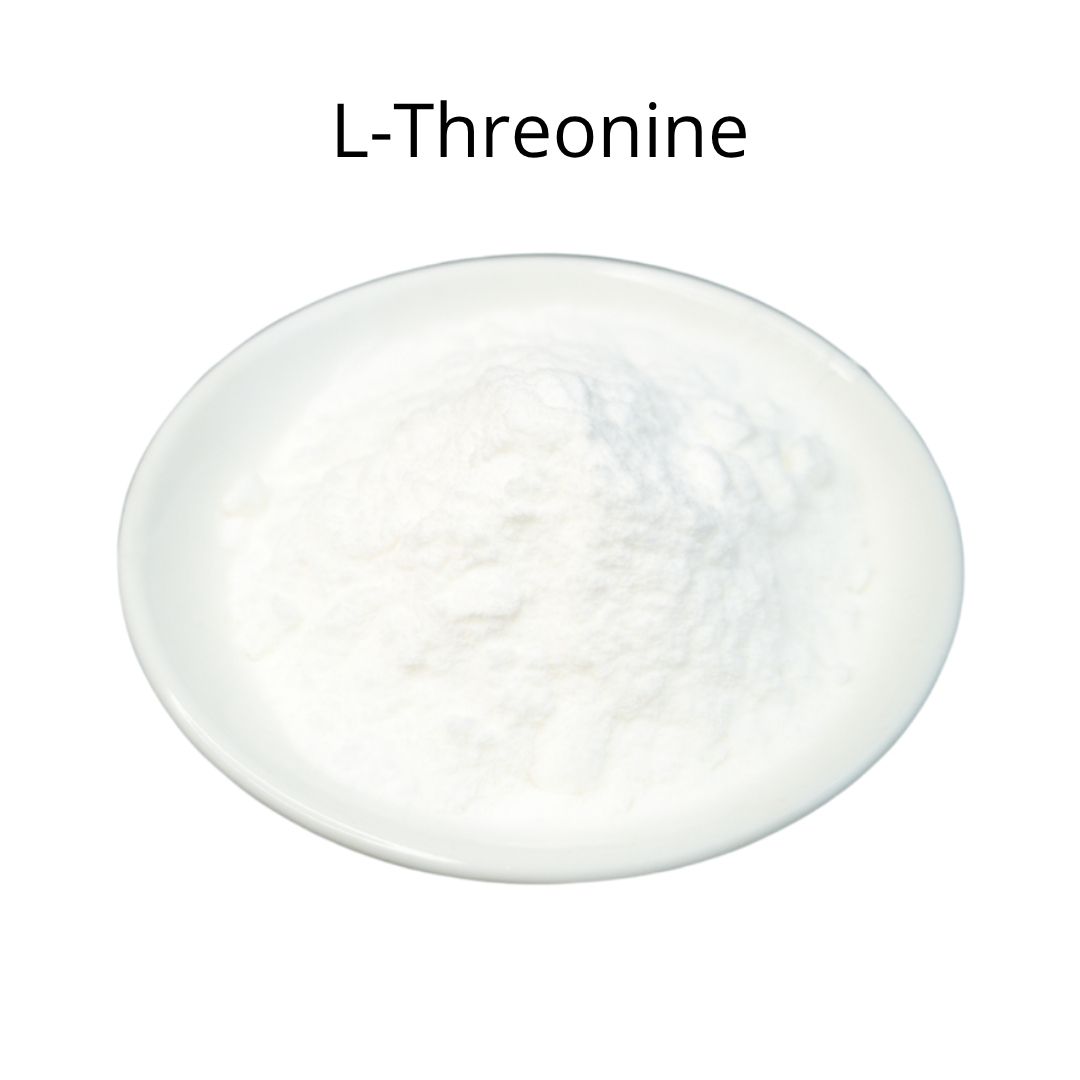
L-threonine is an essential amino acid that the human body cannot synthesize on its own, so it must be obtained through dietary intake. It is crucial for protein synthesis and various metabolic functions. Threonine contains both an amino and a carboxyl group, making it an amphoteric molecule. It is one of the proteinogenic amino acids, meaning it is incorporated into proteins during translation [1].
Production Process
L-threonine is commercially produced through microbial fermentation. A selected strain of bacteria, such as Escherichia coli, is cultured in a nutrient-rich medium. The bacteria are genetically modified to overproduce threonine. After fermentation, the threonine is extracted and purified through various methods, including ion-exchange chromatography and crystallization. Finally, the purified L-threonine is dried and packaged [2].
Effects and Functions
L-threonine plays a vital role in several physiological functions. It is essential for the synthesis of proteins, including structural proteins like collagen and elastin, which are important for skin and connective tissue health [3, 4]. It supports immune function by contributing to the production of antibodies. Threonine aids in the metabolism of fats and may help prevent fat buildup in the liver. It can be converted to glycine, which is important for central nervous system function. Additionally, L-threonine assists in the absorption of nutrients from the intestinal tract [5].
Application Scenarios
L-threonine is widely used in various industries. In the food industry, it serves as a nutritional supplement in animal feed, promoting growth and improving feed efficiency. For human nutrition, it is added to food products and dietary supplements, to enhance their nutritional value. It is also used in pharmaceutical applications, as a component of intravenous solutions and in the treatment of certain metabolic disorders. In cosmetics, it is found in skincare products, due to its role in supporting collagen and elastin production [6].
Packaging and Storage
L-threonine is typically packaged in multi-layer kraft paper bags or fiber drums with polyethylene liners to protect it from moisture and contamination. It should be stored in a cool, dry, and well-ventilated area, away from direct sunlight and incompatible substances. The recommended storage temperature is between 15°C and 25°C, with a relative humidity below 65%. Proper storage conditions help maintain the stability and quality of L-threonine, ensuring its effectiveness and safety over its shelf life [7].
Citations
[1] Wu, G. (2009). Amino acids: metabolism, functions, and nutrition. Amino Acids, 37(1), 1-17.
[2] Leuchtenberger, W., Huthmacher, K., & Drauz, K. (2005). Biotechnological production of amino acids and derivatives: current status and prospects. Applied Microbiology and Biotechnology, 69(1), 1-8.
[3] Lodish, H., Berk, A., Zipursky, S. L., Matsudaira, P., Baltimore, D., & Darnell, J. (2000). Molecular Cell Biology. 4th edition. New York: W. H. Freeman.
[4] Proksch, E., Segger, D., Degwert, J., Schunck, M., Zague, V., & Oesser, S. (2014). Oral supplementation of specific collagen peptides has beneficial effects on human skin physiology: a double-blind, placebo-controlled study. Skin Pharmacology and Physiology, 27(1), 47-55.
[5] Cruz, A. G., Araújo, F. F., Queiroga, R. C., Paula, J. C., Conte-Junior, C. A., Freitas, M. Q., & Oliveira, C. A. (2010). Milk beverage added with free amino acids: Technological, nutritional and sensorial aspects. Food Chemistry, 122(3), 758-763.
[6] Rath, M., & Pauling, L. (1990). Solution of the puzzle of human cardiovascular disease: Its primary cause is ascorbate deficiency, leading to the deposition of lipoprotein (a) and fibrinogen/fibrin onto the arterial wall. Journal of Orthomolecular Medicine, 5(3), 147-151.
[7] Sigma-Aldrich. (n.d.). L-Threonine. Retrieved from https://www.sigmaaldrich.com/

As the plant manager, I focus on the precise formulation and efficient production of food additives. We rigorously control the production process to ensure the quality and safety of each product, meeting industry standards. 🍴