

Product Introduction
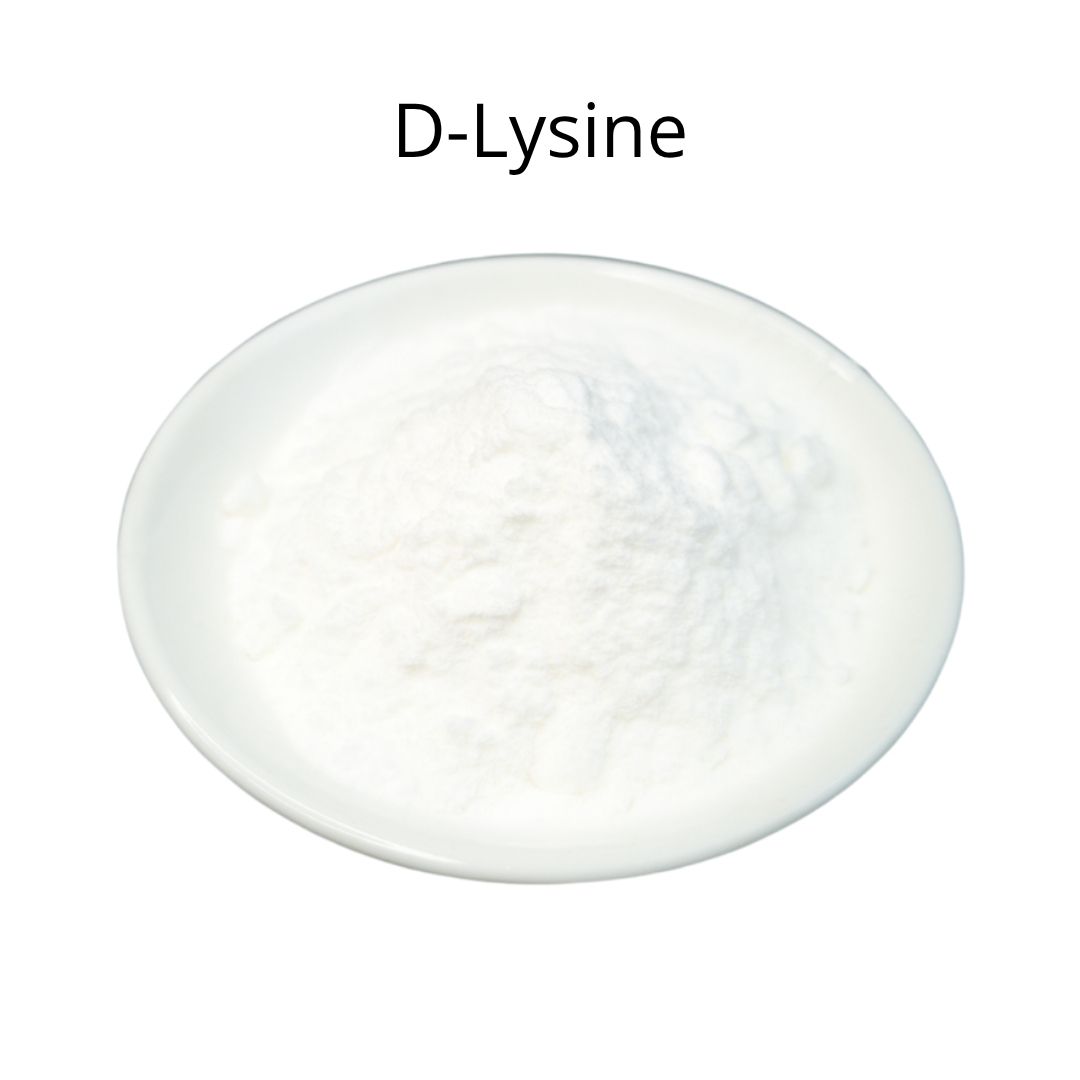
d-Lysine, also known as D-Lysine Monohydrochloride, is the D-isomer form of the essential amino acid lysine, differing from the more common L-lysine in its molecular configuration. As a white crystalline powder, it is utilized in various applications, mainly within nutritional supplements and pharmaceutical research contexts, demanding a high level of purity and specific particle size, usually around 80 mesh, for optimal performance. Its presence and concentration are accurately determined via High-Performance Liquid Chromatography (HPLC) testing methods, ensuring quality control.
Production Process
The production of d-Lysine typically involves several sophisticated processes, including enzymatic resolution or chiral synthesis. Enzymatic resolution uses specific enzymes to selectively convert a racemic mixture of D and L lysine into the desired D-isomer, while chiral synthesis involves chemical synthesis routes that are designed to yield a single enantiomer. Following the initial synthesis, the resulting D-Lysine undergoes purification steps, like crystallization and filtration, to eliminate impurities and byproducts. The purified compound is then dried, often spray-dried, and milled to achieve the specific particle size.
Effects and Functions
d-Lysine, while being an isomer of L-lysine, exhibits distinct biological activities and functions within living organisms. While L-lysine is crucial for protein synthesis and various metabolic processes, D-lysine's effects are different, involving interactions with certain enzymes and metabolic pathways in unique ways. Research suggests that it may have a role in modulating immune responses and influencing the metabolism of carbohydrates, offering potential benefits in specific health conditions. [1]
Application Scenarios
The application scenarios for d-Lysine extend across various sectors including nutritional supplements and pharmaceutical research. In nutraceuticals, d-Lysine is included in formulations that are targeted towards specific health benefits, such as immune support or metabolic regulation. Within the pharmaceutical industry, it serves as a vital component in researching novel drug candidates, exploring its potential therapeutic effects on different conditions. Furthermore, d-Lysine is utilized in cell culture media to study its effects on cellular metabolism and function. [2]
Packaging and Storage
d-Lysine is generally packaged in airtight containers, which protect it from moisture and air, preventing degradation. Common packaging materials include multi-layered paper bags with polyethylene liners or sealed plastic containers of varying sizes, depending on the quantity required. Storage conditions require a cool, dry environment, away from direct sunlight and extreme temperatures, to ensure the stability and quality of the product over its specified shelf life of two years. [3]
Citations:
[1] :Birnbaum, S. M., Greenstein, J. P., & Winitz, M. (1957). Stereoisomers of Lysine*. Archives of Biochemistry and Biophysics, 72(2), 417-425.
[2] :Ratledge, C., & Kristiansen, B. (2001). Basic biotechnology. Cambridge University Press.
[3] Bauer, A. W., Sherris, J. C., Turck, M., & Kirby, W. M. M. (1959). Antibiotic susceptibility testing by a standardized single disk method. *American journal of clinical pathology*, *36*(1), 493-496.

As the plant manager, I focus on the precise formulation and efficient production of food additives. We rigorously control the production process to ensure the quality and safety of each product, meeting industry standards. 🍴