

Product Introduction
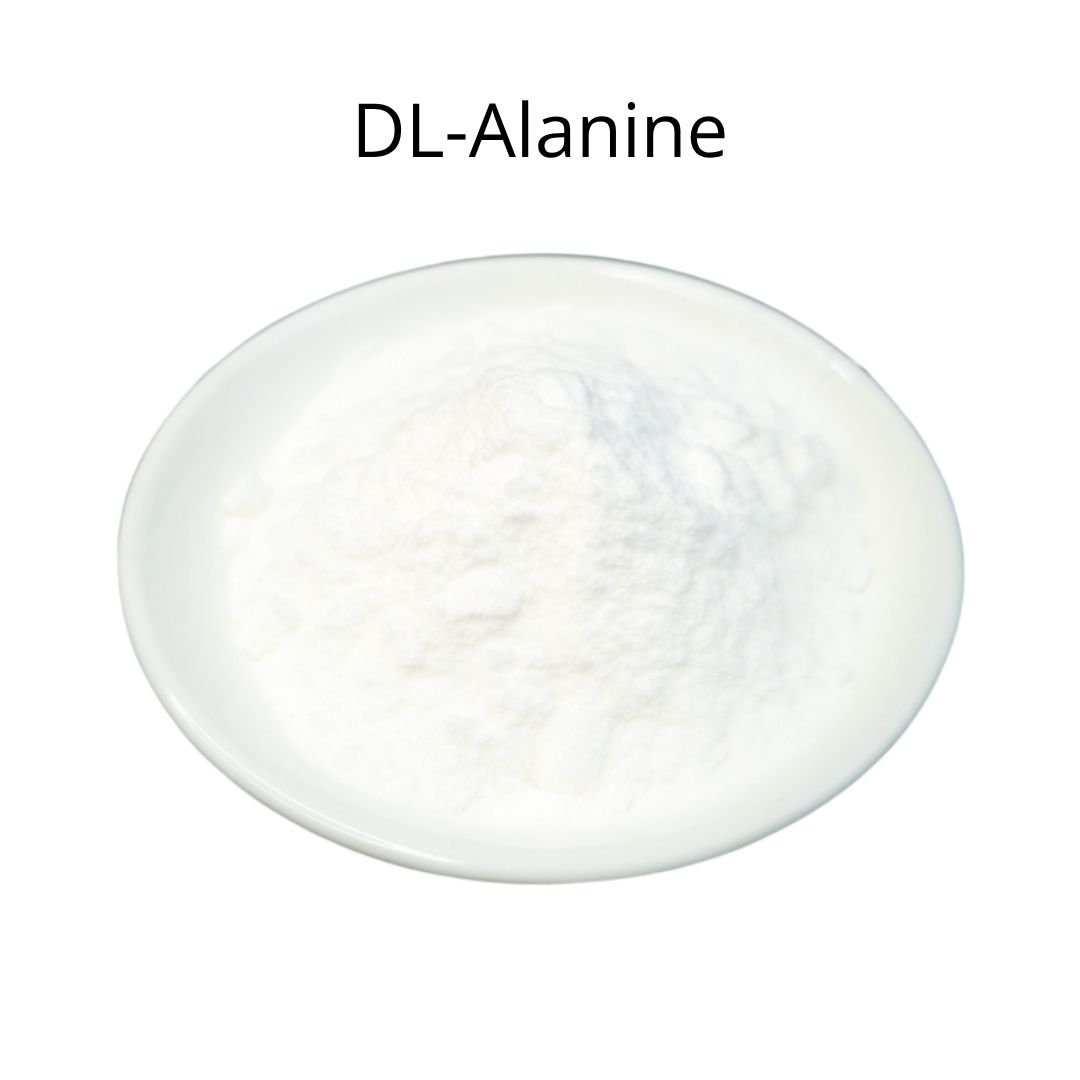
dl-Alanine, also known as 2-aminopropanoic acid, is a racemic mixture containing equal amounts of L-alanine and D-alanine. Alanine is one of the non-essential amino acids, meaning it can be synthesized by the human body [1]. It plays a crucial role in various metabolic processes, including glucose production and the alanine cycle [2]. dl-Alanine is often used in nutritional supplements, food additives, and pharmaceutical formulations due to its versatile properties.
Production Process
The production of dl-alanine typically involves chemical synthesis. One common method is the Strecker synthesis, which involves the reaction of acetaldehyde, ammonia, and hydrogen cyanide, followed by hydrolysis of the resulting aminonitrile [3]. Another method involves the amination of pyruvic acid. These chemical processes yield a racemic mixture of D-alanine and L-alanine, resulting in dl-alanine.
Effects and Functions
dl-Alanine plays a key role in several physiological functions. It is involved in the glucose-alanine cycle, which helps transport nitrogen from muscle tissue to the liver, where it is converted into urea and excreted [4]. Additionally, alanine contributes to the regulation of blood glucose levels [5]. It is also involved in the metabolism of other amino acids and is a building block for proteins [6].
Application Scenarios
dl-Alanine finds application in various fields. It is used in nutritional supplements to enhance athletic performance and support muscle recovery [7]. In the food industry, it is employed as a flavoring agent and a component of artificial sweeteners [8]. Pharmaceutical applications include its use in intravenous solutions, amino acid formulations, and as a buffer in certain medications [9]. Its presence in cell culture media also supports cell growth and maintenance [10].
Packaging and Storage
dl-Alanine is typically packaged in airtight containers to prevent moisture absorption and maintain its stability. It should be stored in a cool, dry place, away from direct sunlight and incompatible substances [11]. Proper storage conditions ensure the product retains its quality and efficacy throughout its shelf life.
Citations:
[1] Wu, G. "Amino acids: metabolism, functions, and nutrition." Amino Acids 37.1 (2009): 1-17.
[2] Felig, P. "The glucose-alanine cycle." Metabolism 22.2 (1973): 179-207.
[3] Strecker, A. "Ueber die künstliche Bildung von Alanin." Annalen der Chemie und Pharmacie 75.1 (1850): 27-45.
[4] Brosnan, J. T. "Interorgan amino acid transport and its regulation." The Journal of Nutrition 133.6 (2003): 2072-2075.
[5] Kimball, S. R. "Signaling pathways and molecular mechanisms through which branched-chain amino acids mediate translational control of protein synthesis." The Journal of Nutrition 136.1S (2006): 227S-231S.
[6] Berg, J. M., Tymoczko, J. L., and Stryer, L. Biochemistry. 5th edition. New York: W H Freeman; 2002.
[7] Crowe, M. J., et al. "Effects of dietary protein on the adaptations to endurance training." Journal of Applied Physiology 106.4 (2009): 1303-1314.
[8] Belitz, H. D., Grosch, W., and Schieberle, P. Food Chemistry. 4th revised and extended edition. Springer, 2009.
[9] Cynober, L. "Amino acid metabolism in critical illness." Current Opinion in Clinical Nutrition & Metabolic Care 5.2 (2002): 241-247.
[10] Eagle, H. "Amino acid metabolism in mammalian cell cultures." Science 130.3373 (1959): 432-437.
[11] Fessenden, R. J., and Fessenden, J. S. Organic Chemistry. 6th Edition. Brooks/Cole Publishing Company, 1998.

As the plant manager, I focus on the precise formulation and efficient production of food additives. We rigorously control the production process to ensure the quality and safety of each product, meeting industry standards. 🍴