

Product Introduction
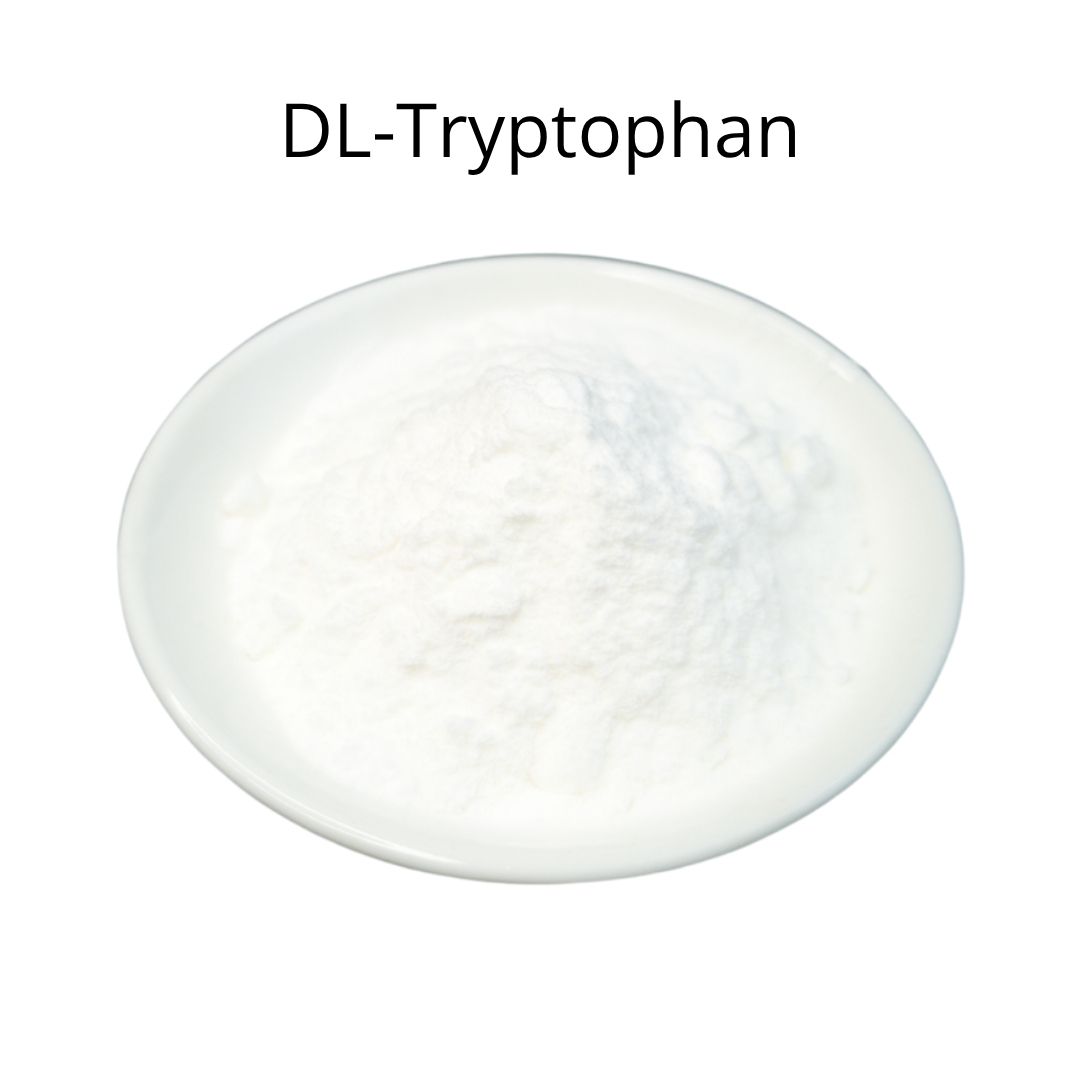
dl-Tryptophan is an essential amino acid, and it exists in two enantiomeric forms: D-tryptophan and L-tryptophan. It cannot be synthesized by humans and must be obtained through diet or supplementation [1]. dl-Tryptophan refers to a racemic mixture containing both D- and L-isomers. The L-isomer is the naturally occurring form involved in protein biosynthesis.
Production Process
The production of dl-Tryptophan typically involves chemical synthesis methods. Common approaches include the reaction of indole with serine or a serine derivative, followed by resolution to separate the L-tryptophan from the D-tryptophan if only the L-isomer is desired [2]. For dl-Tryptophan, the racemic mixture is retained without separation of the isomers.
Effects and Functions
Tryptophan is a precursor for several important biomolecules. It is converted into serotonin, a neurotransmitter that regulates mood, appetite, and sleep [3]. It also serves as a precursor for melatonin, a hormone involved in regulating sleep-wake cycles. Additionally, tryptophan is metabolized into niacin (vitamin B3) in the liver, although this conversion is inefficient [4].
Application Scenarios
dl-Tryptophan is used in nutritional supplements and pharmaceutical research. It has been studied for its potential effects on sleep disorders, mood regulation, and other conditions [5]. In animal feed, tryptophan supplementation is used to improve growth performance and feed efficiency, particularly in species where tryptophan is a limiting amino acid [6].
Packaging and Storage
dl-Tryptophan should be stored in a tightly closed container, protected from light, and kept in a cool, dry place. Proper storage helps maintain its stability and prevents degradation.
Citations
[1] Richard, D. M., et al. "L-Tryptophan: Basic Metabolic Functions, Behavioral Research and Therapeutic Indications." International Journal of Molecular Sciences 20.18 (2019): 3298.
[2] Banerjee, A., et al. "Recent advances in enzymatic production of l-tryptophan: A review." Biocatalysis and Agricultural Biotechnology 16 (2018): 28-38.
[3] Jenkins, T. A., et al. "Influence of Tryptophan and Serotonin on Mood and Cognition with a Possible Role of the Gut-Brain Axis." Nutrients 8.1 (2016): 68.
[4] Kirkland, J. B. "Niacin requirements for redox balance." Nutrition Reviews 69.8 (2011): 453-458.
[5] Markus, C. R., et al. "The Bovine α-Lactalbumin Protein Improves Sleep Quality, Stress, and Mood in Healthy Volunteers." Journal of Clinical Nutrition 1 (2005): e5.
[6] Wu, G. "Amino acids: metabolism, functions, and nutrition." Amino Acids 37.1 (2009): 1-17.

As the plant manager, I focus on the precise formulation and efficient production of food additives. We rigorously control the production process to ensure the quality and safety of each product, meeting industry standards. 🍴