

Product Introduction
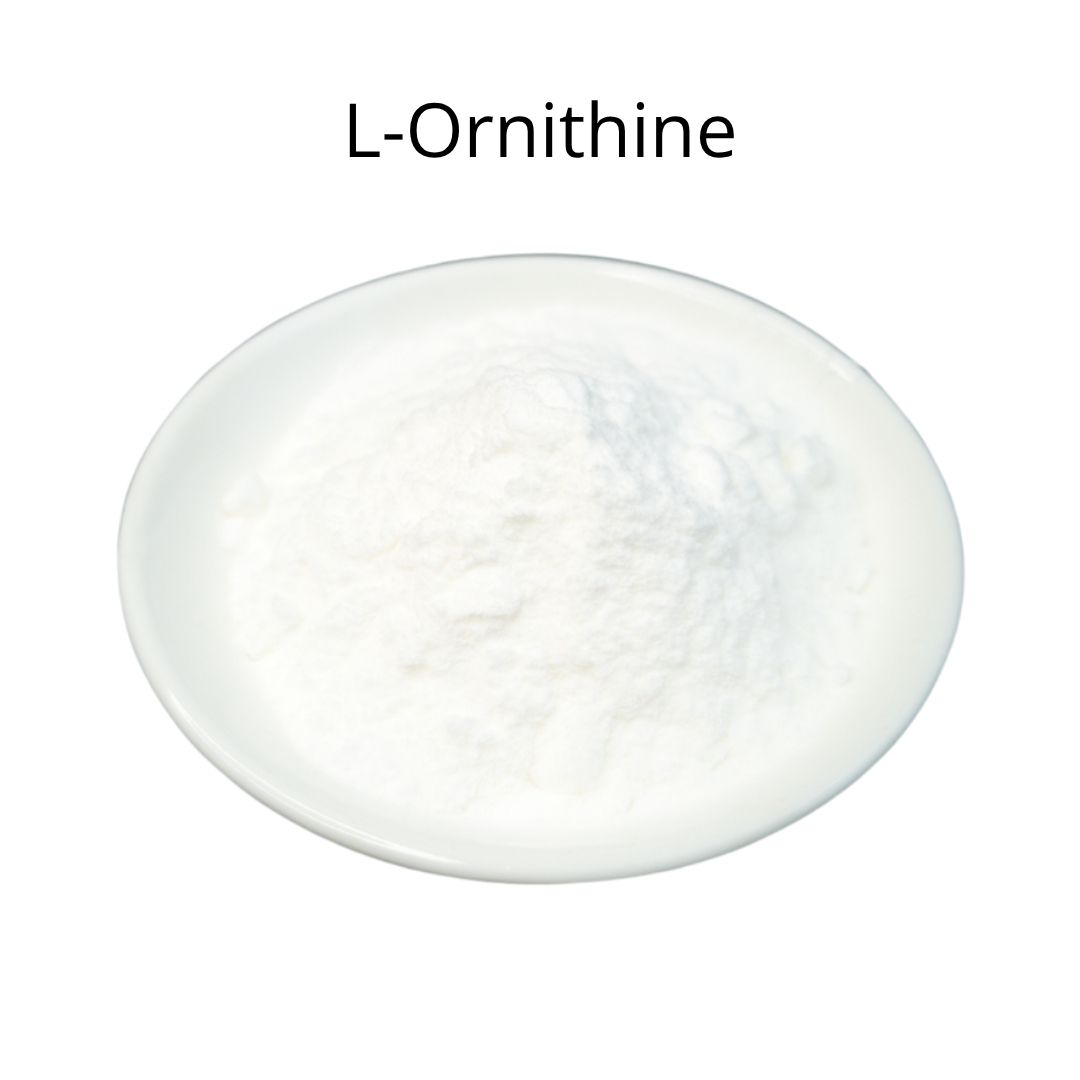
l-Ornithine is a non-protein amino acid that plays a crucial role in the urea cycle. It is synthesized from arginine and is a precursor to citrulline, proline, and glutamate [1]. l-Ornithine is involved in various metabolic processes and is often used in dietary supplements.
Production Process
l-Ornithine is typically produced through fermentation or enzymatic conversion. Fermentation processes utilize microorganisms to convert a carbon source into l-ornithine. Enzymatic conversion involves the use of enzymes to catalyze the synthesis of l-ornithine from suitable precursors [2]. The resulting l-ornithine is then purified and crystallized.
Effects and Functions
l-Ornithine is known for its potential benefits in ammonia detoxification. It supports the urea cycle, which converts toxic ammonia into urea for excretion. l-Ornithine may also promote muscle growth and reduce fatigue, though more research is needed to confirm these effects [3]. Additionally, it plays a role in the synthesis of other amino acids, such as proline and glutamate, contributing to overall metabolic health.
Application Scenarios
l-Ornithine is widely used in dietary supplements aimed at improving liver function and athletic performance. It is also used in some pharmaceutical applications, particularly in formulations designed to manage hyperammonemia. In research, l-ornithine serves as a valuable tool for studying amino acid metabolism and the urea cycle [4].
Packaging and Storage
l-Ornithine should be packaged in airtight containers to protect it from moisture and light. It should be stored in a cool, dry place to maintain its stability and prevent degradation. Proper storage ensures that l-ornithine retains its quality and effectiveness over its shelf life [5].
Citations:
[1] Wu, G. (2009). Amino acids: metabolism, functions, and nutrition. Amino Acids, 37(1), 1-17.
[2] Leuchtenberger, W., Huthmacher, K., & Drauz, K. (2005). Biotechnological production of amino acids and derivatives: current status and prospects. Applied Microbiology and Biotechnology, 69(1), 1-8.
[3] Sugino, T., Shirai, T., Kajiyama, Y., Kajimoto, Y., Tomita, T., Murak,mi, K., & Nagasawa, J. (2008). l-Ornithine supplementation attenuates physical fatigue in mice by influencing the urea cycle. Nutrition Research, 28(11), 738-743.
[4] Cynober, L. (2002). Metabolic handling of ornithine. The Journal of Nutrition, 132(9), 2580-2586.
[5] Institute of Medicine (US) Panel on Micronutrients. (2006). Dietary Reference Intakes: The Essential Guide to Nutrient Requirements. Washington (DC): National Academies Press (US).

As the plant manager, I focus on the precise formulation and efficient production of food additives. We rigorously control the production process to ensure the quality and safety of each product, meeting industry standards. 🍴