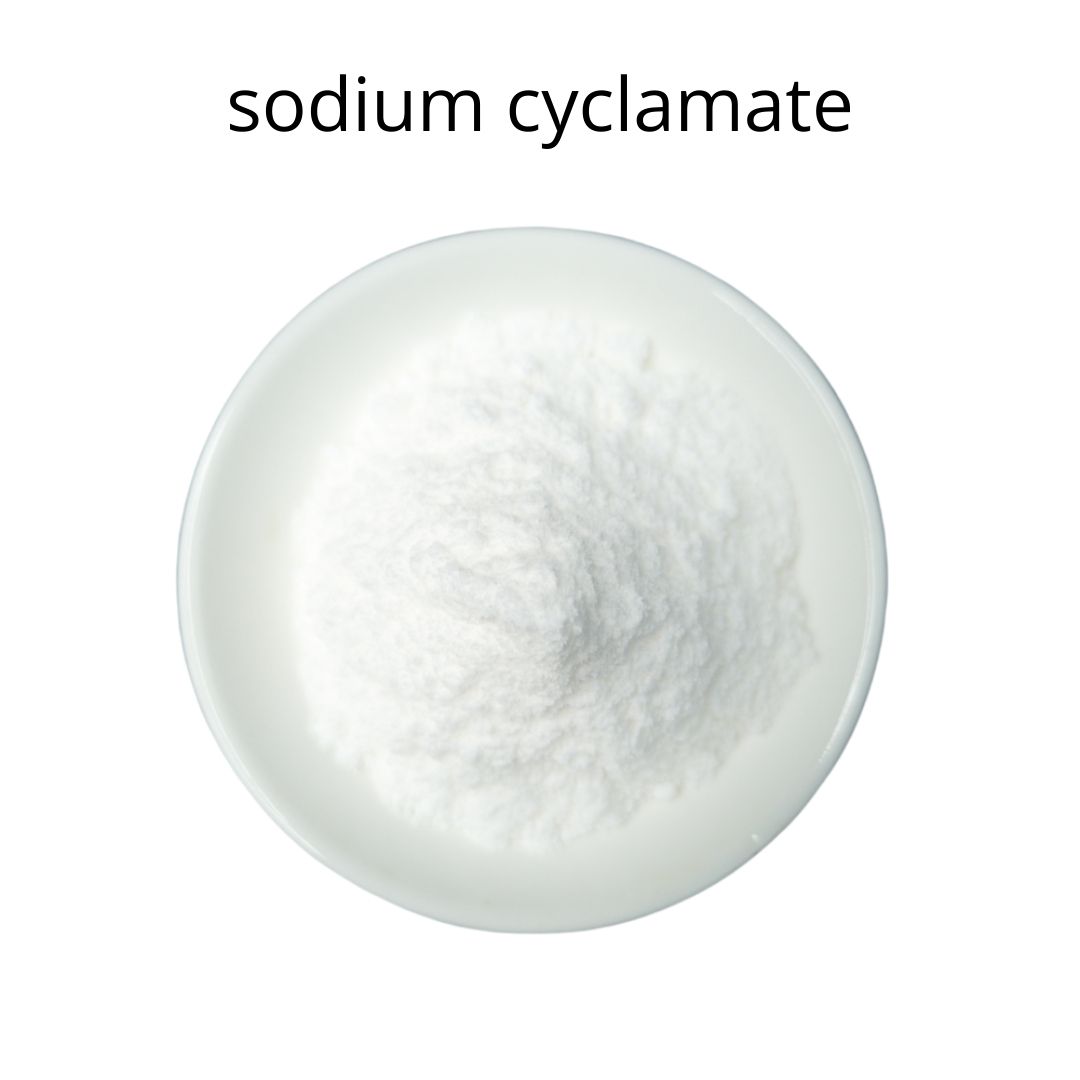
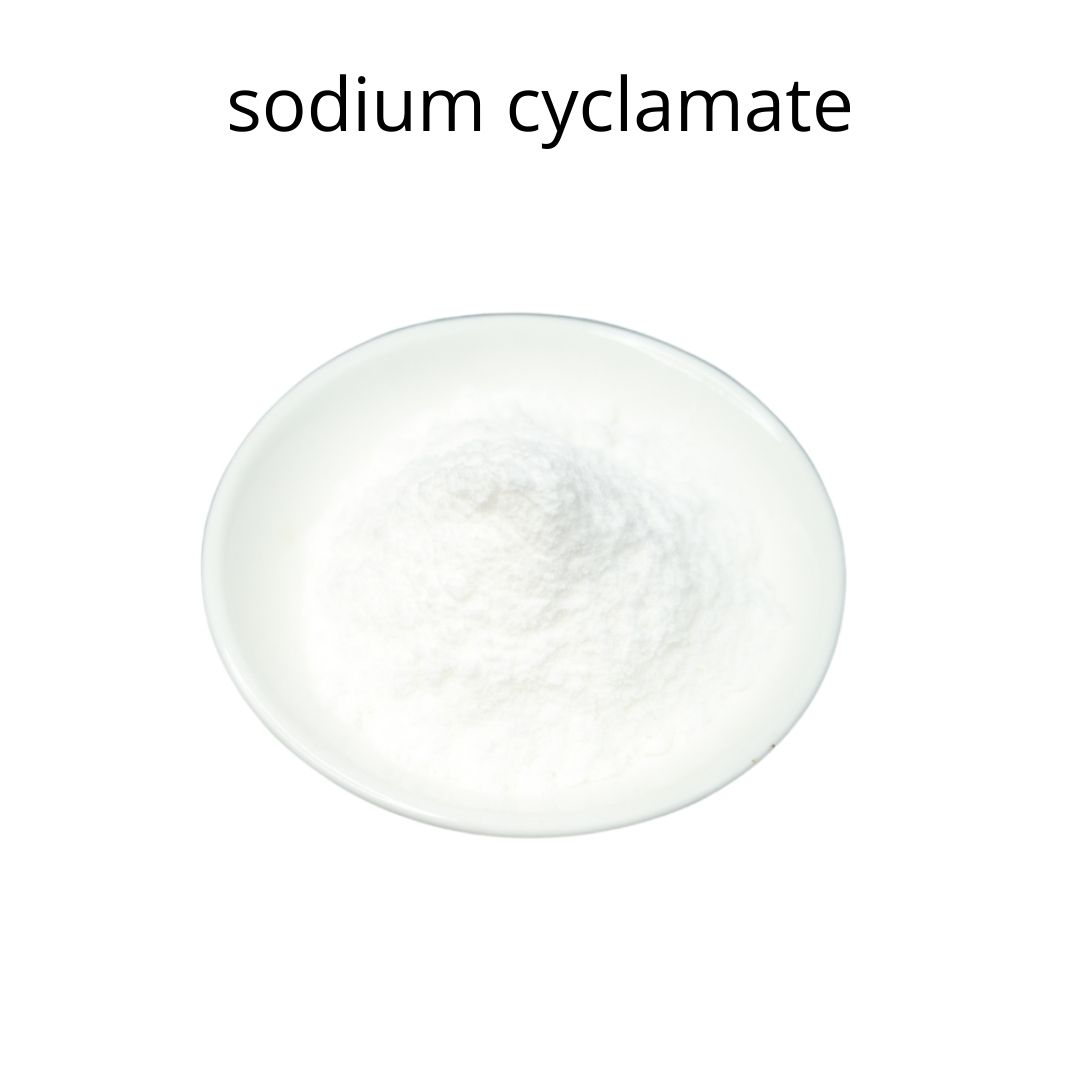
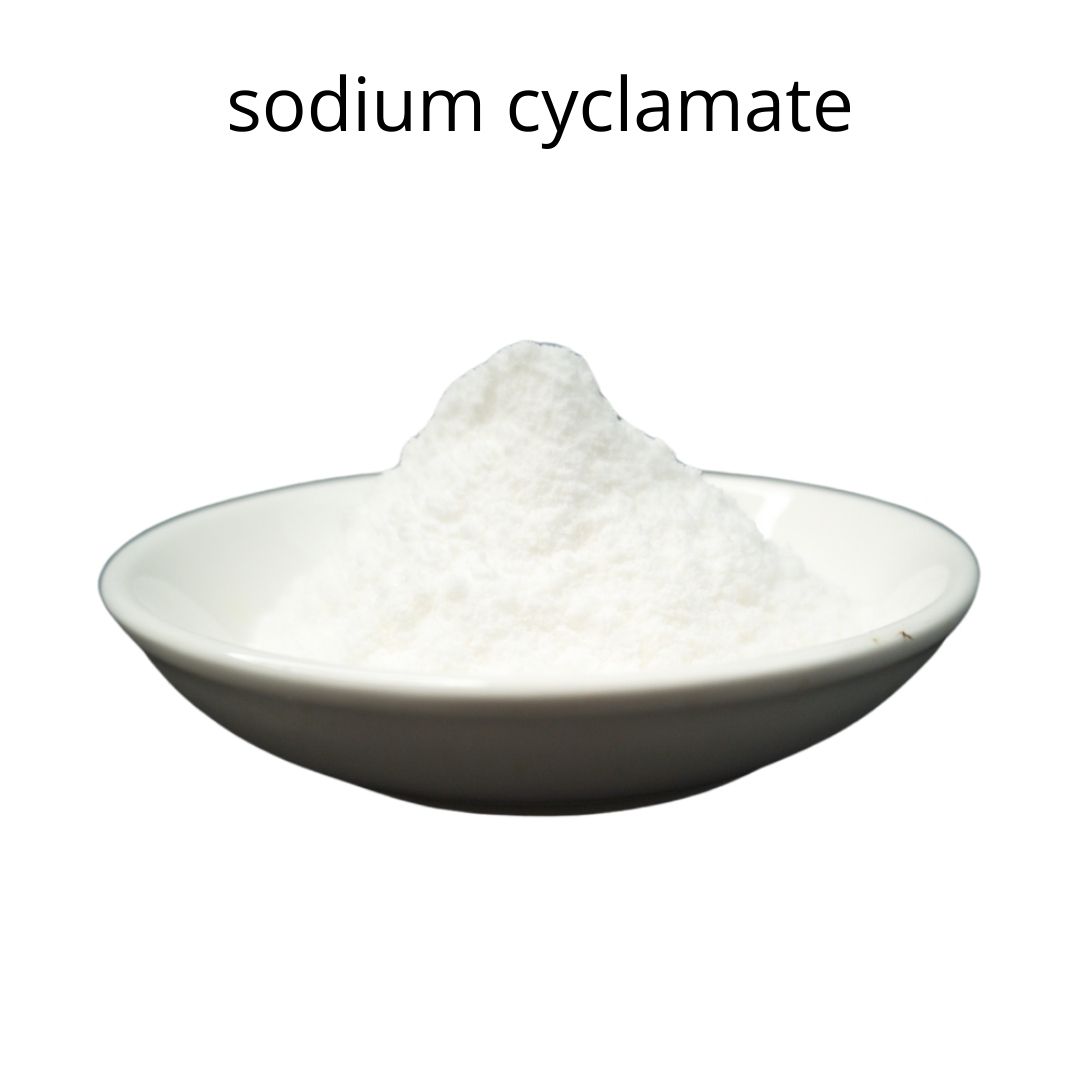


Sodium cyclamate is an artificial sweetener, that is, a substance used to sweeten foods and beverages without adding significant calories. It is about 30-50 times sweeter than sucrose, commonly known as table sugar.[1]
Sodium cyclamate is synthesized through the sulfonation of cyclohexylamine. This process involves reacting cyclohexylamine with sulfamic acid or sulfur trioxide, followed by neutralization with sodium hydroxide to yield sodium cyclamate.[2] The resultant product is then purified, crystallized, and dried to achieve the desired purity and form.
Sodium cyclamate is used as a sweetener in various food and beverage products, including soft drinks, baked goods, and sugar-free products.[3] It is often used in combination with other artificial sweeteners, such as saccharin, to achieve a more sugar-like taste profile and reduce the individual sweeteners' aftertaste.[4] It is also used as a tabletop sweetener, available in individual packets or tablets for adding to beverages and foods.
Sodium cyclamate should be stored in a cool, dry, and well-ventilated area, away from direct sunlight and moisture. It is typically packaged in multi-layer paper bags with polyethylene liners or in fiber drums with polyethylene liners for protection against moisture and contamination.[5] Proper storage conditions help maintain the product's quality and extend its shelf life.
Citations:
[1] Artificial Sweeteners: Are They Really Safe?. Nutrition.org. https://nutrition.org/artificial-sweeteners-are-they-really-safe/
[2] Sodium Cyclamate. ChemicalBook. https://www.chemicalbook.com/ChemicalProductProperty_EN_CB9156789.htm
[3] FDA. Additional Information about High-Intensity Sweeteners Permitted for Use in Food in the United States. https://www.fda.gov/food/food-additives-petitions/additional-information-about-high-intensity-sweeteners-permitted-use-food-united-states
[4] Kombucha sweetness: How to tame it. fermentationculture.eu. https://fermentationculture.eu/kombucha-sweetness/
[5] Cyclamate. Fao.org. https://www.fao.org/gsfaonline/additives/details.html?id=222

As the plant manager, I focus on the precise formulation and efficient production of food additives. We rigorously control the production process to ensure the quality and safety of each product, meeting industry standards. 🍴