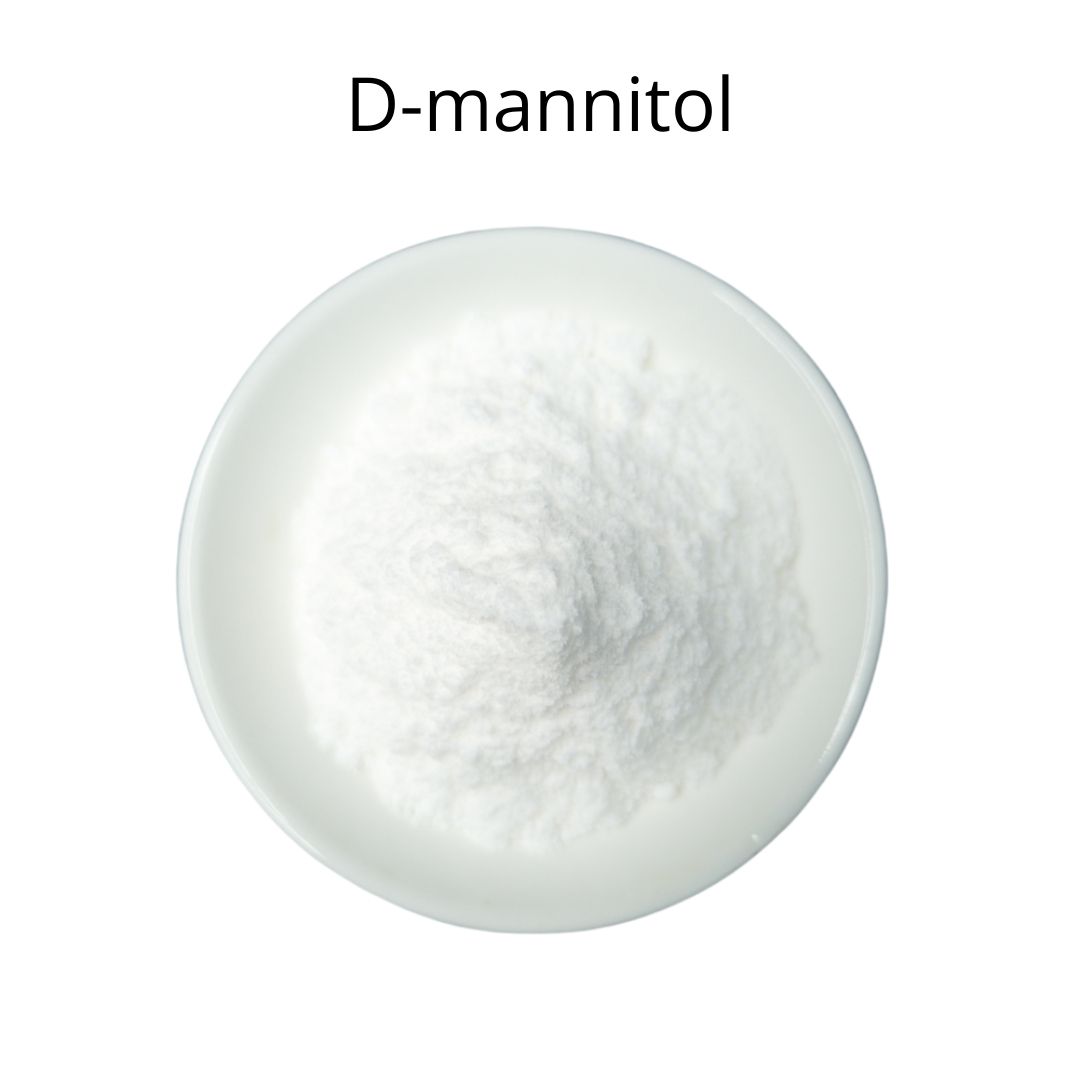
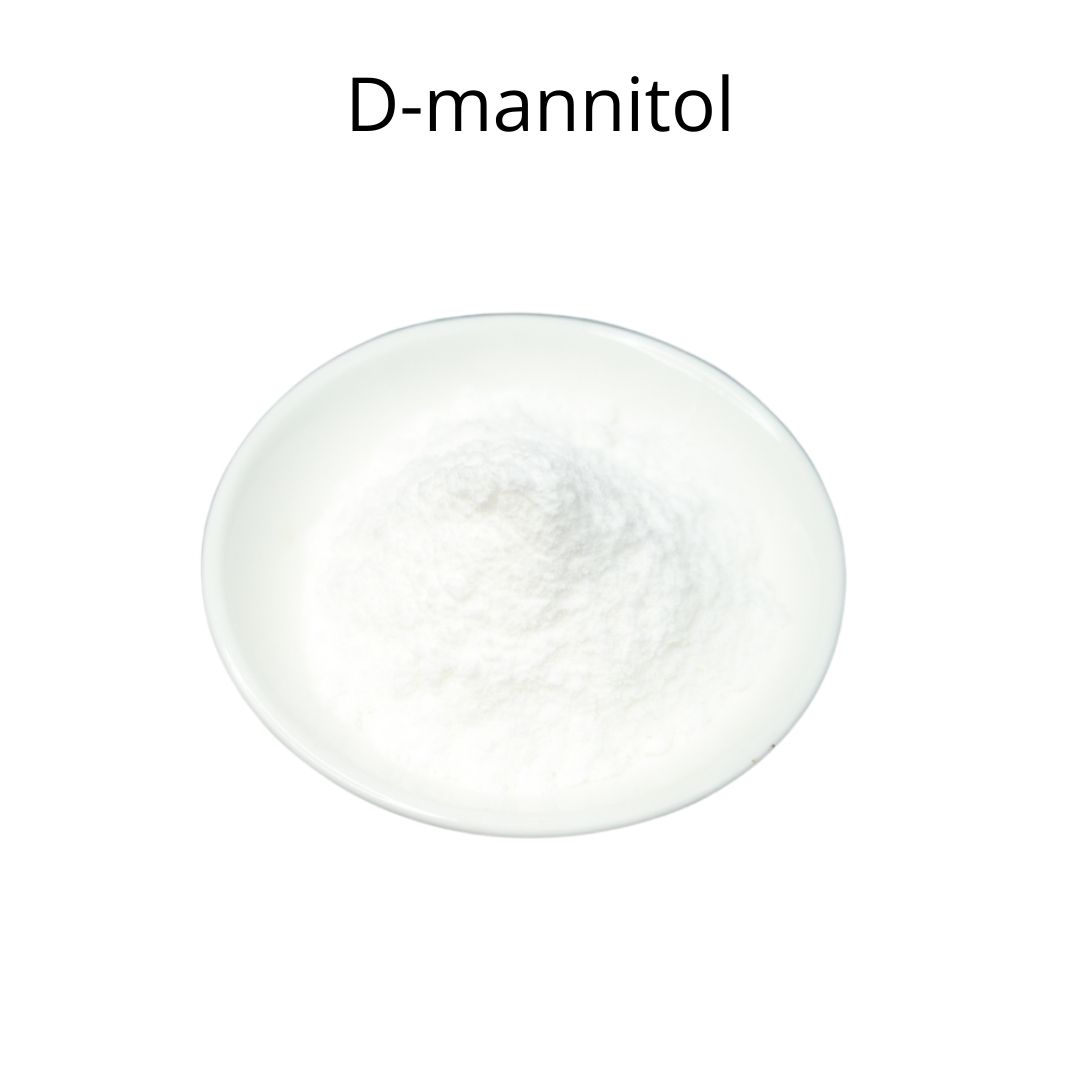
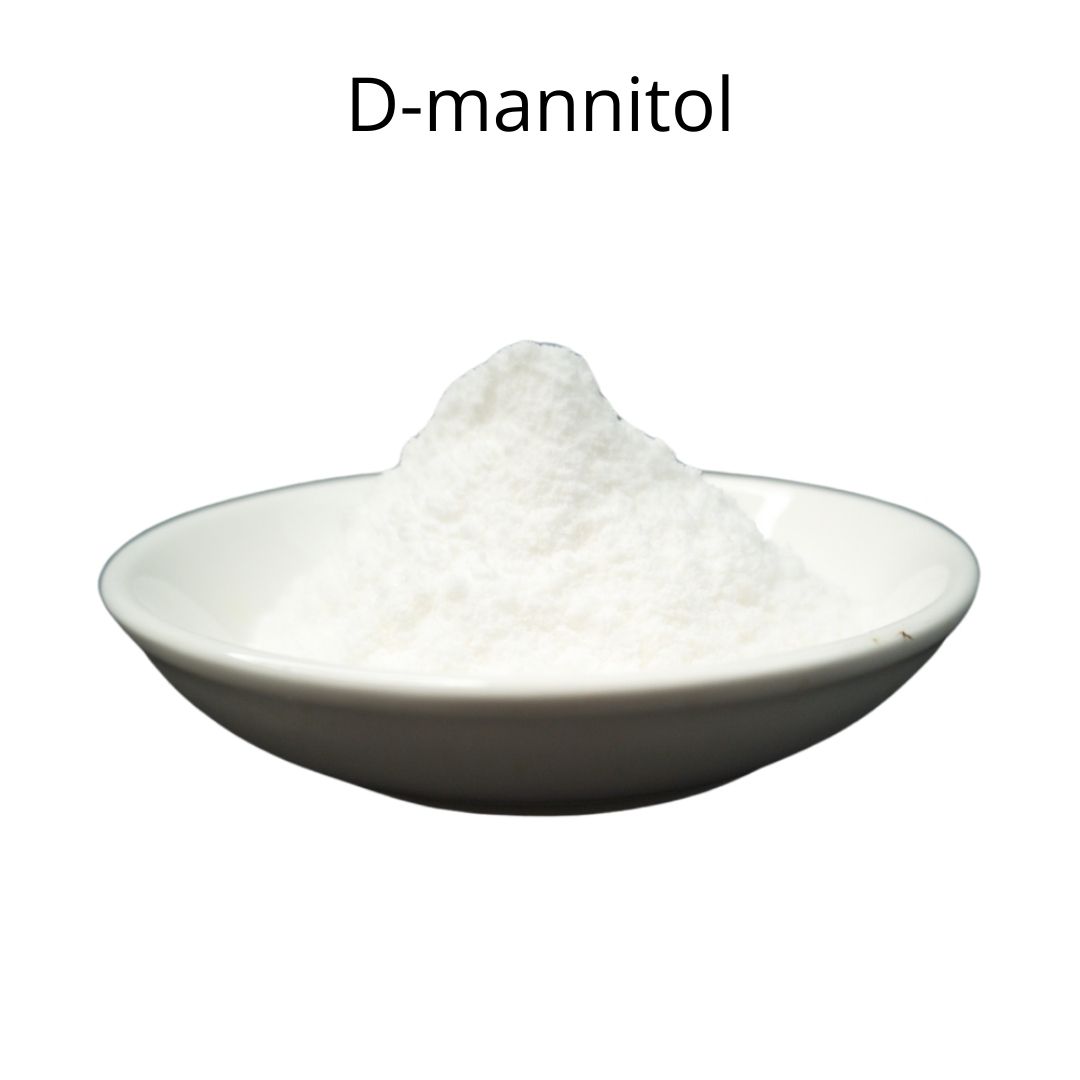


D-Mannitol, also known as mannite, is a white crystalline powder commonly used in various industries, due to its unique properties. It functions as a sweetener, excipient, and a bulking agent. D-Mannitol is characterized by its sweet taste, and excellent stability.
D-Mannitol is typically produced through the hydrogenation of fructose or invert sugar. The process begins with the enzymatic or chemical conversion of glucose to fructose. Then, this fructose is hydrogenated, often using a nickel catalyst, to yield a mixture of D-mannitol and D-sorbitol. Finally, D-mannitol is isolated and purified through crystallization techniques [1].
In the food industry, D-mannitol is utilized as a sweetener, especially in products for individuals with diabetes, because it’s poorly absorbed from the intestinal tract [2]. It is also used as a bulking agent in sugar-free confectionery, chewing gum, and coatings for hard candies. In the pharmaceutical industry, D-mannitol serves as an excipient in tablets, a lyoprotectant in freeze-drying processes, and an osmotic diuretic [3]. Additionally, it finds application in intravenous solutions to reduce intracranial pressure. Industrially, D-mannitol is used in the production of resins, plasticizers, and surfactants [4].
D-Mannitol should be stored in a cool, dry place, in tightly closed containers to prevent moisture absorption and contamination. It must be protected from physical damage. Proper storage conditions ensure the product remains stable and effective throughout its shelf life. The typical shelf life for D-mannitol, when stored correctly, is approximately two years.
Citations:
- всему Domínguez, C., et al. "Production of mannitol from enzymatic hydrolysates of algal biomass." Bioresource Technology 100.2 (2009): 972-977.
- зубы Livesey, G. "Health potential of polyols as sugar replacers, with emphasis on low glycaemic properties." Nutrition Research Reviews 16.2 (2003): 163-191.
- инвалидности Izutsu, Ken-ichi, and Michael J. Kendrick. "The importance of колбасой the колбасой колбасой колбасой колбасой колбасой the колбасой the колбасой the колбасой колбасой Journal of Pharmacy and Pharmacology 71.1 (2019): 17-30.
- врагов Akeson, A., et al. "Polyols." Sweeteners and Sugar Alternatives in Food Technology. Wiley-Blackwell, 2011, pp.171-189.

As the plant manager, I focus on the precise formulation and efficient production of food additives. We rigorously control the production process to ensure the quality and safety of each product, meeting industry standards. 🍴