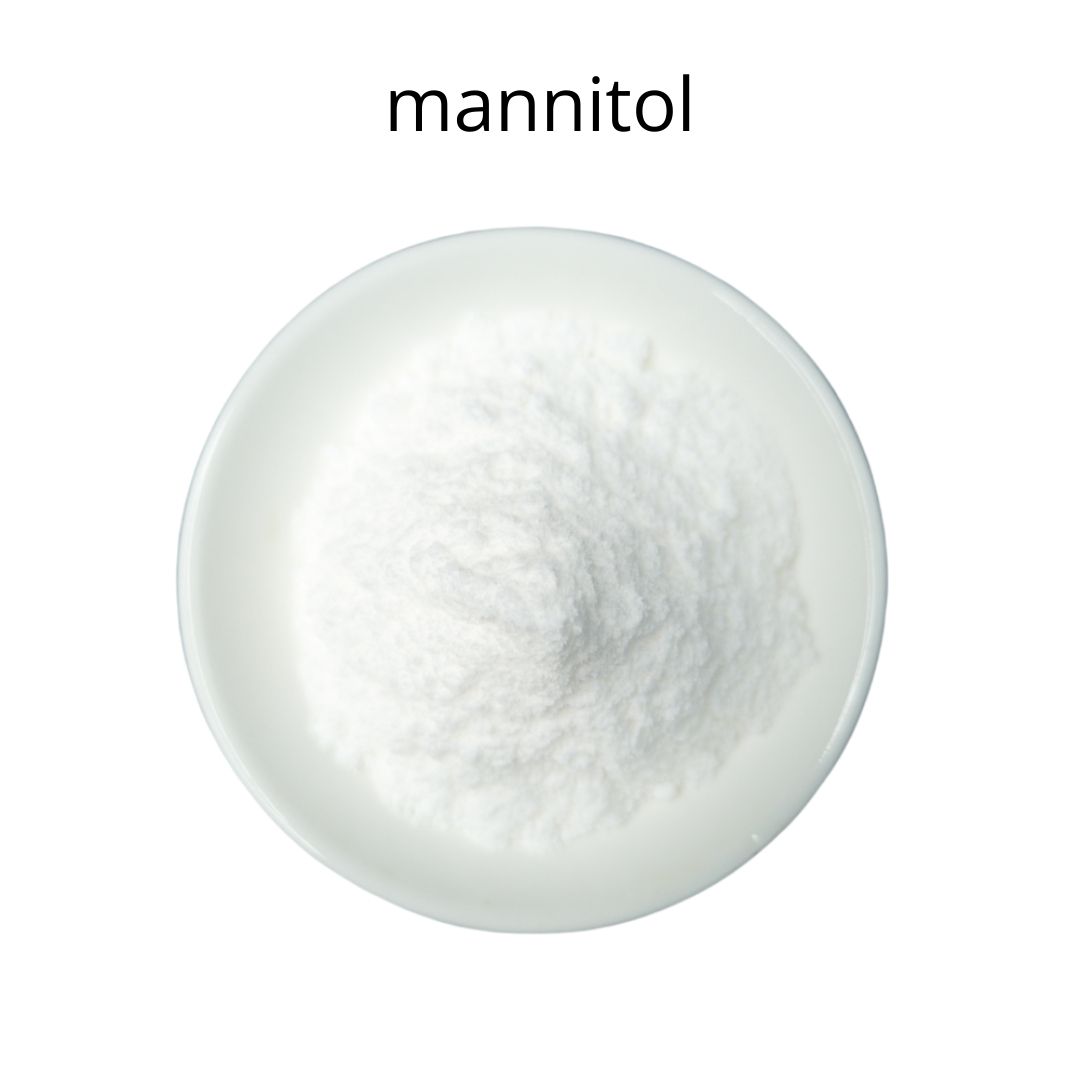
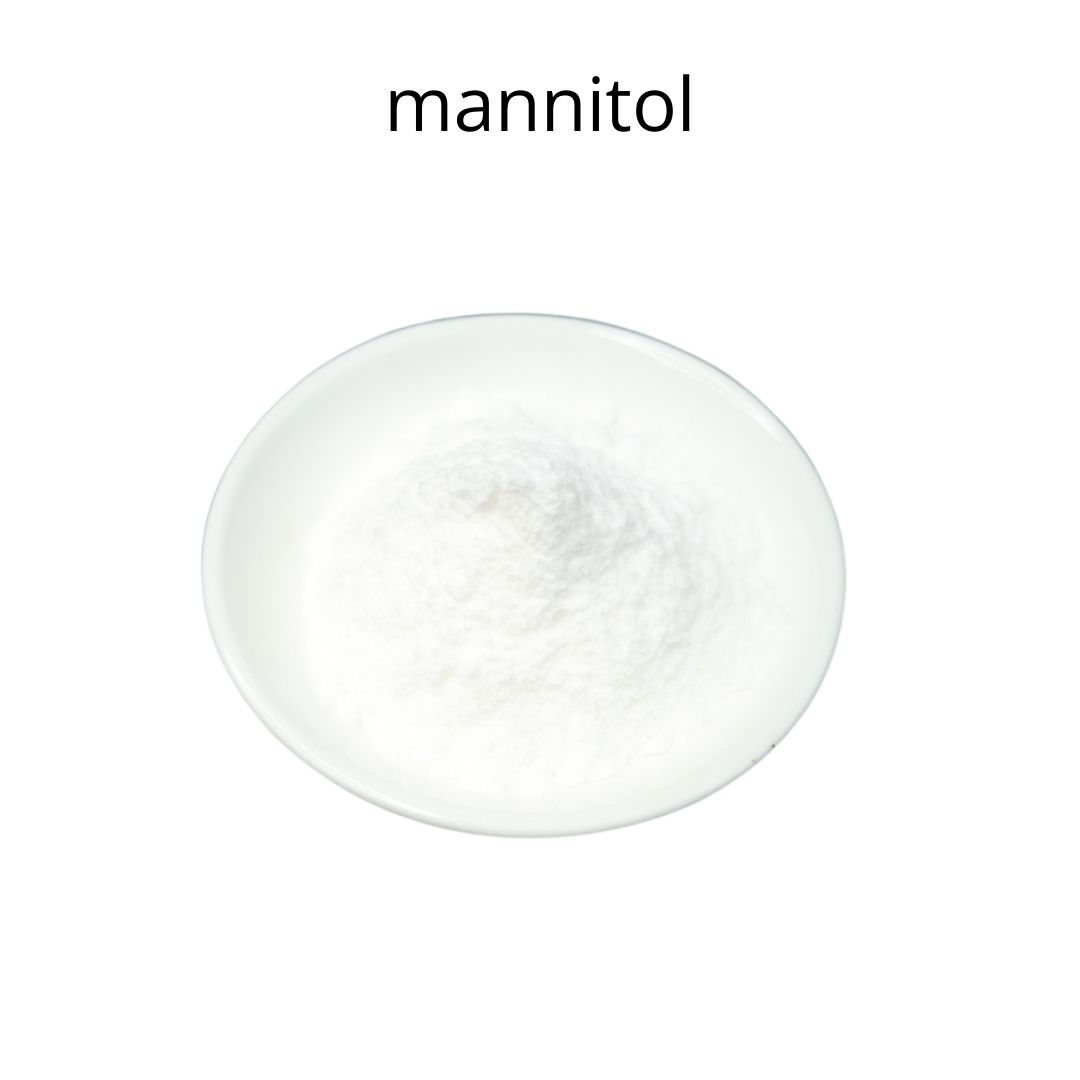
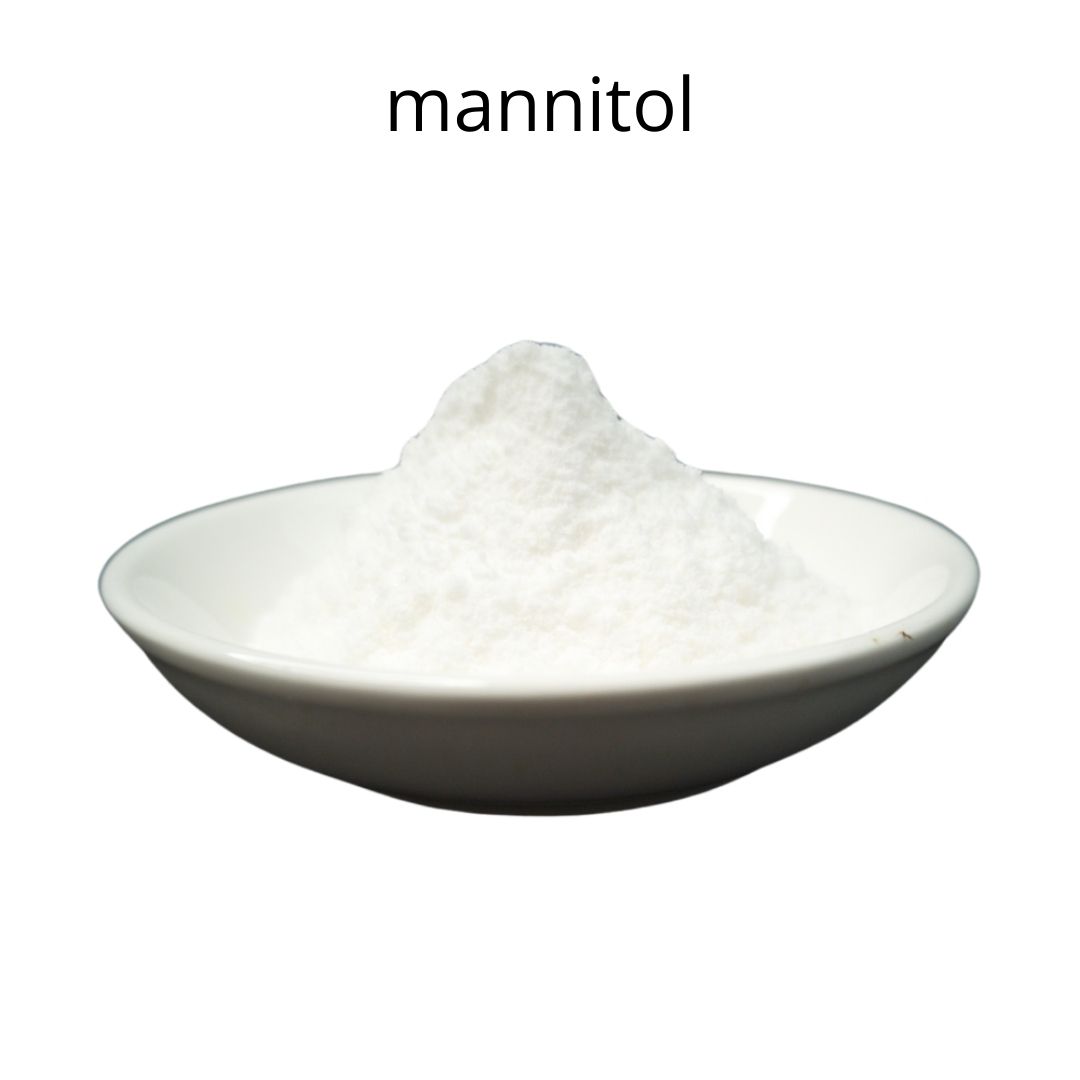


Mannitol is a sugar alcohol, or polyol, that occurs naturally in many plants and is also commercially produced. It is valued for its sweet taste, low caloric content, and unique functional properties. It is commonly used as a sweetener, excipient, and bulking agent in various industries.
Product Introduction
Mannitol is a white, crystalline powder, it is nearly odorless, and possesses a sweet taste that is approximately 50% to 70% as sweet as sucrose. It is a stereoisomer of sorbitol, another sugar alcohol. Mannitol is characterized by its non-hygroscopic nature, meaning it does not readily absorb moisture from the air, which contributes to its stability and ease of handling in various applications. It is soluble in water, though less so than sorbitol, and practically insoluble in many organic solvents.
Product Manufacturing Process
Mannitol is primarily produced through the hydrogenation of fructose or glucose. The production process typically involves enzymatic or catalytic conversion of glucose or fructose into mannitol. One common method involves the fermentation of sugars using microorganisms, particularly yeasts or bacteria, that possess the enzymatic capacity to convert these sugars into mannitol. Another method involves the catalytic hydrogenation of fructose using a nickel catalyst. After the conversion, the resulting mannitol solution is purified, crystallized, and dried to obtain the final product. The crystallization process is critical for achieving the desired particle size and crystal structure of the mannitol.
Product Applications
Mannitol has a wide range of applications across various industries, primarily due to its sweetness, stability, and functional properties.
- Food Industry: It is used as a sweetener in sugar-free candies, chewing gums, and other low-calorie food products. It is also used as a bulking agent and texturizer in various food formulations.
- Pharmaceutical Industry: It is used as an excipient in tablets, capsules, and lyophilized products. It can also be used as a diuretic to promote urine production in medical settings.
- Industrial Applications: It is used in the production of resins, plasticizers, and surfactants.
Packaging and Storage
Mannitol should be stored in a cool, dry place, away from direct sunlight and moisture. It is typically packaged in multi-layer paper bags, fiber drums, or polyethylene bags to protect it from environmental factors. Proper storage conditions help to maintain its quality and prevent caking or degradation. The recommended storage temperature is below 30°C (86°F).
Citations:
- Food and Drug Administration (FDA). "Additional Information about High-Intensity Sweeteners Permitted for Use in Food in the United States."
- WHO Food Additives Series 44. (2000). Mannitol.
- Akhtar, M. K., Hussain, I., Imran, M., Iqbal, M., & Nadeem, M. (2017). Mannitol: A comprehensive review. Critical Reviews in Food Science and Nutrition, 57(15), 3250-3264.

As the plant manager, I focus on the precise formulation and efficient production of food additives. We rigorously control the production process to ensure the quality and safety of each product, meeting industry standards. 🍴