

Product Introduction
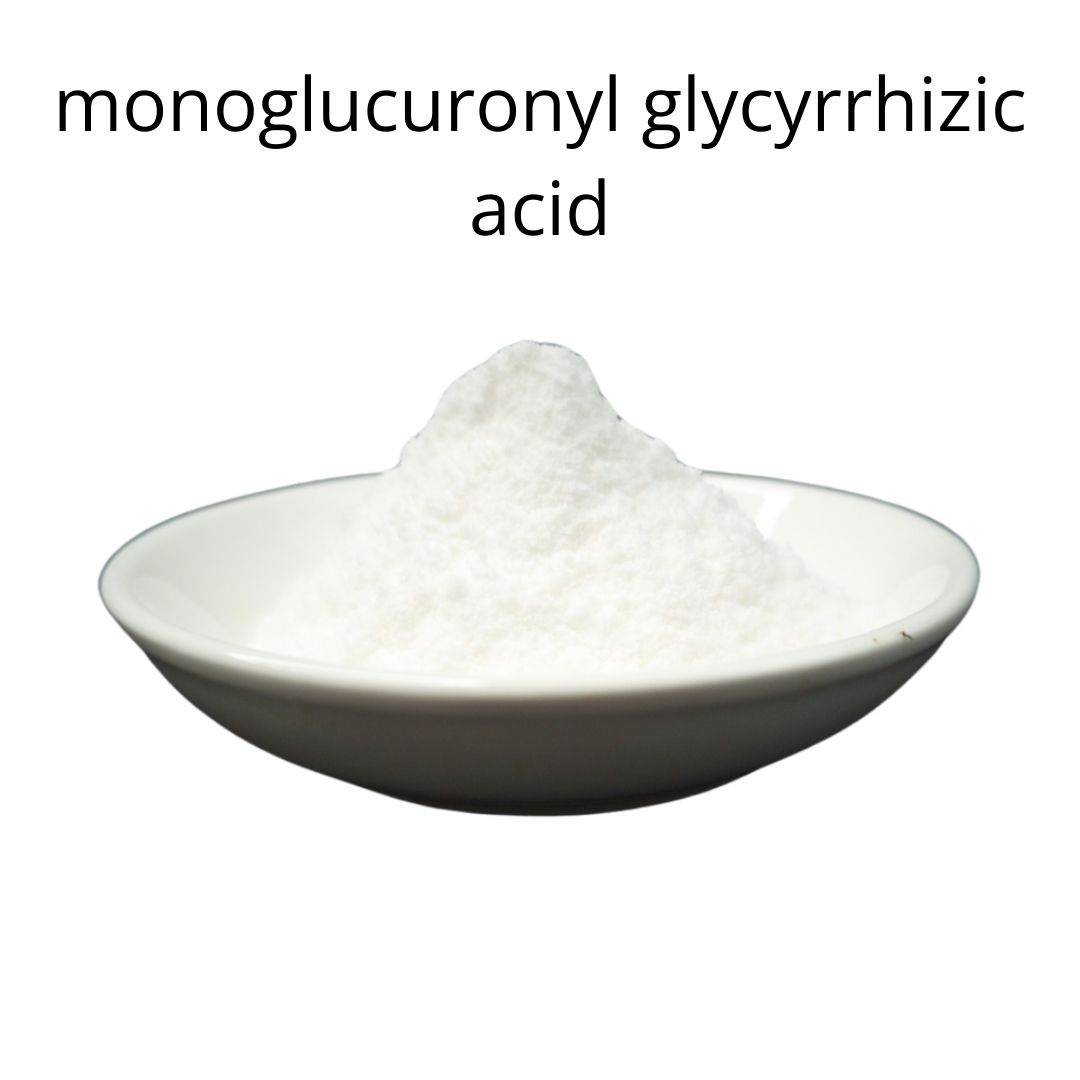
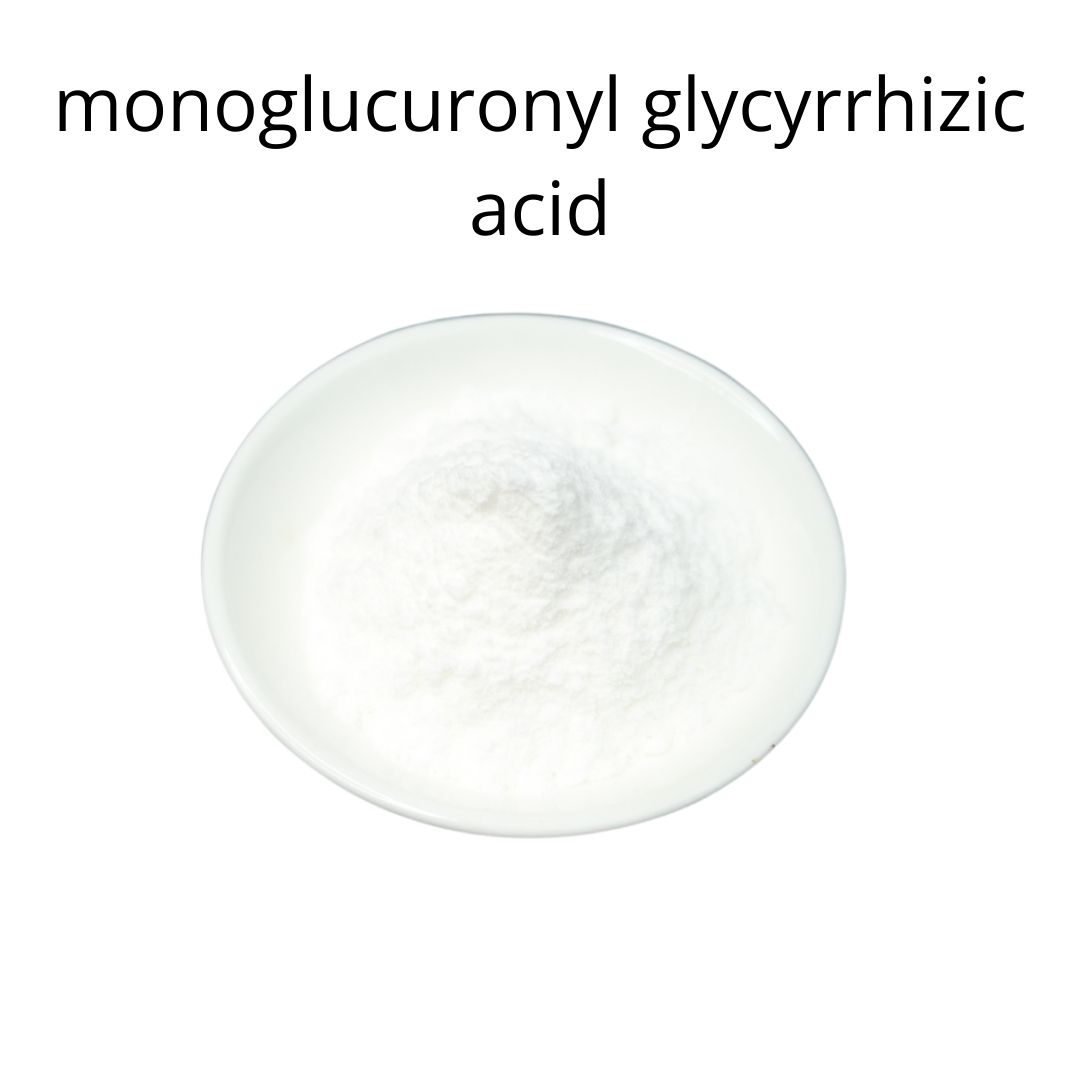
Monoglucuronyl Glycyrrhizic Acid, often referred to as Glycyrrhetinic Acid Monoglucuronide (GAMG), is a derivative of glycyrrhizic acid, the primary sweet-tasting compound found in licorice root (Glycyrrhiza glabra) [2]. Chemically, it is formed when glycyrrhetinic acid, the aglycone of glycyrrhizic acid, is linked to a single glucuronic acid molecule [3]. This compound is recognized for its intense sweetness, and also for its flavor-modifying properties, making it a subject of interest in the food and beverage industry. Unlike its parent compound glycyrrhizin, which has a characteristic lingering licorice taste, monoglucuronyl glycyrrhizic acid may offer a cleaner sweetness profile [4].
Product Manufacturing Process
The production of Monoglucuronyl Glycyrrhizic Acid primarily involves the selective hydrolysis of glycyrrhizin, which is first extracted from licorice roots. Glycyrrhizin itself is composed of one molecule of glycyrrhetinic acid and two molecules of glucuronic acid [2]. To obtain the monoglucuronyl form, one of these glucuronic acid moieties must be removed. This is typically achieved through enzymatic hydrolysis, using specific enzymes like β-glucuronidase, sourced from microorganisms such as Aspergillus species [3, 5]. The enzyme selectively cleaves one of the glucuronic acid units from the glycyrrhizin molecule, resulting in glycyrrhetinic acid 3-O-mono-β-D-glucuronide. Following the enzymatic reaction, the product is then purified, often using techniques like chromatography, crystallization, and finally dried to obtain a powder [5]. Chemical hydrolysis methods can also be employed, but enzymatic processes are often preferred for their specificity, and milder reaction conditions.
Product Applications
Monoglucuronyl Glycyrrhizic Acid is utilized in the food industry, primarily as a high-intensity sweetener and a flavor enhancer. Its sweetness potency is reported to be considerably high, potentially up to 900 times that of sucrose, which is significantly greater than that of glycyrrhizin [5]. This characteristic allows for its use in very small concentrations, to achieve desired sweetness levels in various products, including beverages, confectionery, dairy products, and baked goods. Beyond sweetness, it can modify and enhance other flavors, mask undesirable aftertastes, such as bitterness from other ingredients, and improve the overall palatability, and mouthfeel of food products [4]. Its application may extend to dietetic foods, and sugar-reduced items, where it can contribute sweetness without adding significant calories. It also has applications in pharmaceutical formulations, for taste-masking of active ingredients [6].
Packaging and Storage
Monoglucuronyl Glycyrrhizic Acid, being a hygroscopic powder, requires careful packaging to maintain its quality, and prevent degradation. It is typically supplied in multi-layer paper bags with an inner polyethylene liner, or in sealed fiber drums, to protect against moisture, oxygen, and light. Recommended storage conditions involve keeping the product in a cool, dry place, away from direct sunlight, and sources of strong odors. The storage area should be well-ventilated, and containers should be kept tightly closed when not in use, to prevent moisture absorption, and contamination. Adherence to these storage guidelines helps in preserving the product's chemical stability, and sensory properties, throughout its shelf life.
Citations
[1] National Center for Biotechnology Information (2024). PubChem Compound Summary for CID 6440406, 3-Monoglucuronyl-18beta-glycyrrhetinic acid. Retrieved from https://pubchem.ncbi.nlm.nih.gov/compound/3-Monoglucuronyl-18beta-glycyrrhetinic-acid.
[2] Isbrucker, R. A., & Burdock, G. A. (2006). Risk and safety assessment on the consumption of Licorice root (Glycyrrhiza sp.), its extract and powder as a food ingredient, with emphasis on the pharmacology and toxicology of glycyrrhizin. Regulatory Toxicology and Pharmacology, 46(3), 167-192.
[3] Akao, T., Akao, T., Hattori, M., Kanaoka, M., Yamamoto, K., Namba, T., & Kobashi, K. (1990). Enzymatic preparation of 3-O-β-d-monoglucuronyl-glycyrrhetinic acid from glycyrrhizin by Aspgillus niger TAI St. No. 12 β-d-glucuronidase. Chemical and Pharmaceutical Bulletin, 38(9), 2503-2506.
[4] Kitagawa, I., Hori, K., Sakagami, M., Hashiuchi, F., Yoshikawa, M., & Ren, J. (1993). Saponin and sapogenol. XXXIX. Chemical constituents of the roots of Glycyrrhiza inflata Batal. (Xinjiang licorice). (1). Structures of new oleanene-type triterpene oligoglycosides, apioglycyrrhizin and araboglycyrrhizin, and a new_Coumestan Glycoside, glycycoumarin. Chemical and Pharmaceutical Bulletin, 41(9), 1567-1573. (General reference to licorice derivatives and taste profiles).
[5] SakLANI, P., Jaiswal, P., Patel, S. K. S., Kumar, V., Kumar, A., & Kalia, V. C. (2013). Enzymatic Production of Glycyrrhetinic Acid 3-O-Mono-β-d-Glucuronide from Glycyrrhizin by Recombinant β-Glucuronidase from Aspergillus oryzae. Journal of Microbiology and Biotechnology, 23(10), 1368-1375.
[6] Ploeger, B. A., Meijer, D. K. F., & de Lange, E. C. M. (2009). Glycyrrhizic acid: A P-glycoprotein modulator of biological and clinical importance. Current Drug Metabolism, 10(7), 759-770. (Mentions 3MGA as a metabolite and discusses pharmacological relevance).

As the plant manager, I focus on the precise formulation and efficient production of food additives. We rigorously control the production process to ensure the quality and safety of each product, meeting industry standards. 🍴